FASCINATION
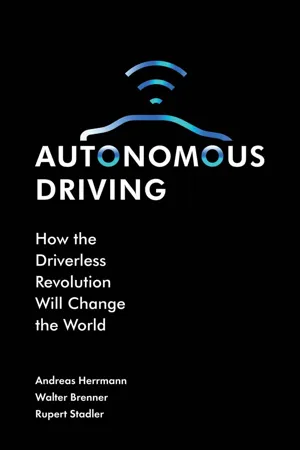
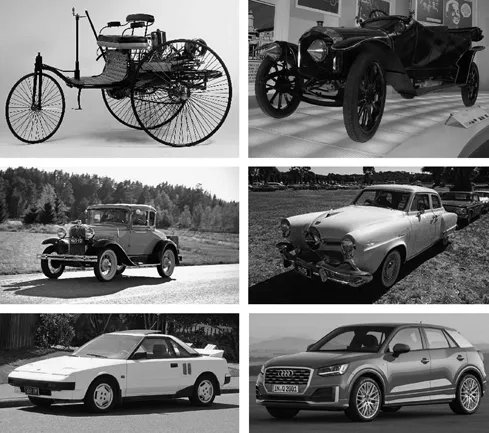
The automobile has fascinated people ever since its invention in 1886 by Carl Benz in Mannheim, Germany. A car can embody what is technically feasible, as well as what is socially desirable. The generations of automobiles over the years are evidence not only of technical progress, but also of aesthetic, social and cultural changes, as expressed in automotive design and the materials used. Cars can be viewed as a demonstration of human achievement over more than 100 years in the fields of electronics, informatics, mechanical engineering, art, design and many other disciplines (see Figure 1.1). In its essence, the automobile with its features and functions, its appeal and aesthetics, reflects how many of us imagine what a society is capable of producing with input from various sectors. However, the fascination of the automobile is a result of not only its visible qualities, but also of the possibilities and opportunities it offers. Mobility, freedom and independence, as well as social status are all advantages that many drivers associate with their cars [83].
Figure 1.1. Milestones of Automotive Development.
Sources: Daimler AG (upper left), Wikipedia: Audi Typ A (1910–1912). Picture taken by Bildergalerie (upper right), Taina Sohlman/123RF.com (middle left), Wikipedia: 1950 Studebaker Champion 4-Door Sedan, Picture taken by GTHO (middle right), Wikipedia 1985 Toyota MR2, Picture taken by Riley from Christchurch, New Zealand (lower left), Audi AG (lower right).
Although the automobile gives people control and power over a machine – and the feeling of freedom, movement, pride and pleasure – the desire for autonomous vehicles is not something new [116]. Driverless cars have been described in some detail for several decades now: at first as science fiction and later in scientific publications. In some fictional cases, the authors’ fantasies stretch to self-driving cars living lives of their own and taking on human traits by independently setting a route or even expressing emotions. No matter how we express our ideas of modern mobility, autonomous vehicles are the logical endpoint of a development that began with the crank handle in the motor car patented by Carl Benz, and has led to driver-assistance systems such as adaptive cruise control, forward collision warnings, lane departure warnings and blind-spot detection. The vision of motor vehicles no longer needing a driver has reached the research and development departments of many car manufacturers, but also of some technology companies (Nvidia, Qualcomm, Mobileye, NuTonomy, etc.), and seems likely to be implemented in the coming years. The idea of a vehicle not needing a driver is no longer a fiction, and the underlying technology is well on the way to changing the economy, society and our everyday lives [7].
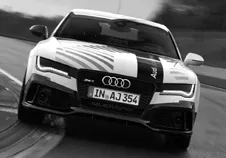
Some manufacturers’ autonomous vehicles have already emerged from the concept phase and passed thorough tests to take their place on the roads. Currently, they operate in controlled environments but will be found soon within normal traffic. For example, an Audi car drove itself from San Francisco to Las Vegas, and another driverless Audi reached a maximum speed of 149.1 miles per hour (240 kilometres per hour) on a racetrack (see Figure 1.2). NioEV’s new sports car Nio EP9 completed the circuit of the Americas Formula 1 racetrack in Austin in a spectacular 2:40.33 minutes.
Figure 1.2. Driverless Race Car of Audi.
Source: Audi AG.
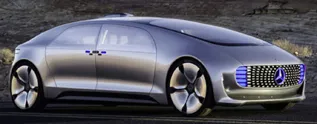
Mercedes has presented its F015, which provides an impression of the autonomous mobility of the coming years with its futuristic design and many innovative features (see Figure 1.3). For several years, Google has been testing its well-known vehicles in California and other US states. Tesla has equipped some of its cars with software, cameras and radar, enabling them to drive autonomously in certain traffic situations. Volvo plans to put cars that can drive in autonomous mode on the beltway around Gothenburg, Sweden. Many other car manufacturers such as Ford, General Motors, BMW, Toyota, Kia, Nissan and Volkswagen are working on prototypes of self-driving cars or have already tested them in road traffic.
Figure 1.3. Mercedes’ Self-Driving F015.
Source: Daimler AG.
The CTOs of many car manufacturers and technology companies agree that achieving the first 90 per cent of autonomous driving is nothing special. It’s the last 10 per cent – in the most challenging traffic situations and especially in urban areas – that makes the difference. That’s why the vehicles have to be tested in as many traffic situations as possible so that experience is gained on their reactions. A similar argument is presented by Jen-Hsun Huang, CEO of Nvidia, who demands accuracy of 99.999999 per cent in the development of autonomous cars, whereby the last percentage point can only be achieved at very great expense. Toyota and Rand Corporation have published calculations of the number of miles self-driving cars have to be tested before they can be assessed as roadworthy because the algorithms required for driverless cars undergo self-learning in multiple road traffic situations. The more traffic situations these algorithms are exposed to, the better prepared they are to master a new situation. Designing this training process so that the accuracy demanded by Jen-Hsun Huang is obtained will be the crucial challenge in the development of autonomous vehicles.
When discussing what fault tolerance might be acceptable, it should be borne in mind that people are more likely to forgive mistakes made by other people than mistakes made by machines. This also applies to driving errors, which are more likely to be overlooked if they were committed by a driver and not by a machine. This means that autonomous vehicles will only be accepted if they cause significantly fewer errors than the drivers. For this reason alone, the precision demanded by Jen-Hsun Huang is indispensable.
The world’s first self-driving taxi has been in use in Singapore’s university district since August 2016. It can be booked via a smartphone app to drive to selected destinations. NuTonomy, which operates this taxi service, has already reported on enthusiastic passengers, and a whole fleet of these cars is due to be put into use by 2018 [124]. They won’t be without competition; the Singapore transport authorities have also approved tests of five self-driving vehicles by Delphi Automotive Systems. The city-state is regarded as an ideal testing ground for autonomous cars, because the weather is always good, the infrastructure is excellent and drivers there actually comply with traffic regulations, unlike in other countries. Singapore also regards itself as a laboratory for testing new technologies and improving autonomous driving and the required infrastructure. The government is aware that this technology is a threat to the traditional automotive industry but that it might give birth to a new industry, thus initiating international competition [7].
Wanting to be at the forefront in the development of driverless cars, South Korea is building the world’s biggest test arena near Hwaseong. K-City, as it is called, is the size of a small town and lets researchers simulate many different traffic situations, with narrow streets, lots of curves, traffic lights, roundabouts, parking spaces, bus lanes, a highway and, if requested, pedestrians and bicyclists crossing the streets. The 360,000 square metre (3,875,007 square feet) test ground is one way in which the South Korean government wants to help the country’s automotive industry in its quest to launch self-driving cars. The artificial city will be open to South Korean carmakers like Kia and Hyundai and to technology firms like Samsung, SK Telecom and Naver. Furthermore, insurance providers and urban planners have been invited to collect data on mobility behaviour on the test ground. But K-City is not the only place where South Korean companies can test their self-driving vehicle technologies. The government has given Samsung permission to have its autonomous experimental cars drive on public roads. With this approval and the construction of K-City, South Korea want to reach its ambitious goal of putting large numbers of cars equipped with autonomous driving technology on public roads by 2020.
Many people are interested in the idea of autonomous driving, as shown by an analysis of more than 100,000 posts on various social networks. Since Google presented its driverless car in 2010, the number of posts on this subject has doubled from year to year. The analysis shows that people have twice as many positive emotions and opinions as negative ones in connection with autonomous driving. The positive associations include smart, intelligent, safe, modern, advanced and capable, while dangerous, expensive, disruptive, slow, complex and inevitable are among the more negative views. On the one hand, people are apparently curious and interested, and also hopeful that this technology will solve major traffic problems such as congestion, pollution and accidents. On the other hand, people are sceptical and doubtful as to whether it will actually work. People wonder whether autonomous vehicles will really be safe and affordable, or whether the technology will be manageable.
In addition to cars, there are other vehicles that already move autonomously, particularly within the military. These vehicles can also be found in agriculture: self-driving tractors, combine harvesters and other vehicles are used and communicate with each other to coordinate their movements. In the recent years, many driverless city vehicles and city buses have been put on the roads, especially in Europe and Asia; most of them support the public transportation systems on defined routes. Another application is freight transport, with autonomous trucks linking up into a platoon. At present, a truck with a driver takes the lead, while the other trucks link up electronically. At automated loading hubs, freight can be loaded from one truck to another without any personnel involved, and the trucks can reform into new platoons.
DEFINITION
A glance at the communications of many car manufacturers, suppliers and technology companies shows that they usually refer to ‘automated driving’, and only rarely to ‘autonomous driving’. The former term is the umbrella term that includes several phases of automation beginning with driver-assistance systems. The latter describes the final stage of automation, the situation in which a system takes over all steering, accelerating and braking manoeuvres. In this phase, a person is out of the loop and the car is able to act totally alone at all times and in all traffic situations. Vehicles that have reached this stage can be described as autonomous, driverless or self-driving. In short, the term automation is used to express the self-acting aspect of a machine. Autonomy goes beyond that and means the self-governing ability of an entire system [110].
So far, we have only been talking about autonomous cars, the furthest and most advanced stage of vehicle automation in which the system is responsible for all driving tasks everywhere and at all times [3]. With this full automation, there is no driver anymore; all the occupants of a vehicle are just passengers. It will take quite a few years until a lot of these vehicles are seen on the roads, but some vehicles are equipped with considerable automation already today. Level 0 is the starting point – there is no automation and the driver steers, accelerates and chooses to apply the brakes on the vehicle without any system support. With Levels 1 and 2, the system takes over more and more of these driving tasks. However, the driver is obliged to permanently monitor the system, the traffic and the surroundings, and must be able to take over the driving function at any time. Level 3 means that the driver no longer has to continuously monitor the activity, because the system indicates to him or her when it is necessary to take control of the vehicle. With Level 4, the system masters all driving functions in normal operation and in defined surroundings, but the driver can overrule the system’s decisions. The last stage is Level 5, which is the focus of this book.
For the sake of uniform terminology, two key terms will be used here. The term automated vehicles refers to Levels 1–4, while the terms autonomous, self-driving or driverless vehicles refer to Level 5.
TECHNOLOGY
The technologies upon which autonomous driving is based blur the boundaries between the automotive industry and the robotic, electronic and software industries [117]. Software with programming codes and algorithms, as well as cameras and sensors using radar, ultrasound and lasers, are all gaining importance. Meanwhile, the hardware of a vehicle – the chassis, suspension and other mechanical parts – are losing importance. So it’s not surprising that technology companies such as Apple, Google, Nvidia, Mobileye, NuTonomy, Qualcomm and Microsoft are occupied with autonomous driving and have actually developed their own driverless vehicles. Even the traditional automotive suppliers such as Aisin, Delphi, Bosch, Denso, Continental, TRW, Schaeffler or Magna are either preparing their own prototypes of self-driving cars or working on key components for autonomous driving. The technology of autonomous driving will have a significant role to play in the success of electric mobility. As automation has a positive impact on energy efficiency, increasing vehicle automation will also significantly extend the range of electric vehicles [148].
The essence of autonomous driving is the development of vehicles into cyber-physical systems that comprise a combination of mechanical and electronic components. A vehicle’s hardware and software exchange certain data about the infrastructure (the Internet of Things), and the vehicle is controlled or monitored by a processing unit. In the future, each vehicle will communicate with the infrastructure: parking garages, parking spaces, traffic lights, traffic signs and a traffic control centre (vehicle-to-infrastructure communication or V-to-I). Data on factors such as traffic flow, available parking spaces and traffic-light phases, will allow the processing unit in the vehicle to select the best route and decide on a suitable speed. With vehicle-to-vehicle communication (V-to-V), automobiles will be in contact with each other to exchange data. This will allow cars to coordinate their speed and manoeuvres and to warn each other of dangers (rain, ice, fog, potholes, etc.). It is already clear that information and communications technology within a car is gaining importance and will lead to a paradigm shift in the automotive industry. Conventional car manufacturing is being transformed into an industry that creates digitised products, requiring completely new skills. Car manufacturers will have to become more like technology companies in their culture, organisation and processes, and must absorb the spirit of this industry [147]. It is no coincidence that the traditional American car-plant sites in Michigan, Ohio and Indiana are in difficulty, while a completely new mobility...