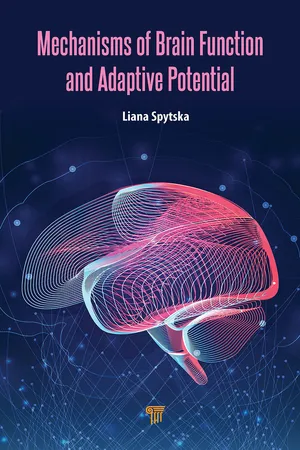
This book explores the relationships between brain function, hypnotic states, and neural networks, illuminating how these fields deepen our understanding of human consciousness, cognition, and therapeutic possibilities. It integrates historical context with modern research methodologies, demonstrating how advanced neuroimaging techniques transformed the ability to visualize and understand brain activity. It explores how alterations in brain activity correlate with changes in perception, attention, memory, and emotional regulation, providing insights into the malleable nature of consciousness. What distinguishes Mechanisms of Brain Function and Adaptive Potential is its emphasis on integrating knowledge across multiple disciplines—neurobiology, psychology, computer science, and clinical practice. This interdisciplinary approach enables a more holistic understanding of the brain and its functions. Such integration is essential for understanding complex mental processes and developing more effective treatments for neurological and psychological disorders. The practical applications of this research highlight how hypnotherapy can be used in treating conditions ranging from chronic pain and anxiety disorders to PTSD and addictions. The book examines how principles derived from neural networks can be applied to develop personalized hypnotherapeutic approaches. Virtual reality, artificial intelligence, real-time neural monitoring, and brain–computer interfaces are powerful tools that may enable more precise control of hypnotic states and lead to the development of hypnotherapy strategies with increased efficacy. The book establishes an ethical framework for researchers and practitioners that would ensure appropriate safeguards for patient welfare.
- English
- ePUB (mobile friendly)
- Available on iOS & Android
eBook - ePub
Mechanisms of Brain Function and Adaptive Potential
About this book
Information
Subtopic
Educational PsychologyIndex
Biological SciencesTable of contents
- Cover Page
- Half Title Page
- Title Page
- Copyright Page
- Contents
- Preface
- Introduction
- Chapter 1 Brain Basics
- Chapter 2 Hypnosis and Its Mechanisms
- Chapter 3 Neural Networks and Their Role in Perception
- Chapter 4 Hypnosis and Brain Activity
- Chapter 5 Practical Applications and Future Research
- Conclusions
- References
- Index
Trusted by 375,005 students
Access to over 1.5 million titles for a fair monthly price.
Study more efficiently using our study tools.
Frequently asked questions
Yes, you can cancel anytime from the Subscription tab in your account settings on the Perlego website. Your subscription will stay active until the end of your current billing period. Learn how to cancel your subscription
No, books cannot be downloaded as external files, such as PDFs, for use outside of Perlego. However, you can download books within the Perlego app for offline reading on mobile or tablet. Learn how to download books offline
Perlego offers two plans: Essential and Complete
- Essential is ideal for learners and professionals who enjoy exploring a wide range of subjects. Access the Essential Library with 800,000+ trusted titles and best-sellers across business, personal growth, and the humanities. Includes unlimited reading time and Standard Read Aloud voice.
- Complete: Perfect for advanced learners and researchers needing full, unrestricted access. Unlock 1.5M+ books across hundreds of subjects, including academic and specialized titles. The Complete Plan also includes advanced features like Premium Read Aloud and Research Assistant.
We are an online textbook subscription service, where you can get access to an entire online library for less than the price of a single book per month. With over 1.5 million books across 990+ topics, we’ve got you covered! Learn about our mission
Look out for the read-aloud symbol on your next book to see if you can listen to it. The read-aloud tool reads text aloud for you, highlighting the text as it is being read. You can pause it, speed it up and slow it down. Learn more about Read Aloud
Yes! You can use the Perlego app on both iOS and Android devices to read anytime, anywhere — even offline. Perfect for commutes or when you’re on the go.
Please note we cannot support devices running on iOS 13 and Android 7 or earlier. Learn more about using the app
Please note we cannot support devices running on iOS 13 and Android 7 or earlier. Learn more about using the app
Yes, you can access Mechanisms of Brain Function and Adaptive Potential by Liana Spytska in PDF and/or ePUB format, as well as other popular books in Biological Sciences & Educational Psychology. We have over 1.5 million books available in our catalogue for you to explore.