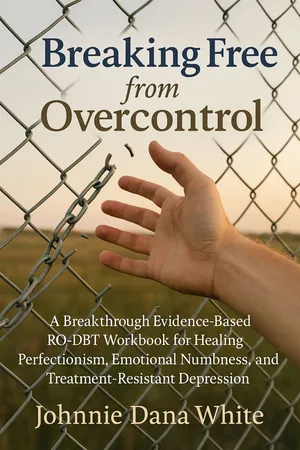
Breaking Free from Overcontrol
eBook - ePub

Breaking Free from Overcontrol

An Evidence-Based Skills Workbook for Healing Perfectionism, Emotional Numbness, and Persistent Depression

  1. English
  2. ePUB (mobile friendly)
  3. Available on iOS & Android
eBook - ePub

Breaking Free from Overcontrol

An Evidence-Based Skills Workbook for Healing Perfectionism, Emotional Numbness, and Persistent Depression

About this book

Break the Invisible Prison of Perfect Control

Have you built a life that looks "fine" on the outside, but feels restrained or emotionally flat on the inside? You may be the dependable one—highly responsible, self-disciplined, and careful—yet still struggle with perfectionism, persistent low mood, or relationships that feel distant even when you truly care.

Breaking Free from Overcontrol is a skills-based workbook for people who tend toward rigid self-control—often called overcontrol. It offers practical exercises drawn from established clinical research on overcontrol, social connection, and behavior change, with a focus on building flexibility, healthy emotional expression, and stronger relationships. This is an independent educational resource and is not connected to any proprietary therapy program or trademarked method.

This workbook helps you work on

Perfectionism and all-or-nothing thinking

Emotional shutdown or numbness, and difficulty showing feelings

Social disconnection, loneliness, or relationships that feel overly formal

Rigid habits and rules that reduce spontaneity and closeness

Persistent low mood or ongoing distress that has not improved as you hoped

Control-driven coping patterns, including food- and routine-related control

Social communication challenges, including difficulties with openness and warmth

Note: This workbook is not a diagnostic tool and does not claim to treat any condition. If symptoms are severe or worsening, seek professional support.

What you'll practice

Connection skills that support warmth, approachability, and genuine rapport

Self-reflection exercises to reduce harsh self-judgment and increase curiosity

Flexibility training to loosen rigid thinking and rigid routines

Emotional alignment practices to better match inner experience with outward expression

Interpersonal tools for clearer communication, repair, and closeness

Structured tracking to support steady progress over time

How the workbook is structured

Each section includes:

Step-by-step exercises

Real-life examples (fictionalized composites)

Common obstacles and practical ways to respond

Simple progress checks to notice change without perfectionism taking over

Who it's for

Adults who identify with overcontrol: high standards, caution, emotional restraint, and difficulty receiving support

Readers who want a practical, skills-first approach to improving connection, flexibility, and emotional expression

Professionals seeking an additional client-facing resource to supplement appropriate care

Trusted by 375,005 students

Access to over 1.5 million titles for a fair monthly price.

Study more efficiently using our study tools.

Information

Year
2025
eBook ISBN
9781764272094

Table of contents

  1. Breaking Free from Overcontrol
  2. Table of Contents
  3. Chapter 1: When Self-Control Becomes Self-Destruction
  4. The Overcontrol Epidemic Hidden in Plain Sight
  5. The Paradox of Excessive Self-Control
  6. Recognizing Overcontrol in Daily Life
  7. The Promise of Radical Openness
  8. The Brief Overcontrol Scale
  9. Daily Life Overcontrol Checklist
  10. Personal Reflection Questions
  11. Building Awareness
  12. Key Insights From This Foundation
  13. Chapter 2: The Science of Social Connection
  14. The Evolutionary Foundation of Social Signaling
  15. Understanding Polyvagal Theory in Simple Terms
  16. The Vicious Cycle of Isolation
  17. Mirror Neurons and Human Connection
  18. The Evolutionary Importance of Emotional Expression
  19. How Masked Emotions Prevent Tribal Belonging
  20. Research on Neuroplasticity and Change Potential
  21. Practical Assessment and Awareness Building
  22. Understanding Your Social Signaling Patterns
  23. Chapter 3: The Many Faces of Overcontrol
  24. Treatment-Resistant Depression: When Sadness Goes Underground
  25. Anorexia Nervosa and Restrictive Eating Patterns
  26. Autism Spectrum Disorders and the Overcontrolled Presentation
  27. Personality Disorders and Overcontrol Patterns
  28. Chronic Anxiety and Perfectionism
  29. Transdiagnostic Overcontrol Patterns
  30. Why Traditional Treatments Often Fail
  31. The Promise of a Different Approach
  32. Assessment Tools for Overcontrol Recognition
  33. Symptom Tracking for Multiple Domains
  34. Preparing for Transformation
  35. Chapter 4: What Is Radical Openness?
  36. The Three Pillars of Radical Openness
  37. Understanding the Biosocial Theory of Overcontrol
  38. Moving from Emotional Control to Authentic Expression
  39. Cultural Factors in Overcontrol Development
  40. Practical Exercises for Building Openness
  41. The Courage Required for Openness
  42. Building a Foundation for Change
  43. Chapter 5: Rewiring Your Social Brain
  44. Understanding Neuroplasticity and Change Potential
  45. Learning Social Signaling Fundamentals
  46. Mirror Neurons and Human Connection
  47. The Evolutionary Importance of Emotional Expression
  48. How Masked Emotions Prevent Tribal Belonging
  49. Practical Social Brain Rewiring Exercises
  50. Building New Neural Pathways for Connection
  51. Overcoming Common Barriers to Social Brain Change
  52. Measuring Progress in Social Brain Rewiring
  53. The Science of Social Transformation
  54. Chapter 6: Activating Social Safety (The Big Three +1)
  55. The Revolutionary Science Behind Simple Actions
  56. Technique Breakdown: The Four Components
  57. When and How to Use Each Component
  58. Common Mistakes and Corrections
  59. Practical Implementation Tools
  60. Troubleshooting Guide
  61. Building on the Foundation
  62. Chapter 7: The Art of Self-Enquiry
  63. Replacing Self-Criticism with Curious Self-Enquiry
  64. The Core Question: What Do I Need to Learn?
  65. Moving from Judgment to Curiosity
  66. Edge-Finding: Identifying Discomfort as Opportunity
  67. Malamati Sufism Influence on Self-Enquiry
  68. Developing Daily Self-Enquiry Practice
  69. Edge-Finding Worksheet
  70. Weekly Reflection Template
  71. Overcoming Common Self-Enquiry Obstacles
  72. Building Self-Compassion Through Enquiry
  73. Chapter 8: Flexible Mind Skills
  74. Breaking Rigid Behavioral Patterns
  75. Increasing Tolerance for Uncertainty
  76. The DEEP Framework for Flexibility
  77. Challenging Perfectionistic Standards
  78. Novel Behavior Experiments
  79. Balancing Structure with Spontaneity
  80. Building Your Flexibility Toolkit
  81. The Flexibility Paradox
  82. Chapter 9: Emotional Expression and Authenticity
  83. Matching Inner Experience with Outer Expression
  84. The Expression Suppression Spectrum
  85. Context-Appropriate Emotional Expression
  86. Moving from Incongruent to Genuine Signals
  87. Safe Vulnerability Practice
  88. Relationship-Specific Expression Practice
  89. Video Practice with Feedback
  90. Building Emotional Expression Confidence
  91. The Authenticity Paradox
  92. Chapter 10: Advanced Social Signaling
  93. Reading Complex Social Situations Accurately
  94. Mastering Heat On/Heat Off Strategies
  95. Micro-Expressions and Their Meanings
  96. Matching Signals to Social Context
  97. Repairing Signaling Ruptures
  98. Building Consistent Trust Through Signaling
  99. Practical Implementation Tools
  100. The Art of Social Intelligence
  101. Chapter 11: Interpersonal Effectiveness for Overcontrol
  102. Transforming Aloof and Distant Relating Patterns
  103. Developing Validation Skills
  104. Building and Maintaining Close Relationships
  105. Managing Envy and Social Comparison
  106. Friendship Skills for Overcontrolled Adults
  107. Practical Implementation Tools
  108. From Observer to Participant
  109. Chapter 12: Targeted Strategies by Condition
  110. Chronic Depression: From Emotional Numbness to Aliveness
  111. Eating Disorders: Flexibility with Food, Body, and Control
  112. Autism and OCPD: Working with Your Brain's Wiring
  113. Personality Disorders: Softening Rigid Patterns
  114. Condition-Specific Tracking Tools
  115. Warning Signs and Safety Planning
  116. Creating Your Condition-Specific Practice Plan
  117. Chapter 13: Integration and Lifelong Practice
  118. Building Your Personal RO Practice
  119. Creating Community and Accountability
  120. When to Seek Certified RO-DBT Therapy
  121. The Ongoing Journey of Radical Openness
  122. Practical Implementation Tools
  123. Relapse Prevention Planning
  124. Professional Resources Directory
  125. Appendix A: Complete Assessment Battery (All Validated Tools)
  126. The Overcontrol Scale (OCS)
  127. The Inhibited Temperament Scale (ITS)
  128. The Flexible Responding Scale (FRS)
  129. The Social Signaling Assessment (SSA)
  130. The Validation Seeking and Giving Scale (VSGS)
  131. The Openness to Experience Scale (OES)
  132. Progress Tracking Protocols
  133. Appendix B: Quick Reference Skill Summary
  134. Core Social Signaling Skills
  135. Self-Enquiry Techniques
  136. Emotional Expression Skills
  137. Flexibility and Openness Skills
  138. Interpersonal Effectiveness Skills
  139. Crisis and Challenge Applications
  140. Daily Integration Reminders
  141. Appendix C: Guide for Mental Health Professionals
  142. Understanding Overcontrol in Clinical Context
  143. Assessment and Diagnostic Considerations
  144. Treatment Planning and Intervention Strategies
  145. Therapeutic Relationship Considerations
  146. Referral Guidelines and Professional Resources
  147. Training and Continuing Education Opportunities
  148. Appendix D: Research Summary and Outcome Data
  149. Foundational Research Studies
  150. Eating Disorders Research
  151. Autism Spectrum Disorder Research
  152. Personality Disorder Research
  153. Meta-Analysis and Systematic Review Findings
  154. Mechanism of Action Research
  155. Neurobiological Research
  156. Long-Term Follow-Up Studies
  157. Comparative Effectiveness Research
  158. Current Research Directions
  159. Research Limitations and Future Directions
  160. Appendix E: Finding Certified RO-DBT Providers
  161. Understanding RO-DBT Provider Certification Levels
  162. Professional Directory Resources
  163. Regional and Specialty Provider Networks
  164. Evaluating Provider Qualifications
  165. Alternative Options When Certified Providers Aren't Available
  166. Insurance and Payment Considerations
  167. Building Your Treatment Team
  168. Appendix F: Recommended Reading and Resources
  169. Essential RO-DBT Books and Publications
  170. Related Psychology and Self-Help Books
  171. Mindfulness and Self-Compassion Resources
  172. Trauma-Informed and Nervous System Resources
  173. Flexibility and Acceptance Resources
  174. Online Resources and Websites
  175. Mobile Apps and Digital Tools
  176. Podcasts and Audio Resources
  177. Academic and Research Resources
  178. Building Your Personal Library
  179. Creating Your Ongoing Learning Plan
  180. References

Frequently asked questions

Yes, you can cancel anytime from the Subscription tab in your account settings on the Perlego website. Your subscription will stay active until the end of your current billing period. Learn how to cancel your subscription
No, books cannot be downloaded as external files, such as PDFs, for use outside of Perlego. However, you can download books within the Perlego app for offline reading on mobile or tablet. Learn how to download books offline
We are an online textbook subscription service, where you can get access to an entire online library for less than the price of a single book per month. With over 1.5 million books across 990+ topics, we’ve got you covered! Learn about our mission
Look out for the read-aloud symbol on your next book to see if you can listen to it. The read-aloud tool reads text aloud for you, highlighting the text as it is being read. You can pause it, speed it up and slow it down. Learn more about Read Aloud
Yes! You can use the Perlego app on both iOS and Android devices to read anytime, anywhere — even offline. Perfect for commutes or when you’re on the go.
Please note we cannot support devices running on iOS 13 and Android 7 or earlier. Learn more about using the app
Yes, you can access Breaking Free from Overcontrol by Johnnie Dana White in PDF and/or ePUB format, as well as other popular books in Personal Development & Abnormal Psychology. We have over 1.5 million books available in our catalogue for you to explore.