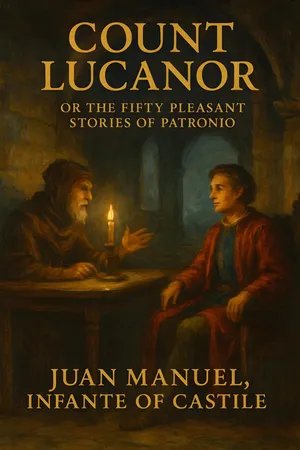
Count Lucanor: Or, The Fifty Pleasant Stories of Patronio by Juan Manuel, Prince of Castile is one of the great treasures of medieval Spanish literature — a brilliant collection of moral tales that stands at the crossroads of storytelling, philosophy, and early humanism. Written around 1335, this elegant compilation of fables and exempla blends the wisdom of the East and the chivalric culture of the West, offering a mirror of life, character, and virtue that remains strikingly modern in its insight.
Presented as a dialogue between the wise counselor Patronio and his noble master Count Lucanor, each story begins with a dilemma posed by the Count and concludes with Patronio's parable-like advice. The lessons range from cunning and prudence to loyalty, humility, and the pursuit of honor. Drawn from Arabic, classical, and Christian sources, these tales reflect a world where morality is learned through narrative — where experience, wit, and wisdom meet.
What distinguishes Count Lucanor is not merely its moral instruction but its literary artistry. Juan Manuel's prose is concise, elegant, and purposeful, laying the foundation for Spanish narrative style centuries before Cervantes. His blend of entertainment and ethical reflection makes the collection a direct ancestor of The Canterbury Tales and The Decameron, as well as a cornerstone of Iberian and world literature.