When trust breaks in a relationship, love often remains — but safety disappears.
What do you do when the person you love becomes the person you struggle to trust?
After betrayal, secrecy, emotional distance, repeated lying, or serious conflict, simply saying "I'm sorry" rarely repairs the damage. Trust has to be rebuilt through truth, accountability, changed behavior, patience, and time.
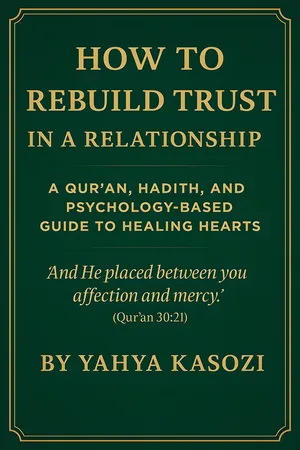
How to Rebuild Trust in a Relationship gives couples a practical, faith-rooted framework for understanding broken trust and working toward genuine repair.
Drawing from the Qur'an, Hadith, and modern relationship psychology, Yahya Kasozi explores how trust is built, how it breaks, why emotional safety disappears, and what meaningful repair actually requires.
At the heart of the book is a structured Repair Protocol that guides couples through:
Full and honest disclosure
Sincere apology and accountability
Emotional stabilization
Transparency and healthy boundaries
Reconnection and rebuilding the bond
Inside, you'll learn how to:
Understand what broken trust does to both partners and the relationship
Apologize in a way that demonstrates responsibility rather than simply asking for forgiveness
Rebuild emotional safety through consistent action
Establish boundaries without turning the relationship into control or surveillance
Navigate difficult areas such as phones, social media, finances, in-laws, and parenting
Understand the difference between forgiveness and restored trust
Use practical conversations, exercises, worksheets, and rituals to support the healing process
Recognize when outside guidance from an imam, counselor, therapist, or trusted mentor may be appropriate
Understand when genuine healing may require separation rather than continued harm
This book does not promise a quick fix.
Trust is not rebuilt by an apology alone. It is rebuilt by what happens after the apology.
The work requires honesty, repentance, accountability, consistency, mercy, patience, boundaries, and changed behavior.
For Muslim readers, the framework is rooted in Islamic principles including am?nah (trust), tawbah (repentance), ?abr (patience), ra?mah (mercy), and accountability before Allah.
The book also recognizes that not every relationship can or should be restored at any cost. It addresses how to approach separation with dignity, justice, and faith when reconciliation is no longer possible.
Whether you are dealing with betrayal, emotional neglect, hidden behavior, financial secrecy, repeated conflict, or a relationship damaged by years of accumulated hurt, this guide provides a structured way to understand what happened and what meaningful repair can look like.