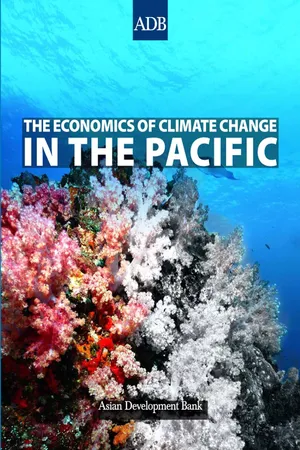
The Pacific developing member countries of the Asian Development Bank are highly vulnerable to the predicted effects of climate change, including higher sea levels, intense storm surges and cyclones, erratic rainfall patterns, and major temperature fluctuations. This study identifies the effects and quantifies the costs of these adverse outcomes to the Pacific island economies, with details provided for selected key sectors including agriculture, fisheries, tourism, coral reefs, and human health. It then presents policy recommendations and action steps for the countries to minimize or mitigate these impacts, particularly by mainstreaming climate change in their development plans, adopting forward-looking and risk-based approaches to climate change, and climate-proofing both their programs and infrastructure so that poverty eradication and sustainable development efforts can continue regardless of the vagaries of climate.
- 100 pages
- English
- ePUB (mobile friendly)
- Available on iOS & Android
eBook - ePub
About this book
Information
Chapter 1
INTRODUCTION
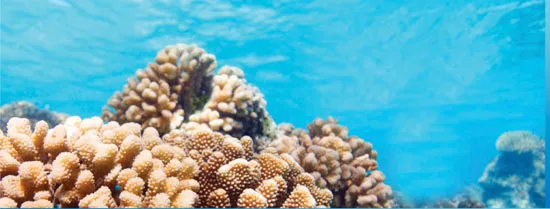
The 14 Pacific developing member countries (DMCs) of the Asian Development Bank (ADB) consist mostly of small and geographically isolated islands, some of them low-lying atolls, in the Pacific Ocean; each of the islands has a limited resource base and fragile biodiversity. The countries are the Cook Islands, Fiji, Kiribati, Republic of the Marshall Islands (RMI), the Federated States of Micronesia (FSM), Nauru, Palau, Papua New Guinea (PNG), Samoa, Solomon Islands, Timor-Leste, Tonga, Tuvalu, and Vanuatu. Their combined population of approximately 10.7 million is of diverse ethnicity and culture.
For the Pacific region as a whole, climate change has been identified as one of the critical challenges of this century. The region’s vulnerability to climate change arises from its unique geography and environment, the fragility of its economic structure, its distinctive demographics, and the interactions between these different factors. Many of the Pacific DMCs have limited agricultural land and high population densities, with their economic activities mostly concentrated on low-lying coastal areas. Rising sea level is thus projected to significantly impact their coastal cities and communities as well as damage infrastructure and human habitats. Moreover, over the past several decades, the Pacific region has experienced increases in annual mean temperature, in variability of rainfall pattern, and in intensity of rainfall events.1 In the last decades, extreme weather events have also increased in frequency and intensity.2 Increasing temperatures as well as changes in rainfall patterns are likewise expected to adversely impact the region’s water resources and its agriculture and health sectors.
Given these threats to the economic prosperity, stability, and human security of the Pacific DMCs, the region’s leaders and policymakers have recognized climate change as a formidable challenge. These island-nations have limited capacity to adapt and respond to climate change, however, and the region as a whole has scant resources to handle the complex financing arrangements for climate change activities.
This study therefore aims to support the Pacific DMCs in developing their climate change adaptation plan and strategy. Its core concept is that current and future plans aimed at improving living standards and achieving sustainable development should factor in climate change and its potential consequences. Policy and decision-making need to clearly take into account the reality of climate change, the costs of inaction, and the benefits of adaptation actions. For this purpose, the study provides climate information that can be used to support adaptation actions under various climate scenarios. The study presents estimates of the possible impacts of climate change on significant sectors of the region, assesses the economy-wide impacts of climate change, and quantifies funding needs for climate change adaptation.
One other major aim of this study is to contribute to the growing literature on climate change impacts in the context of the Pacific region. Climate science in its current state cannot accurately predict future climate at either the global or the regional level. Nonetheless, this study can help forearm the Pacific DMCs with the knowledge to prepare for climate change impacts and to identify adaptation actions for mitigating them. As discussed in detail in this study, such adaptation actions should be systematically developed and implemented on the basis of (i) detailed assessments of vulnerability and adaptation needs that sufficiently capture local climate as well as socioeconomic characteristics; (ii) economic analyses to assess the impacts of climate change and to guide the selection of adaptation actions at both national and local levels; and (iii) reliable databases and information that must underlie the conduct of such assessments and analyses.
The report consists of the following chapters:
Chapter 2 – Overview of the vulnerability of the Pacific DMCs to climate change in relation to their geographic and economic characteristics.
Chapter 3 – Methodology and modeling framework used for the study.
Chapter 4 – Projected future climate change and climate extremes in the Pacific region based on selected emissions scenarios and a downscaling exercise, along with a discussion of the biophysical consequences of climate change.
Chapter 5 – Assessment of the sectoral implications of climate change in the Pacific, with a focus on agriculture (for selected main commercial and staple food crops), fisheries, tourism, coral reefs, and human health.
Chapter 6 – Presentation of a macro-economic perspective that quantifies the economic costs of climate change at the national and regional levels, and suggests estimates of adaptation funding needs.
Chapter 7 – Summary of the key findings and their policy implications.
By making climate change adaptation truly integral to their policy-making and decision-making processes, the Pacific island-nations could plan against the adverse impacts of climate change and continue their efforts to achieve poverty eradication and sustainable development for the region.
References
Asian Development Bank (ADB). 2011. Food Security and Climate Change in the Pacific: Rethinking the Options. Pacific Studies Series, Manila.
Australian Bureau of Meteorology and Commonwealth Scientific and Industrial Research Organisation. 2011. Climate Change in the Pacific: Scientific Assessment and New Research. Volume 1: Regional Overview.
McKenzie, D., Jackson, J. and K. Priestley. 2005. Thermal structure of oceanic and continental lithosphere. Earth and Planetary Science Letters. 233. 337–349.
Chapter 2
VULNERABILITY OF THE PACIFIC NATIONS TO CLIMATE CHANGE
In recent years, numerous assessments have been made of the vulnerability of the Pacific nations to projected climate change, including the assessment contained in the Fourth Assessment Report (AR4) of the Intergovernmental Panel on Climate Change (IPCC 2007). This chapter aims to provide a succinct overview of the key factors identified thus far to be contributing to this vulnerability.
I. Overview of Geographic and Environmental Features
The unique geography and environment of the Pacific Region make it highly vulnerable to climate change.
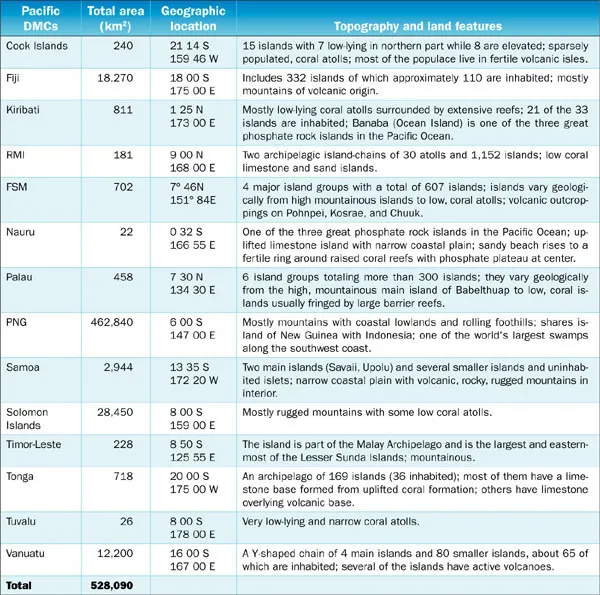
The Pacific DMCs are scattered across a large area of the South Pacific Ocean covering more than 30 million square kilometers (km2) (Figure 2.1). The region’s sovereign zone stretches up to 10,000 kilometers (km) from east to west, and 3,000 km from north to south. It covers a total land area of approximately 528,090 km2 with PNG representing 88% of the land area. Many of the island-nations are small, occupying less than 1,000 km2; Nauru is the smallest at 22 km2 (Table 2.1).
Figure 2.1: Map of the Pacific Region
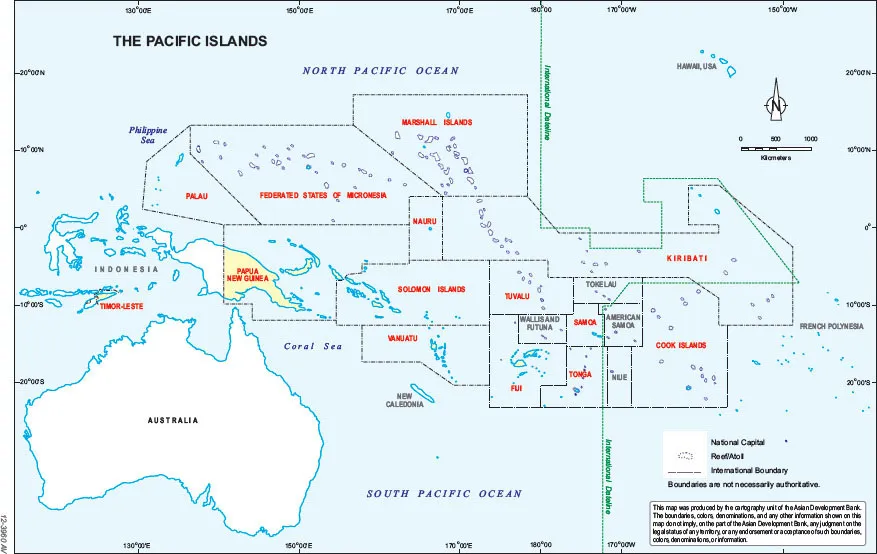
Table 2.1: Geographic and Topographic Profiles of Pacific Countries
With its many islands, the region has an extensive coastline of around 25,000 km that represents approximately 3% of the total world coastline; it is longer than the coastlines of the People’s Republic of China (PRC) and India combined (ADB 2004). More than half of the region’s population lives within a distance of 1.5 km from the shoreline (IOC/UNESCO, IMO, FAO, UNDP 2011). In smaller countries such as Samoa, up to 80% of the total population lives near the coast (Hay and Wedderburn 2011). Most settlements and infrastructure, including airports and centers of government, are located along the coast, thus exposing them to flooding and storm surges.
With Fiji, the Solomon Islands, and PNG as exceptions, most of the island countries in the Pacific have limited surface water and are highly dependent on rain and groundwater resources for their water requirement. Atoll countries and limestone islands have no surface water or streams and are fully dependent on rain and groundwater. Some of the countries are already experiencing significant declines in freshwater supplies. Among the well-known reasons for the decline are deforestation, increasing water demand, erratic rainfall pattern, saltwater intrusion of groundwater, and increasing water pollution. Projected changes in rainfall pattern, accompanied by increasing saltwater intrusion, make the limited water resources of the islands of the region particularly sensitive to climate change. As noted in IPCC’s AR4, water resources in small islands are likely to be seriously compromised (IPCC 2007, Chapter 16).
The Pacific region is home to a rich variety of flora and fauna (ESCAP 2006). In PNG alone, more than 250 species each of mammals, reptiles, and amphibians as well as more than 11,000 species of plants are found. On some islands, 80% or more of the species are found nowhere else on earth. Many species of mammals, birds, plants, reptiles, amphibians, and fishes are already threatened or at risk of extinction. While the region has a remarkably rich and unique set of ecosystems, these systems and the biodiversity they harbor are fragile and threatened. This makes them particularly sensitive to climate change.
II. Demographic and Economic Factors
The Pacific region has a rapidly growing population, taxing resources that may be further pressed by...
Table of contents
- Front Cover
- Title Page
- Copyright Page
- Contents
- Tables and Boxes
- Abbreviations
- Foreword
- Acknowledgments
- Executive Summary
- Chapter 1 Introduction 1
- Chapter 2 Vulnerability of the Pacific Nations to Climate Change
- Chapter 3 Framework and Methodology
- Chapter 4 Climate Scenarios for the Pacific
- Chapter 5 Sectoral Implications of Climate Change in the Pacific
- Chapter 6 Economic Implications of Climate Change in the Pacific
- Chapter 7 Summary and Policy Implications
- Back Cover
Trusted by 375,005 students
Access to over 1.5 million titles for a fair monthly price.
Study more efficiently using our study tools.
Frequently asked questions
Yes, you can cancel anytime from the Subscription tab in your account settings on the Perlego website. Your subscription will stay active until the end of your current billing period. Learn how to cancel your subscription
No, books cannot be downloaded as external files, such as PDFs, for use outside of Perlego. However, you can download books within the Perlego app for offline reading on mobile or tablet. Learn how to download books offline
Perlego offers two plans: Essential and Complete
- Essential is ideal for learners and professionals who enjoy exploring a wide range of subjects. Access the Essential Library with 800,000+ trusted titles and best-sellers across business, personal growth, and the humanities. Includes unlimited reading time and Standard Read Aloud voice.
- Complete: Perfect for advanced learners and researchers needing full, unrestricted access. Unlock 1.5M+ books across hundreds of subjects, including academic and specialized titles. The Complete Plan also includes advanced features like Premium Read Aloud and Research Assistant.
We are an online textbook subscription service, where you can get access to an entire online library for less than the price of a single book per month. With over 1.5 million books across 990+ topics, we’ve got you covered! Learn about our mission
Look out for the read-aloud symbol on your next book to see if you can listen to it. The read-aloud tool reads text aloud for you, highlighting the text as it is being read. You can pause it, speed it up and slow it down. Learn more about Read Aloud
Yes! You can use the Perlego app on both iOS and Android devices to read anytime, anywhere — even offline. Perfect for commutes or when you’re on the go.
Please note we cannot support devices running on iOS 13 and Android 7 or earlier. Learn more about using the app
Please note we cannot support devices running on iOS 13 and Android 7 or earlier. Learn more about using the app
Yes, you can access The Economics of Climate Change in the Pacific by in PDF and/or ePUB format, as well as other popular books in Biological Sciences & Global Warming & Climate Change. We have over 1.5 million books available in our catalogue for you to explore.