For years, Nauru, a small Pacific island nation (population 10,000), benefited from the considerable wealth generated from its only major natural resource, phosphate. However, when that resource was almost exhausted and national assets held under the Nauru Phosphate Royalties Trust had been reduced to relatively minor holdings, the Government of Nauru sought and received assistance from the Asian Development Bank and the Australian Agency for International Development (AusAID) to prepare a National Sustainable Development Strategy to guide future development in the country. This case study examines innovative efforts to strengthen participatory capacity in Nauru to support development of the new strategy, focusing on the design and implementation of a participatory planning process which engendered wide community engagement and included communications with communities about the choices and trade-offs facing them moving forward.
eBook - ePub
Building Capacity through Participation
Nauru National Sustainable Development Strategy
- 35 pages
- English
- ePUB (mobile friendly)
- Available on iOS & Android
eBook - ePub
About this book
Information
BUILDING CAPACITY THROUGH PARTICIPATORY PLANNING
Extreme wealth generated in Nauru over the 25 years since independence resulted in capacities being viewed as goods and services to be purchased. The rapid decline of that wealth in the last decade has resulted in awareness of the need for other types of capacity, including capacity to engage and participate in the effective functioning of households, the public and private sectors, and the nation as a whole.
The participatory process specialist’s experience and background in technology of participation (ToP) methods led him to believe that gaining wide support for an agreed, feasible future and taking steps to implement that future successfully required three critical conditions: (i) genuine and wide engagement and participation of stakeholders in building the components of the development plan; (ii) an experience of engaging in planning that was empowering, even transformational; and (iii) the development of participatory leadership capacity of at least a core group of people to champion ownership at all levels of the National Sustainable Development Strategy (NSDS).
“Participation” of stakeholders in the planning process had to improve the “doing” (skills and capabilities), “knowing” (knowledge and understanding), and “being” (attitudes and values) dimensions of stakeholders, individually and collectively. In other words, participation had to deliver more than a plan, however practical and feasible that plan might be. It also had to develop—in some cases shift—people’s knowledge base and understanding to align with the plan. And the experience from participating in the planning process had to attune, sometimes reframe, people’s historical and cultural attitudes and values. This was to be capacity development by engaging and participating in development planning, and development planning made sustainable by developing capacity to engage and participate.
The community largely viewed formulating and implementing development initiatives as the responsibility of government, while the government largely viewed the community as not having the necessary capacities to be involved. Given the community’s low-level of trust and confidence in the abilities of public sector institutions, it was necessary to ensure that the NSDS, especially its implementation, was not going to be left to government alone. Hence, the need for a new kind of engagement with and participation in development planning, and the creation of a champions group drawn from the public and community sectors and equipped with participatory leadership methods to “champion” the plan and its implementation. If the NSDS were going to be a different “parade” to the future, the champions group would be the marshals of this parade.
Nauru NSDS Process: Enhancing Many Capacities
The NSDS project emphasized the capacity to engage with and participate in development planning. To sustain this capacity beyond the NSDS required the project to focus as well on developing the capacity to lead engagement and participation processes. Hence, the “doing,” “knowing”, and “being” dimensions of engagement, participation, participatory planning, and participatory leadership capacities were targeted. However, other capacities were also being developed or initiated by the NSDS and are described below. Additionally, while this section focuses on a few key capacities, it is important to acknowledge other capacity development efforts initiated on many fronts in Nauru—some as a result of inclusion in the NSDS document, others accelerated by the NSDS process.
Participative Capacity: Participation in Development Planning
Consultation, engagement, and participation in the context of ToP, as practiced during the NSDS project, have the following characteristics.
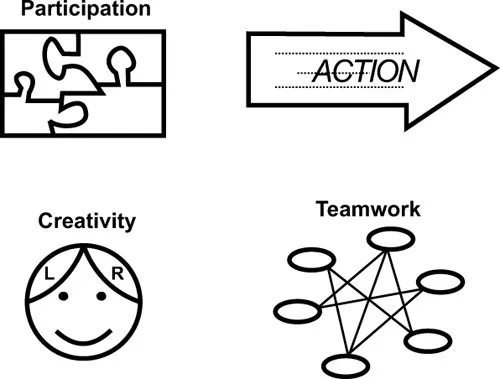
Figure 1: The ToP Principles of Participation
Source: Technology of Participation (ToP) Facilitative Leadership Program.
The ToP principles (Figure 1) describe a participatory process in which the authentic engagement and participation of individuals in a collective setting empowers “new” thinking and leads to collaborative efforts that improve collective capacity to act. In the case of Nauru, this meant enabling stakeholders to fully express their thoughts and ideas about the future development of their country. The second principle has to do with tapping the creative or innovative edges of thinking for, in the words of Albert Einstein, “the significant problems we face today cannot be solved by the same level of thinking that created them.” Third, participation is about collaborative efforts based on the recognition that no one person or interest group has a monopoly on good ideas and often, we do not know who will come up with the breakthrough ideas. Last, participation is about moving the results of thoughts and discussion into action.
Complementing these principles is an understanding of...
Table of contents
- Front Cover
- Title Page
- Copyright Page
- Contents
- Acronyms
- Foreword
- Introduction
- NSDS Project Scope and Capacity Dimensions
- NSDS Project Context
- NSDS Methodology: Framing Capacity Development
- Building Capacity through Participatory Planning
- Key Lessons for the Future
- Back Cover
Trusted by 375,005 students
Access to over 1.5 million titles for a fair monthly price.
Study more efficiently using our study tools.
Frequently asked questions
Yes, you can cancel anytime from the Subscription tab in your account settings on the Perlego website. Your subscription will stay active until the end of your current billing period. Learn how to cancel your subscription
No, books cannot be downloaded as external files, such as PDFs, for use outside of Perlego. However, you can download books within the Perlego app for offline reading on mobile or tablet. Learn how to download books offline
Perlego offers two plans: Essential and Complete
- Essential is ideal for learners and professionals who enjoy exploring a wide range of subjects. Access the Essential Library with 800,000+ trusted titles and best-sellers across business, personal growth, and the humanities. Includes unlimited reading time and Standard Read Aloud voice.
- Complete: Perfect for advanced learners and researchers needing full, unrestricted access. Unlock 1.5M+ books across hundreds of subjects, including academic and specialized titles. The Complete Plan also includes advanced features like Premium Read Aloud and Research Assistant.
We are an online textbook subscription service, where you can get access to an entire online library for less than the price of a single book per month. With over 1.5 million books across 990+ topics, we’ve got you covered! Learn about our mission
Look out for the read-aloud symbol on your next book to see if you can listen to it. The read-aloud tool reads text aloud for you, highlighting the text as it is being read. You can pause it, speed it up and slow it down. Learn more about Read Aloud
Yes! You can use the Perlego app on both iOS and Android devices to read anytime, anywhere — even offline. Perfect for commutes or when you’re on the go.
Please note we cannot support devices running on iOS 13 and Android 7 or earlier. Learn more about using the app
Please note we cannot support devices running on iOS 13 and Android 7 or earlier. Learn more about using the app
Yes, you can access Building Capacity through Participation by Kevin Balm in PDF and/or ePUB format, as well as other popular books in Economics & Sustainable Development. We have over 1.5 million books available in our catalogue for you to explore.