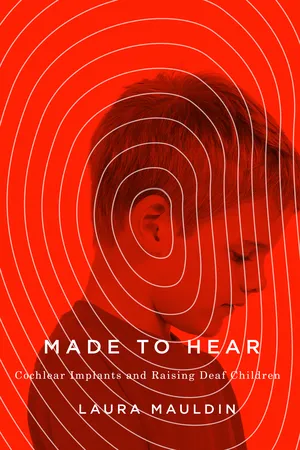
A mother whose child has had a cochlear implant tells Laura Mauldin why enrollment in the sign language program at her daughter’s school is plummeting: “The majority of parents want their kids to talk.” Some parents, however, feel very differently, because “curing” deafness with cochlear implants is uncertain, difficult, and freighted with judgment about what is normal, acceptable, and right. Made to Hear sensitively and thoroughly considers the structure and culture of the systems we have built to make deaf children hear.
Based on accounts of and interviews with families who adopt the cochlear implant for their deaf children, this book describes the experiences of mothers as they navigate the health care system, their interactions with the professionals who work with them, and the influence of neuroscience on the process. Though Mauldin explains the politics surrounding the issue, her focus is not on the controversy of whether to have a cochlear implant but on the long-term, multiyear undertaking of implantation. Her study provides a nuanced view of a social context in which science, technology, and medicine are trusted to vanquish disability—and in which mothers are expected to use these tools. Made to Hear reveals that implantation has the central goal of controlling the development of the deaf child’s brain by boosting synapses for spoken language and inhibiting those for sign language, placing the politics of neuroscience front and center.
Examining the consequences of cochlear implant technology for professionals and parents of deaf children, Made to Hear shows how certain neuroscientific claims about neuroplasticity, deafness, and language are deployed to encourage compliance with medical technology.