- English
- ePUB (mobile friendly)
- Available on iOS & Android
eBook - ePub
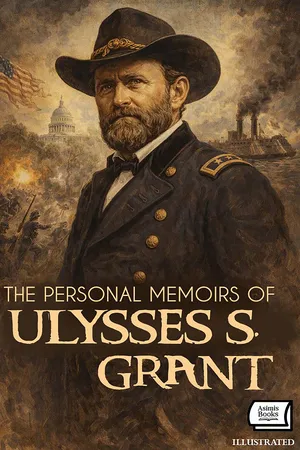
The Personal Memoirs of Ulysses S. Grant. Illustrated
About this book
The Personal Memoirs of Ulysses S. Grant by Ulysses S. Grant is one of the most respected military autobiographies ever written and a cornerstone of American historical literature. Composed in the final years of Grant's life and first published in 1885–1886, these memoirs offer a clear, honest, and remarkably restrained account of the American Civil War from the perspective of the Union's leading general and eighteenth President of the United States.
Grant recounts his early life, military education, and rise through the ranks with simplicity and directness, focusing not on self-glorification but on events, decisions, and outcomes. His detailed descriptions of major campaigns—such as Vicksburg, Shiloh, and the final Appomattox surrender—provide invaluable insight into strategy, leadership, and the realities of war.
What sets these memoirs apart is Grant's lucid, unembellished prose. He writes with precision and humility, acknowledging mistakes while emphasizing cooperation, discipline, and perseverance. His portraits of fellow commanders, including Lincoln, Sherman, and Lee, are balanced and thoughtful, offering a nuanced view of both allies and opponents.
Beyond military history, the memoirs reflect Grant's moral character and sense of duty. They convey his belief in unity, reconciliation, and the preservation of the nation, avoiding bitterness even when discussing former enemies.
Widely praised by historians and writers alike, The Personal Memoirs of Ulysses S. Grant remains a powerful testament to leadership under pressure and a rare example of a great historical figure telling his own story with clarity, integrity, and enduring literary merit.
Trusted by 375,005 students
Access to over 1.5 million titles for a fair monthly price.
Study more efficiently using our study tools.
Information
Subtopic
Political BiographiesTable of contents
- Preface
- Introduction
- Abbreviations
- Preface
- 1. Ancestry — Birth — Boyhood
- 2. West Point — Graduation
- 3. Army Life — Causes of the Mexican War — Camp Salubrity
- 4. Corpus Christi — Mexican Smuggling — Spanish Rule in Mexico — Supplying Transportation
- 5. Trip to Austin — Promotion to Full Second Lieutenant — Army of Occupation
- 6. Advance of the Army — Crossing the Colorado — The Rio Grande
- 7. The Mexican War — The Battle of Palo Alto — The Battle of Resaca de la Palma — Army of Invasion — General Taylor — Movement on Camargo
- 8. Advance on Monterey — The Black Fort — The Battle of Monterey — Surrender of the City
- 9. Political Intrigue — Buena Vista — Movement against Vera Cruz — Siege and Capture of Vera Cruz
- 10. March to Jalapa — Battle of Cerro Gordo — Perote — Puebla — Scott and Taylor
- 11. Advance on the City of Mexico — Battle of Contreras — Assault at Churubusco — Negotiations for Peace — Battle of Molino del Rey — Storming of Chapultepec — San Cosme — Evacuation of the City — Halls of the Montezumas
- 12. Promotion to First Lieutenant — Capture of the City of Mexico — The Army — Mexican Soldiers — Peace Negotiations
- 13. Treaty of Peace — Mexican Bull Fights — Regimental Quartermaster — Trip to Popocatapetl — Trip to the Caves of Mexico
- 14. Return of the Army — Marriage — Ordered to the Pacific Coast — Crossing the Isthmus — Arrival at San Francisco
- 15. San Francisco — Early California Experiences — Life on the Pacific Coast — Promoted Captain — Flush Times in California
- 16. Resignation — Private Life — Life at Galena — The Coming Crisis
- 17. Outbreak of the Rebellion — Presiding at a Union Meeting — Mustering Officer of State Troops — Lyon at Camp Jackson — Services Tendered to the Government
- 18. Appointed Colonel of the 21st Illinois — Personnel of the Regiment — General Logan — March to Missouri — Movement against Harris at Florida, Mo. — General Pope in Command — Stationed at Mexico, Mo.
- 19. Commissioned Brigadier-General — Command at Ironton, Mo. — Jefferson City — Cape Girardeau — General Prentiss — Seizure of Paducah — Headquarters at Cairo
- 20. General Fremont in Command — Movement against Belmont — Battle of Belmont — A Narrow Escape — After the Battle
- 21. General Halleck in Command — Commanding the District of Cairo — Movement on Fort Henry — Capture of Fort Henry
- 22. Investment of Fort Donelson — The Naval Operations — Attack of the Enemy — Assaulting the Works — Surrender of the Fort
- 23. Promoted Major-General of Volunteers — Unoccupied Territory — Advance upon Nashville — Situation of the Troops — Confederate Retreat — Relieved of the Command — Restored to the Command — General Smith
- 24. The Army at Pittsburg Landing — Injured by a Fall — The Confederate Attack at Shiloh — The First Day’s Fight at Shiloh — General Sherman — Condition of the Army — Close of the First Day’s Fight — The Second Day’s Fight — Retreat and Defeat of the Confederates
- 25. Struck by a Bullet — Precipitate Retreat of the Confederates — Intrenchments at Shiloh — General Buell — General Johnston — Remarks on Shiloh
- 26. Halleck Assumes Command in the Field — The Advance upon Corinth — Occupation of Corinth — The Army Separated
- 27. Headquarters Moved to Memphis — On the Road to Memphis — Escaping Jackson — Complaints and Requests — Halleck Appointed Commander-in-Chief — Return to Corinth — Movements of Bragg — Surrender of Clarksville — The Advance upon Chattanooga — Sheridan Colonel of a Michigan Regiment
- 28. Advance of Van Dorn and Price — Price Enters Iuka — Battle of Iuka
- 29. Van Dorn’s Movements — Battle of Corinth — Command of the Department of the Tennessee
- 30. The Campaign against Vicksburg — Employing the Freedmen — Occupation of Holly Springs — Sherman Ordered to Memphis — Sherman’s Movements down the Mississippi — Van Dorn Captures Holly Springs — Collecting Forage and Food
- 31. Headquarters Moved to Holly Springs — General McClernand in Command — Assuming Command at Young’s Point — Operations above Vicksburg — Fortifications about Vicksburg — The Canal — Lake Providence — Operations at Yazoo Pass
- 32. The Bayous West of the Mississippi — Criticisms of the Northern Press — Running the Batteries — Loss of the Indianola— Disposition of the Troops
- 33. Attack on Grand Gulf — Operations below Vicksburg
- 34. Capture of Port Gibson — Grierson’s Raid — Occupation of Grand Gulf — Movement up the Big Black — Battle of Raymond
- 35. Movement against Jackson — Fall of Jackson — Intercepting the Enemy — Battle of Champion’s Hill
- 36. Battle of Black River Bridge — Crossing the Big Black — Investment of Vicksburg — Assaulting the Works
- 37. Siege of Vicksburg
- 38. Johnston’s Movements — Fortifications at Haines’ Bluff — Explosion of the Mine — Explosion of the Second Mine — Preparing for the Assault — The Flag of Truce — Meeting with Pemberton — Negotiations for Surrender — Accepting the Terms — Surrender of Vicksburg
- 39. Retrospect of the Campaign — Sherman’s Movements — Proposed Movement upon Mobile — A Painful Accident — Ordered to Report at Cairo
- 40. First Meeting with Secretary Stanton — General Rosecrans — Commanding Military Division of Mississippi — Andrew Johnson’s Address — Arrival at Chattanooga
- 41. Assuming the Command at Chattanooga — Opening a Line of Supplies — Battle of Wauhatchie — On the Picket Line
- 42. Condition of the Army — Rebuilding the Railroad — General Burnside’s Situation — Orders for Battle — Plans for the Attack — Hooker’s Position — Sherman’s Movements
- 43. Preparations for Battle — Thomas Carries the First Line of the Enemy — Sherman Carries Missionary Ridge — Battle of Lookout Mountain — General Hooker’s Fight
- 44. Battle of Chattanooga — A Gallant Charge — Complete Rout of the Enemy — Pursuit of the Confederates — General Bragg — Remarks on Chattanooga
- 45. The Relief of Knoxville — Headquarters Moved to Nashville — Visiting Knoxville — Cipher Dispatches — Withholding Orders
- 46. Operations in Mississippi — Longstreet in East Tennessee — Commissioned Lieutenant-General — Commanding the Armies of the United States — First Interview with President Lincoln
- 47. The Military Situation — Plans for the Campaign — Sheridan Assigned to Command of the Cavalry — Flank Movements — Forrest at Fort Pillow — General Banks’s Expedition — Colonel Mosby — An Incident of the Wilderness Campaign
- 48. Commencement of the Grand Campaign — General Butler’s Position — Sheridan’s First Raid
- 49. Sherman’s Campaign in Georgia — Siege of Atlanta — Death of General McPherson — Attempt to Capture Andersonville — Capture of Atlanta
- 50. Grand Movement of the Army of the Potomac — Crossing the Rapidan — Entering the Wilderness — Battle of the Wilderness
- 51. After the Battle — Telegraph and Signal Service — Movement by the Left Flank
- 52. Battle of Spottsylvania — Hancock’s Position — Assault of Warren’s and Wright’s Corps — Upton Promoted on the Field — Good News from Butler and Sheridan
- 53. Hancock’s Assault — Losses of the Confederates — Promotions Recommended — Discomfiture of the Enemy — Ewell’s Attack — Reducing the Artillery
- 54. Movement by the Left Flank — Battle of North Anna — An Incident of the March — Moving on Richmond — South of the Pamunkey — Position of the National Army
- 55. Advance on Cold Harbor — An Anecdote of the War — Battle of Cold Harbor — Correspondence with Lee — Retrospective
- 56. Left Flank Movement across the Chickahominy and James — General Lee — Visit to Butler — The Movement on Petersburg — The Investment of Petersburg
- 57. Raid on the Virginia Central Railroad — Raid on the Weldon Railroad — Early’s Movement upon Washington — Mining the Works before Petersburg — Explosion of the Mine before Petersburg — Campaign in the Shenandoah Valley — Capture of the Weldon Railroad
- 58. Sheridan’s Advance — Visit to Sheridan — Sheridan’s Victory in the Shenandoah — Sheridan’s Ride to Winchester — Close of the Campaign for the Winter
- 59. The Campaign in Georgia — Sherman’s March to the Sea — War Anecdotes — The March on Savannah — Investment of Savannah — Capture of Savannah
- 60. The Battle of Franklin — The Battle of Nashville
- 61. Expedition against Fort Fisher — Attack on the Fort — Failure of the Expedition — Second Expedition against the Fort — Capture of Fort Fisher
- 62. Sherman’s March North — Sheridan Ordered to Lynchburg — Canby Ordered to Move against Mobile — Movements of Schofield and Thomas — Capture of Columbia, South Carolina — Sherman in the Carolinas
- 63. Arrival of the Peace Commissioners — Lincoln and the Peace Commissioners — An Anecdote of Mr. Lincoln — The Winter before Petersburg — Sheridan Destroys the Railroad — Gordon Carries the Picket Line — Parke Recaptures the Line — The Battle of White Oak Road
- 64. Interview with Sheridan — Grand Movement of the Army of the Potomac — Sheridan’s Advance on Five Forks — Battle of Five Forks — Parke and Wright Storm the Enemy’s Line — Battles before Petersburg
- 65. The Capture of Petersburg — Meeting President Lincoln in Petersburg — The Capture of Richmond — Pursuing the Enemy — Visit to Sheridan and Meade
- 66. Battle of Sailor’s Creek — Engagement at Farmville — Correspondence with General Lee — Sheridan Intercepts the Enemy
- 67. Negotiations at Appomattox — Interview with Lee at McLean’s House — The Terms of Surrender — Lee’s Surrender — Interview with Lee after the Surrender
- 68. Morale of the Two Armies — Relative Conditions of the North and South — President Lincoln Visits Richmond — Arrival at Washington — President Lincoln’s Assassination — President Johnson’s Policy
- 69. Sherman and Johnston — Johnston’s Surrender to Sherman — Capture of Mobile — Wilson’s Expedition — Capture of Jefferson Davis — General Thomas’s Qualities — Estimate of General Canby
- 70. The End of the War — The March to Washington — One of Lincoln’s Anecdotes — Grand Review at Washington — Characteristics of Lincoln and Stanton — Estimate of the Different Corps Commanders
- Conclusion
Frequently asked questions
Yes, you can cancel anytime from the Subscription tab in your account settings on the Perlego website. Your subscription will stay active until the end of your current billing period. Learn how to cancel your subscription
No, books cannot be downloaded as external files, such as PDFs, for use outside of Perlego. However, you can download books within the Perlego app for offline reading on mobile or tablet. Learn how to download books offline
We are an online textbook subscription service, where you can get access to an entire online library for less than the price of a single book per month. With over 1.5 million books across 990+ topics, we’ve got you covered! Learn about our mission
Look out for the read-aloud symbol on your next book to see if you can listen to it. The read-aloud tool reads text aloud for you, highlighting the text as it is being read. You can pause it, speed it up and slow it down. Learn more about Read Aloud
Yes! You can use the Perlego app on both iOS and Android devices to read anytime, anywhere — even offline. Perfect for commutes or when you’re on the go.
Please note we cannot support devices running on iOS 13 and Android 7 or earlier. Learn more about using the app
Please note we cannot support devices running on iOS 13 and Android 7 or earlier. Learn more about using the app
Yes, you can access The Personal Memoirs of Ulysses S. Grant. Illustrated by Ulysses S. Grant in PDF and/or ePUB format. We have over 1.5 million books available in our catalogue for you to explore.