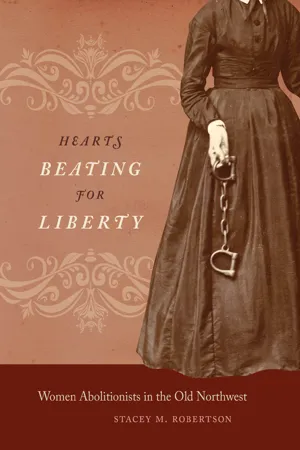
Challenging traditional histories of abolition, this book shifts the focus away from the East to show how the women of Ohio, Indiana, Illinois, Michigan, and Wisconsin helped build a vibrant antislavery movement in the Old Northwest.
Stacey Robertson argues that the environment of the Old Northwest — with its own complicated history of slavery and racism — created a uniquely collaborative and flexible approach to abolitionism. Western women helped build this local focus through their unusual and occasionally transgressive activities. They plunged into Liberty Party politics, vociferously supported a Quaker-led boycott of slave goods, and tirelessly aided fugitives and free blacks in their communities. Western women worked closely with male abolitionists, belying the notion of separate spheres that characterized abolitionism in the East. The contested history of race relations in the West also affected the development of abolitionism in the region, necessitating a pragmatic bent in their activities. Female antislavery societies focused on eliminating racist laws, aiding fugitive slaves, and building and sustaining schools for blacks. This approach required that abolitionists of all stripes work together, and women proved especially adept at such cooperation.
- 320 pages
- English
- ePUB (mobile friendly)
- Available on iOS & Android
eBook - ePub
About this book
Information
CHAPTER 1
Grassroots Activism and Female Antislavery Societies
The two knew each other by reputation only. Lucy Wright, sister of famed abolitionist Elizur Wright, had just returned home to Tallmadge, Ohio, after spending nearly two years working as a teacher in African American schools in Cincinnati.1 Betsey Mix Cowles, who lived only eighty miles from Wright, had recently founded the Ashtabula County Female Anti-Slavery Society, which eventually became the largest and most influential women's group in the Old Northwest.2 In March 1836, Wright wrote to congratulate Cowles for her zealous advocacy of antislavery and to offer encouragement. A year before the Grimké sisters would lecture to “promiscuous” audiences in New York and Boston and four years before Abby Kelley would scandalize many with her election to a leadership position in the American Anti-Slavery Society, Wright understood the burgeoning opposition to women's organized participation in the movement: “Many curl the lip and cast the look of scorn when woman associate their efforts in this cause,” she warned. “They fear the strength that union gives so they cry, out of your sphere ladies, you have forgotten the modesty and retirement belonging to your sex.” Ever optimistic, Wright advised that the “taunts of opponents” could be helpful if they “incline us to temper our ardor with prudence and study wisdom in our measures more than we otherwise should, and if [they] beget in us patience, and meekness under insult it will be worth more than scores of unmeaning compliments.” As an experienced abolitionist and a founder of the fast-growing Portage County Female Anti-Slavery Society, Wright had learned that opponents were more likely to be won over with “prudence” and “patience” than with intransigent resistance. Wright concluded her letter by wishing for a mutually beneficial friendship: “We should like well to have company in this matter.”3
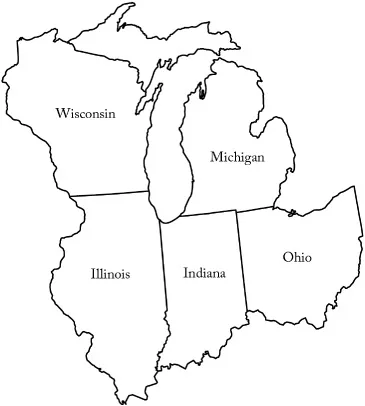
The Old Northwest. Map created by Brian Powers and William “Wes” Skidmore.
The Ashtabula and Portage County women's abolitionist societies would become closely linked, as Wright desired, with both experiencing explosive growth during their first year. The Ashtabula society enrolled nearly 80 women at its inaugural meeting, and within twelve months it was bursting at the seams with more than 450 members.4 The Portage group increased tenfold, from 37 to 390 by August 1836.5 No other female antislavery society in the Northwest or Northeast rivaled them in numbers; the Philadelphia Female Anti-Slavery Society included fewer than 100 members in 1836, while the famed Boston group boasted only 250 members that year.6The New York–based American Anti-Slavery Society highlighted the two Ohio groups in its monthly publication, the Anti-Slavery Record. After disparaging those who would “hate” women for their abolitionism, the Record “rejoiced” at the “rapid multiplication” of female antislavery societies in Ohio, exclaiming, “Our hearts are cheered” at the success of the two Western Reserve groups.7
The efficient and successful Ashtabula and Portage organizations well represent the cooperative, pragmatic abolitionism that came to characterize western female antislavery. As Wright suggested in her letter to Cowles, western women abolitionists favored prudence and patience over zealousness and rigidity. They understood that as women taking an unpopular position on a controversial political issue, they stood on shaky ground. Western women worked toward pragmatic abolitionism by carefully choosing moderate antislavery methods, including a savvy partnership with men, an unprecedented campaign in support of black education, and a nationally influential petition drive. Moreover, in a distinctly western tradition, Ohio women banded together at the county and state levels to create a unified, powerful antislavery voice. Though their membership was almost entirely white, Ohio women's groups also proved deeply committed to racial equality.8 These Ohio female antislavery societies influenced the development of women's abolition groups in the remainder of the Old Northwest. In the 1840s, more than one hundred such organizations emerged in Indiana, Michigan, Illinois, and Wisconsin. Even as eastern female groups became embroiled in divisive ideological battles, western women embraced cooperation and practical change as their maxim.
Getting Organized
While the colonization movement held sway among those who opposed slavery during the 1820s, William Lloyd Garrison's call for immediate emancipation quickly took hold in the Buckeye State. By 1836, Ohio claimed more antislavery groups than any other state, accounting for 25 percent of the total.9 Several individuals and events catalyzed this explosion, much of which was centered in southern Ohio.10 Though abolitionism would take root primarily in western and northern Ohio, the border town of Cincinnati initially experienced the most antislavery activity. The city's large African American community worked diligently to aid fugitive slaves and to undermine the institution through social and economic success.11 James G. Birney's courageous attempt to publish an antislavery newspaper in Cincinnati and the violent mob opposition that ensued turned many Ohioans into abolitionists.12 Finally, when Theodore Weld and a group of ministerial students chose to leave Cincinnati's Lane Seminary in 1834 because it suppressed their abolitionism, the entire state experienced the aftereffects. Oberlin College received a number of the former Lane students, opened its doors to African American students, and quickly became well known as an abolitionist stronghold. Many “Lane rebels” became public advocates for abolitionism, blanketing Ohio with their message of freedom and equality.13 Early on, they focused attention particularly on women's role in the movement.14
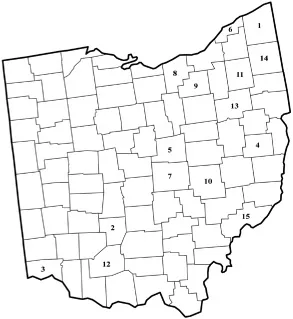
Ohio Female Antislavery Societies, 1835–38. Map created by Brian Powers and William “Wes” Skidmore.
1. ASHTABULA COUNTY
Andover (1836)
Ashtabula (1835)
Cherry Valley (1836)
Geneva (1835)
Harpersfield and Austinburg (1836)
Morgan (1836)
New Lyme (1836)
Rome (1836)
Windsor (1836)
2. FAYETTE COUNTY
County-Wide (1837)
Bloomingburg (1837)
3. HAMILTON COUNTY
Cincinnati (1835)
4. HARRISON COUNTY
Cadiz (1837)
5. KNOX COUNTY
Mount Vernon (1835)
6. LAKE COUNTY
Madison (1838)
7. LICKING COUNTY
Madison (1835)
St. Albans (1836)
8. LORAIN COUNTY
Elyria (1836)
Oberlin (1835)
9. MEDINA COUNTY
Abbeyville (1836)
10. MUSKINGUM COUNTY
County-Wide (1836)
11. PORTAGE COUNTY
County-Wide (1836)
12. ROSS COUNTY
Concord (1838)
13. STARK COUNTY
Canton (1836)
14. TRUMBULL COUNTY
Vernon (1835)
15. WASHINGTON COUNTY
Unionville (1838)
A small group of “sisters” who taught in African American schools in Cincinnati brought some of this attention to women. These teachers made quite an impression on the Lane rebels. The Cincinnati educational experiment began when two young men, Augustus Wattles and Marius Robinson, “felt so deeply” the desperate situation of local African Americans that they abandoned Lane Seminary in 1834 to devote themselves full time to the educational needs of the city's black community.15 Several equally devoted women abolitionists soon joined Wattles and Robinson. Responding to a plea in the New York Evangelist to help educate Cincinnati's young black women, Emeline Bishop, Susan Lowe, Phebe Mathews, and Lucy Wright moved to the Queen City in 1834. Several others, including Ohio-born Emily Rakestraw, would join them within a few months. These women lived, worked, and socialized among local African Americans. Their male colleagues expressed awe at the women's devotion. “The Sisters are doing nobly,” exclaimed Lane rebel Samuel Wells. “They are everywhere received with open arms. They visit, eat, and sleep with their people and are exerting a powerful influence in correcting their domestic habits.”16 Most of the sisters received little or no compensation for their work and thus went into debt during their time in Cincinnati.17 They often worked very long days with little respite. “Since you have been in Cincinnati you have taxed your constitution beyond its power of endurance,” Marius Robinson warned his wife, Emily.18 In response to Weld's concern that the women “do not take recreation enough,” Bishop bluntly replied, “We have no time to play or laugh or ramble on the hills that surround us…. There is now, particularly now, so much that demands attention.”19
Witnessing considerable self-sacrifice and boundless energy on the part of the Cincinnati sisters, the Lane rebels became strong advocates of women's participation in abolition. When Weld, Wattles, Robinson, and a few others began lecturing across Ohio, they shared with their audiences this respect and enthusiasm for women's important role in the movement. However, although the Lane men helped to plant female abolitionism in Ohio, women had already tilled the ground.20 By 1838, Ohio alone had at least thirty women's abolitionist groups, with more than one hundred others elsewhere in the North.21
Cowles, a savvy organizer, helped construct many of these groups. Raised in the small town of Austinburg, in Ashtabula County in the Western Reserve, Cowles understood the difficulty of building a reform community in rural Ohio. The population of Ashtabula County in the 1830s remained below fifteen thousand, though it would nearly double over the next two decades. Most residents were farmers, but the economy was beginning to diversify, with professionals, bankers, and skilled artisans slowly moving into the area.22 As one scholar argues, “Ohio was a world defined by the proliferation of villages as commercial crossroads sporting banks, stores, churches, and schools, all of them vying to acquire the keys to growth and prosperity.”23 In the 1830s, however, most citizens were focused on making a living on their farms or on finding consumers for their products, with little time left for activism. Residents often lived miles away from one another, making meetings difficult to organize. Recognizing these obstacles, Cowles and her fellow antislavery converts in Austinburg decided to create a county organization that would meet on a quarterly basis in different locations. This organization would rely heavily on correspondence among the various auxiliaries to maintain its vitality and focus. Local groups would meet more often at convenient sites. With Cowles as its guiding force, the Ashtabula County Female Anti-Slavery Society became Ohio's most energetic, successful abolition group in the mid-1830s.24
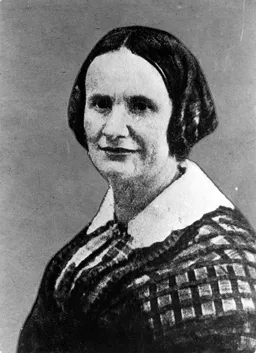
Betsey Mix Cowles, 1840. Courtesy of Oberlin College Archives.
Founded in the fall of 1835, several months before the Oberlin Female Anti-Slavery Society, the sensible Ashtabula group focused on growth through networking.25 Reaching out to nearby friends, relatives, and those with reform inclinations, Cowles immediately began a writing campaign to spur the development of more groups across Ashtabula County. She instructed women in the basics of antislavery organizing and tallied the movement's growth in her region. She asked for specific information about the number and names of participants, their activities, and their successes. She gave advice about holding concerts, prayers groups, and petitioning. Without leaving her small town, she became a one-woman antislavery organizer. Even as Weld and his band of Lane rebels traipsed across the state beating the antislavery drum, Cowles inspired hundreds of women across western Ohio to endure social scorn and embrace abolitionism. With sisterly affection and practical guidance, she brought women out of their homes and into civil society.
The women of the Western Reserve took pleasure and motivation from their interaction with Cowles. “I wish much to hear how the cause prospers with you,” wrote Wright to Cowles.26 “We wish to avail ourselves of your experience and correspondence.” One of Cowles's most important lessons was the effectiveness of organizing at the county level, a message Wright took to heart. By the fall of 1835, she was working with Ravenna resident Sarah Carpenter to construct a female group in their county. Carpenter, who had been converted to abolition after hearing a lecture by Weld, begged him to return to Ravenna to attend the group's organizational meeting, telling him, “I am confident not a stroke will be struck, not a finger will be lifted if you do not come.”27 But Carpenter belied that conclusion in the same letter, explaining that she had already met with the area's most “influential Ladies” and found a “united expression” in favor of forming a county organization. A few months later, several hundred women met in Ravenna to form the Portage County Ladies Anti-Slavery Society, with Lane rebel James Thome regaling the women with a lively address at their inaugural gathering.28 Despite violent mob attacks at nearby antislavery meetings—in Middlebury, abolitionists were pelted with rotten eggs and broken glass—the women insisted on their right to organize.29 “It is peculiarly proper that woman should sympathize with the afflicted and oppressed,” they proclaimed.30 Wright served as the group's first secretary. The Portage organization came to rival the Ashtabula group in both size and success, taking lessons from Cowles in how to organize effectively as well as in the importance of both regional and national networking. One o...
Table of contents
- Cover Page
- Hearts Beating For Liberty
- Copyright Page
- Dedication
- Contents
- Illustrations
- Acknowledgments
- Introduction
- CHAPTER 1 Grassroots Activism and Female Antislavery Societies
- CHAPTER 2 Abolitionist Women and the Liberty Party
- CHAPTER 3 Free Produce in the Old Northwest
- CHAPTER 4 Antislavery Fairs, Cooperation, and Community Building
- CHAPTER 5 Women Lecturers and Radical Antislavery
- CHAPTER 6 Abolitionists and Fugitive Slaves
- CHAPTER 7 Woman's Rights and Abolition in the West
- Afterword
- Notes
- Bibliography
- Index
Trusted by 375,005 students
Access to over 1.5 million titles for a fair monthly price.
Study more efficiently using our study tools.
Frequently asked questions
Yes, you can cancel anytime from the Subscription tab in your account settings on the Perlego website. Your subscription will stay active until the end of your current billing period. Learn how to cancel your subscription
No, books cannot be downloaded as external files, such as PDFs, for use outside of Perlego. However, you can download books within the Perlego app for offline reading on mobile or tablet. Learn how to download books offline
Perlego offers two plans: Essential and Complete
- Essential is ideal for learners and professionals who enjoy exploring a wide range of subjects. Access the Essential Library with 800,000+ trusted titles and best-sellers across business, personal growth, and the humanities. Includes unlimited reading time and Standard Read Aloud voice.
- Complete: Perfect for advanced learners and researchers needing full, unrestricted access. Unlock 1.5M+ books across hundreds of subjects, including academic and specialized titles. The Complete Plan also includes advanced features like Premium Read Aloud and Research Assistant.
We are an online textbook subscription service, where you can get access to an entire online library for less than the price of a single book per month. With over 1.5 million books across 990+ topics, we’ve got you covered! Learn about our mission
Look out for the read-aloud symbol on your next book to see if you can listen to it. The read-aloud tool reads text aloud for you, highlighting the text as it is being read. You can pause it, speed it up and slow it down. Learn more about Read Aloud
Yes! You can use the Perlego app on both iOS and Android devices to read anytime, anywhere — even offline. Perfect for commutes or when you’re on the go.
Please note we cannot support devices running on iOS 13 and Android 7 or earlier. Learn more about using the app
Please note we cannot support devices running on iOS 13 and Android 7 or earlier. Learn more about using the app
Yes, you can access Hearts Beating for Liberty by Stacey M. Robertson in PDF and/or ePUB format, as well as other popular books in Social Sciences & North American History. We have over 1.5 million books available in our catalogue for you to explore.