Drawing on scores of interviews with black and white tobacco workers in Winston-Salem, North Carolina, Robert Korstad brings to life the forgotten heroes of Local 22 of the Food, Tobacco, Agricultural and Allied Workers of America-CIO. These workers confronted a system of racial capitalism that consigned African Americans to the basest jobs in the industry, perpetuated low wages for all southerners, and shored up white supremacy.
Galvanized by the emergence of the CIO, African Americans took the lead in a campaign that saw a strong labor movement and the reenfranchisement of the southern poor as keys to reforming the South — and a reformed South as central to the survival and expansion of the New Deal. In the window of opportunity opened by World War II, they blurred the boundaries between home and work as they linked civil rights and labor rights in a bid for justice at work and in the public sphere.
But civil rights unionism foundered in the maelstrom of the Cold War. Its defeat undermined later efforts by civil rights activists to raise issues of economic equality to the moral high ground occupied by the fight against legalized segregation and, Korstad contends, constrains the prospects for justice and democracy today.
eBook - ePub
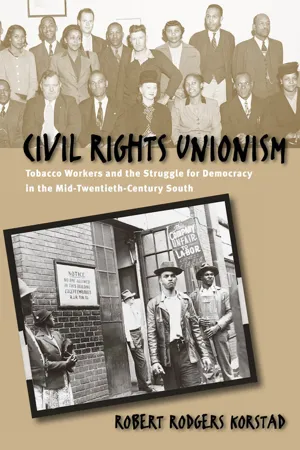
Civil Rights Unionism
Tobacco Workers and the Struggle for Democracy in the Mid-Twentieth-Century South
- 576 pages
- English
- ePUB (mobile friendly)
- Available on iOS & Android
eBook - ePub
Civil Rights Unionism
Tobacco Workers and the Struggle for Democracy in the Mid-Twentieth-Century South
About this book
Information
CHAPTER ONE Those Who Were Not Afraid
At dawn on June 17, 1943, the haze that has developed during the cool early morning hours slowly begins to burn away. Seen from atop the R. J. Reynolds Building, far above the trees and church steeples, the city of Winston-Salem, North Carolina, slowly comes alive. The heat wave of the past two weeks continues. The ever-present smell of tobacco fills the air, a sickly-sweet odor that ties all the city’s inhabitants to the giant company.
In the valley known as Monkey Bottom on the east side of town, men and women emerge from dilapidated shotgun houses and slowly begin their ascent by foot up Third, Fourth, and Fifth Streets to the R. J. Reynolds Tobacco Company, the largest tobacco manufacturing complex in the world. Farther to the east, the buses of the black-owned Safe Bus Company make their rounds. At each stop Reynolds employees climb aboard, joined by hundreds of household workers headed for the white homes of Winston-Salem. From the north and south of town come white Reynolds employees, some on foot, some in cars, and some riding Duke Power buses. More white workers stream in from the foothills of the Blue Ridge Mountains to the west, in cars with four and five passengers. Many of these daily migrants from Forsyth, Stokes, Wilkes, and Yadkin Counties have been up since daybreak, tending to the livestock on their farms or putting in an hour on their own tobacco crop before leaving for work.1
It is Thursday, and the increased workload in place since early May is taking its toll. Black and white workers move slowly into separate lines as they file through the factory gates for the 7:30 A.M. starting time. They barely notice the “White only” and “Colored” markers at each of the seventy-two entrances, even as they obey and absorb these vivid reminders of the segregated world they all inhabit.2
Other Reynolds employees are readying themselves for the day ahead as well. On his 120-acre farm in western Winston-Salem, John Clarke Whitaker, vice president of the company, glances at the headlines in the Winston-Salem Journal: the Allies had attacked Italy, and Churchill was planning his Balkan drive. The war was going well, but it was causing problems for tobacco manufacturers. The demand for cigarettes far exceeded all possible production; the military alone bought 20 percent of the company’s product. Yet the company found new machinery almost impossible to obtain. The labor shortage in the Carolina Piedmont also threatened the green leaf tobacco season that began in August. Reynolds needed 1,500 seasonal workers, and many who traditionally filled these positions had joined the armed forces or secured war-industry jobs.3
The son of a local tobacco manufacturer, John Whitaker had begun working for Reynolds in 1913 after graduating from the University of North Carolina, and he prided himself on having operated Reynolds’s first cigarette-making machine. He joined the navy during World War I and then returned to Winston-Salem to head the company’s new employment office. He became vice president in charge of manufacturing in 1937 and fifteen years later would become chairman of the company. Whitaker knew the ins and outs of the Reynolds Tobacco Company firsthand. He was worried about the labor shortages and aware that his employees were being pushed to work harder than ever before.4
Theodosia Gaither Simpson was one those overworked employees. A slender young African American woman, Simpson was fated to be John Whitaker’s antagonist. The two rivals, each with deep roots in North Carolina, shared a strong sense of family and a bedrock faith in education. Theodosia Simpson’s maternal grandfather moved from nearby Mocksville to teach school in Forsyth County. The rest of the family found work in town at Reynolds. Theodosia seemed destined to follow in the footsteps of her grandfather, but in 1936 the Depression forced her to drop out of Winston-Salem Teachers College after one year and go to work in the tobacco stemmeries to help support her family. Like Whitaker, Simpson knew all about tobacco production, indeed, more than she cared to know. This morning she caught the bus at the corner near her apartment on North Cherry Street, where she and her husband, Buck Simpson, lived, and headed reluctantly for her job on the fifth floor in the stemmery of Plant Number 65.5
African American women, ranging in age from late teens to sixties, performed almost all the stemming in the Reynolds plants. They removed the hard center core from the tobacco leaf, a key step in the process that transformed the aged tobacco leaves into cigarettes, smoking tobacco, and chewing tobacco. Until the mid-1930s, hand stemming predominated; by 1943 most stemmers worked on a machine that cut the leaf away from the stem.
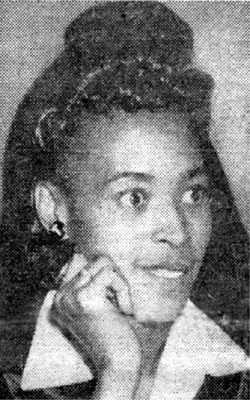
Theodosia Gaither Simpson (UCAPAWA News)
Three women worked at each of the fifth floor’s sixty-six stemming machines. Black men from the nearby casing room brought the tobacco to the machines in large boxes. One woman removed a “hand” of tobacco from the box, untied it, and passed it on to a coworker who spread the leaves out on top of the machine. A third woman fed the tobacco onto a moving chain that carried it between two circular knives that cut out the stem. Each job required dexterity and intense concentration. The room was hot, the work numbingly repetitive, and the dust from the leaf covered everyone from head to foot by the end of the day. The tobacco moved continuously, with the speed of the work in the stemmery geared to the needs of the manufacturing division it supplied. But the manufacturing division also depended on the product from the stemmery, a fact that made the women stemmers a linchpin in the entire production process.6
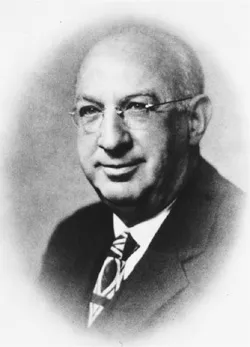
John Clarke Whitaker (Forsyth County Public Library Photograph Collection)
By 1943, workers at Reynolds had gained a modicum of protection under the 1938 Fair Labor Standards Act, which mandated a forty-hour week and a minimum wage of forty cents per hour plus time-and-a-half for overtime. The work was regular, but the $16 to $20 a week that most women took home still amounted to only half the annual income the federal government calculated as a “minimum subsistence of living” in cities like Winston-Salem. Few stemmers made more than ten cents above minimum wage, even those who had worked at Reynolds for many years. The company manipulated small wage differentials to create divisions among the workers and encourage dependence on the foreman’s goodwill.7
Reynolds had responded to the soaring wartime demand for cigarettes by speeding up production and then, in early May, by jacking up quotas throughout the factory. The foremen and subforemen who walked the lines of machines hour after hour, checking the work and disciplining the women, saw nothing out of the ordinary. But beneath the surface lay a hidden reality of unrest and self-organization that had begun in 1942 when a small but dedicated group of rank-and-file workers and organizers from the United Cannery, Agricultural, Packing, and Affiliated Workers of America–Congress of Industrial Organizations (UCAPAWA-CIO) formed the Tobacco Workers Organizing Committee (TWOC) and slowly began to sign up members.8
“We was catching so much hell in Reynolds that we had to do something,” said Geneva McClendon, a close friend of Theodosia Simpson and one of the small group of union supporters in Plant Number 65 in 1943. “In the first place they gave you a great big workload, more than you could do,” McClendon continued. “Instead of cutting down on the boxes of work, if the foreman discovered a box not tightly packed, he would roll it back to the casing room to be repacked. If you’d tell them they put too much work on you, they’d fire you. And then they stood over you and cussed you out about doing it: ‘If you can’t get this work out, get your clothes and get out.’ . . . Everybody would almost cry every day the way they would work you and talk to you. Working conditions was so bad you needed God and a union.” Finally, McClendon remembered, “it got so we wasn’t going to take it any more; we had had it.”9
Sit-down
The confrontation erupted on the hot, muggy morning of June 17. Theodosia Simpson remembered exactly how it began. “The lady who worked on the machine next to me, she was a widow with five kids, and she was sick that day. Oh, you could get sick up there in a minute, the way you had to work. She couldn’t keep up with her work.” Other workers would often pick up the slack when one of their number fell behind, but “she didn’t have too good a relationship with the other two people on the machine, so they weren’t helping her. The foreman came up and told her that if she didn’t catch up, ‘there was the door that the carpenter left.’ She started crying because she had these children to rear and nobody working but her. And that sort of got next to me. I called a couple of people I thought I could trust ‘down house,’ down to the lavatory. I said, ‘When we come in here tomorrow, let’s not work until we get some understanding on how these people are going to be treated.’” The line foreman, Will, found out about the women’s plans, apparently from someone in Simpson’s group. Recalled Geneva McClendon, “He came around telling everybody, ‘We hear there’s going to be a work stoppage. You better not do that. You’ll lose your job.’ And that frightened a few people. So at lunchtime we got together, and decided instead of doing it tomorrow morning, let’s do it after lunch.”10
The conspirators told Leon Edwards and the other men who worked in the adjoining casing room about the planned strike. “They said, ‘We want you all to stick with us,’” Edwards remembered. When the women filed back in after their lunch break, Edwards saw that they really meant business. The company “had a little whistle they’d blow [when it was time to start work] and when that whistle went ‘whwhwh,’ them women about-faced just the same as if they were in the army. Everyone turned their back to the machine. You [never saw] anybody turn so quick.”11
“The foreman looked at us as if we were crazy,” McClendon remembered. “He pulled the whistle again and nobody moved. He asked what was wrong. Several of us told him that we weren’t going to work until our working conditions were improved, our workload cut to where we could get our work out, and we wanted our wages equalized. The foreman said he couldn’t do nothing and if we didn’t want to work to get out. We told him we wanted to work but not under those conditions and if he couldn’t do nothing we would like to talk to the person that did have the authority to remedy the situation.”12
At that moment, the conflict took a dramatic turn. James McCardell, a thirty-eight-year-old “draft boy” who had worked for fifteen years putting boxes of tobacco on the women’s machines, stepped forward to make it clear to the foreman that the men from the casing room were going to back the stemmers’ refusal to work. “If these women’ll stand up for their rights, I’m with them,” he proclaimed. No sooner had the words left McCardell’s mouth than he crashed to the floor. The few machines that were still running stopped as everyone rushed to see what was wrong. “Some fellows grabbed him and carried him to the nurse,” Simpson recalled. “One came back and said, ‘He’s already dead.’ He had been sick that whole week, going back and forth to the nurse. Instead of staying home, he would come to work and feel bad. He would go to the nurse, but she said he wasn’t sick and sent him back to the floor to work.” Doctors later determined that McCardell had died of a cerebral hemorrhage.13
Whether or not the heightened emotion of the moment caused McCardell’s death, his collapse was like a match in a tinderbox. Suddenly, everyone was yelling. Milling around the head foreman, Samuel Strader, the stemmers shouted that neglect and overwork had killed McCardell and the company was to blame. Management had thoroughly schooled Strader in how to handle the complaints of individual employees. But the official “Memorandum on Grievances” ill prepared the foreman for a simultaneous work stoppage by 200 women. He had been cautioned “that the farther away a problem or dispute gets from the place it started, the larger it grows, and the more importance it assumes. The foreman must learn from his experience how to prevent disputes, and if not successful, to settle them before they go up the management ladder.” It was clear from the outset that this case could not be contained, and Strader immediately telephoned the executive offices to ask for help.14
Meanwhile, word of the strike and McCardell’s death swept quickly through the factory. The stemmed tobacco that normally fell to the searching tables on the fourth floor was not moving. “Why?” the women below asked. Elevator operators passed the word: “They’re sitting down.” Within minutes, the 198 women on the fourth floor and the 25 on the third floor were standing idly by their machines. Soon company officials ordered all the doors locked so that no one could enter or leave the building.15
As the women waited, union members circulated quietly on their respective floors. “‘Sit right there, don’t move,’” they told their coworkers. “‘Just stay there until time to go home. If you’ve got to go to the bathroom, go to the bathroom, come right back on your job.’ You wasn’t running around all over the place,” Edwards remembered. “Right there where you worked is right there where you’d be.”16
Stories of hurt and hardship, many of which had been told before, traveled from group to group as the workers sat at their machines talking among themselves. What were they going to ask for? Surely an end to the increased workload. They all needed more money. What about enlarging the dressing rooms? They didn’t see why people should have to work when they were sick. Respect. They would demand that the foremen treat them with respect.17
It did not take the company officials long to get to Number 65; the main office was only two blocks away. Within minutes, the strikers looked up to see B. C. Johnson, superintendent of the stemmeries, Edgar Bumgardner, head of the employment office, and John C. Whitaker, vice president in charge of manufacturing, walking through the door. Bumgardner asked the women what was wrong. “We told him that we were tired of the workload,” McClendon remembered, “tired of the bosses standing over us with a whip in his hand. We wanted better working conditions, and we wanted more money. We wanted equal pay for equal work.” Then Johnson introduced Whitaker, who climbed up on one of the machines to address the workers. This was the first time that most of them had ever laid eyes on the Reynolds vice president, though some had been with the company as long as he had.18
John Whitaker personified the official style of Reynolds management. His calm but forceful manner combined the charm of the Old South with the practicality of the New. He did not operate like the foremen who worked for him. He did not threaten the men and women in Number 65; there were no raised voices, no curses as he tried to persuade them to return to work. He had the power to hire and fire, reward and discipline everyone in the factories, even the foremen. But he presented himself as a reasonable man who, because of his experience and position in the company, could be trusted to act in the best inte...
Table of contents
- Cover Page
- CIVIL RIGHTS UNIONISM
- Copyright Page
- Dedication Page
- CONTENTS
- ILLUSTRATIONS AND MAPS
- ABBREVIATIONS
- INTRODUCTION
- CHAPTER ONE Those Who Were Not Afraid
- CHAPTER TWO Industrial and Political Revolutions
- CHAPTER THREE Winston-Salem, North Carolina Country Small Town Grown Big Town Rich—and Poor
- CHAPTER FOUR R. J. Reynolds Tobacco Company A Moneymaking Place
- CHAPTER FIVE Social Learning
- CHAPTER SIX Talking Union
- CHAPTER SEVEN A Dream Come True
- CHAPTER EIGHT Like Being Reconstructed
- CHAPTER NINE In Dreams Begin Responsibilities
- CHAPTER TEN There Was Nothing in the City That Didn’t Concern the Tobacco Union
- CHAPTER ELEVEN It Wasn’t Just Wages We Wanted, but Freedom
- CHAPTER TWELVE Fighting the Fire
- CHAPTER THIRTEEN Jim Crow Must Go
- CHAPTER FOURTEEN If You Beat the White Man at One Trick, He Will Try Another
- CHAPTER FIFTEEN Trust the Bridge That Carried Us Over
- EPILOGUE
- NOTES
- BIBLIOGRAPHY
- ACKNOWLEDGMENTS
- INDEX
Trusted by 375,005 students
Access to over 1.5 million titles for a fair monthly price.
Study more efficiently using our study tools.
Frequently asked questions
Yes, you can cancel anytime from the Subscription tab in your account settings on the Perlego website. Your subscription will stay active until the end of your current billing period. Learn how to cancel your subscription
No, books cannot be downloaded as external files, such as PDFs, for use outside of Perlego. However, you can download books within the Perlego app for offline reading on mobile or tablet. Learn how to download books offline
Perlego offers two plans: Essential and Complete
- Essential is ideal for learners and professionals who enjoy exploring a wide range of subjects. Access the Essential Library with 800,000+ trusted titles and best-sellers across business, personal growth, and the humanities. Includes unlimited reading time and Standard Read Aloud voice.
- Complete: Perfect for advanced learners and researchers needing full, unrestricted access. Unlock 1.5M+ books across hundreds of subjects, including academic and specialized titles. The Complete Plan also includes advanced features like Premium Read Aloud and Research Assistant.
We are an online textbook subscription service, where you can get access to an entire online library for less than the price of a single book per month. With over 1.5 million books across 990+ topics, we’ve got you covered! Learn about our mission
Look out for the read-aloud symbol on your next book to see if you can listen to it. The read-aloud tool reads text aloud for you, highlighting the text as it is being read. You can pause it, speed it up and slow it down. Learn more about Read Aloud
Yes! You can use the Perlego app on both iOS and Android devices to read anytime, anywhere — even offline. Perfect for commutes or when you’re on the go.
Please note we cannot support devices running on iOS 13 and Android 7 or earlier. Learn more about using the app
Please note we cannot support devices running on iOS 13 and Android 7 or earlier. Learn more about using the app
Yes, you can access Civil Rights Unionism by Robert R. Korstad in PDF and/or ePUB format, as well as other popular books in Politics & International Relations & Labour Economics. We have over 1.5 million books available in our catalogue for you to explore.