Since the fall of the Berlin Wall, there has been a proliferation of German historical films. These productions have earned prestigious awards and succeeded at box offices both at home and abroad, where they count among the most popular German films of all time. Recently, however, the country's cinematic take on history has seen a significant new development: the radical style, content, and politics of the New German Cinema. With in-depth analyses of the major trends and films, this book represents a comprehensive assessment of the historical film in today's Germany. Challenging previous paradigms, it takes account of a postwall cinema that complexly engages with various historiographical forms and, above all, with film history itself.
- 218 pages
- English
- ePUB (mobile friendly)
- Available on iOS & Android
eBook - ePub
About this book
Trusted by 375,005 students
Access to over 1.5 million titles for a fair monthly price.
Study more efficiently using our study tools.
Information
Chapter 1
REBIRTH OF A NATION
Das Wunder von Bern, the 1950s, and the Reactions to the New German Cinema

For the leftist student movement associated with the generation of 1968, the 1950s was a decade no better than the Nazi period. Indeed, in its radical interpretation of national history, the continuity of former National Socialists’ career trajectories and the prevalence of “everyday fascism” in the parenting and education of young people meant that there was in fact no true caesura, no “Zero Hour” in 1945; a more or less submerged Nazism still existed.1
This stance is reflected in many of the later New German Cinema’s historical films which treat the 1950s. Feminist projects such as Jutta Brückner’s Hungerjahre (Years of Hunger, 1980) and Margarethe von Trotta’s Die bleierne Zeit (Marianne und Juliane, 1981) presented scenes from the decade in which patriarchal structures from the Nazi period remained intact. Von Trotta’s film, for instance, implied that the 1970s leftist terrorists were in fact deformed into violence by their upbringing in the 1950s. The narrative of Helma Sanders-Brahms’s Deutschland, bleiche Mutter (Germany, Pale Mother, 1980) suggests that the conditions for German families actually worsened with the return of the fathers from the war. Rainer Werner Fassbinder’s Die Ehe der Maria Braun (The Marriage of Maria Braun, 1979) and Lola (1981) associate the Adenauer reign with consumerism, renewed militarism, bourgeois moral hypocrisy, and the lost chance of coming to terms with the past. For leftist filmmakers, the 1950s and its shallow cinema were bad objects to be rejected and fought against.
In the 1990s and through the turn of the twenty-first century, this conception of the 1950s came up for revision. The postwar period resounded strikingly with the postwall years’ concerns about national identity and the state’s place in new international ensembles. Indeed, as the united Germany slipped into recession and the unemployment rate surpassed 10 percent, a certain nostalgia for the economic miracle and the old Federal Republic’s prosperity arose. One event captivated the public memory in particular: the 1954 West German soccer World Cup victory against Hungary in Bern.
In Germany, this “miracle of Bern” has a similar quality to other “epochal” events such as the moon landing, Princess Diana’s death, or the collapse of the World Trade Center. In many ways, of course, such “vivid memories” are media experiences. As Thomas Elsaesser has remarked, asking if you remember the day John F. Kennedy was assassinated actually wants to know if you recall the day you watched Kennedy being shot on television.2
Leading up to 1994, the fortieth anniversary of the event, the 1954 soccer victory was remembered publicly. Television featured specials and documentaries, such as WM 1954: Deutschland und die Fuβballweltmeisterschaft (World Cup 1954: Germany and the Soccer World Cup, 1990), re-released in 1994 as Das Wunder von Bern: Deutschland und die Fuβball-WM 1954 (The Miracle of Bern: Germany and the 1954 Soccer World Cup). In that year, writer Friedrich Christian Delius published his autobiographical novella Der Sonntag an dem ich Weltmeister wurde (The Sunday I Became World Champion). The story sketches 4 July 1954 from the perspective of an eleven-year-old boy living in a Hessian village. Rebelling against his authoritarian father, who is the village pastor, he experiences the radio commentary of the match and the German victory as a relief from the strict piety at home.
Preceding the fiftieth anniversary in 2004, a much larger spate of articles and television specials appeared. Public channel ZDF produced Das Wunder von Bern – Die wahre Geschichte (The Miracle of Bern – The True Story, 2003). The documentary features interviews with political luminaries such as ex-Federal Chancellor Helmut Kohl and the President of the Bundestag, Wolfgang Thierse, who reveal their memories in talking-head style. Former players from the national team, such as Helmut Rahn and Horst Eckel, provide the retrospective commentary from the perspective of those who actually were there. A variety of books along these lines, composed primarily of photographs, appeared in 2004.3 Popular media historian Guido Knopp, who had overseen the 1994 documentary, invited surviving members of the West German and Hungarian teams for a tear-filled walk down memory lane. Weekly magazines described how Hungarian radio reporters cried every time they thought of the game and its Cold War repercussions.4 In Speyer, a museum exhibition displayed Rahn’s game-winning shoe, immortalized in bronze. To commemorate the “eleven from Bern,” Adidas introduced a retro-clothing line modelled on the original West German game jerseys from 1954.
The fiftieth anniversary would have been an obligatory occasion to look back to the event, but retrospectively it is clear that Sönke Wortmann’s feature Das Wunder von Bern (The Miracle of Bern, 2003) served as the centerpiece. Before discussing Wortmann’s film and the rehabilitation of the 1950s in postwall Germany, however, it is vital to recognize how the memory of the 1954 World Cup final differs from other culture-defining events. National public German television transmission began in December 1952; by 1954 only 11,658 television sets were registered in the Federal Republic of nearly 52 million residents.5 Today, only eighteen minutes of poor-quality images from this game remain, in part thanks to amateur collectors.6 Because of the scarcity of televisual coverage both live and afterwards, the memory of the 1954 West German World Cup victory differs from 9/11 or the fall of the Berlin Wall in three crucial ways. First, the primary mode of the game’s initial transmission was via radio, and thus non-visual. Second, the lack of quality television footage has denied any one image or set of images iconic status. Unlike the Zapruder film of JFK’s assassination, for instance, no single motion-picture record of the World Cup victory has come to stand in for the event. Third, and following on from this, Herbert Zimmermann’s radio commentary is the remembered source. In sum, the match is a media memory, but an aural rather than a visual one.
Das Wunder von Bern sets out to fill this visual vacuum with a prosthetic memory. Alison Landsberg uses the term “prosthetic memory” to describe memories that are not products of lived experiences, but derived from engagement with the mediated representation of a film, TV series, museum, and so on. These are interchangeable but ultimately sensuous memories that are experienced by the body. Landsberg has a utopian belief in the possibilities of these memories, speculating that they might help produce “empathy and social responsibility as well as political alliances that transcend race, class, and gender.”7 Das Wunder von Bern, however, defies Landberg’s utopianism. Here, a prosthetic, mediated memory mythologizes the restoration of a nuclear family as the rebirth of a nation. Mobilizing genres with heavy historical baggage, the film both delivers the missing visual memory of 1954 and tries to erase the subsequent traumatized recollection of the event. It serves as an example of a major strand of postwall German cinema which seeks to recuperate maligned periods of Germany’s recent past—especially the 1940s and 1950s—and thus revise the New German Cinema’s historical consensus.
A Family Affair
Feature films about culture-defining moments face a significant dramaturgical problem: if everyone knows the story, no one is surprised by its conclusion. Marcia Landy has observed that monumental historical films are robbed of suspense by the spectator’s knowledge of the outcome and, for that reason, employ melodramatic strategies.8 Embedding a family melodrama within a historical epic furthers a feeling of shared experience. Indeed, if prosthetic memories indulge the desire for a sensuous, bodily experience of history, then the melodrama—which Linda Williams terms an excessive “body genre”—is its perfect generic form. The melodrama “seems to endlessly repeat our melancholic sense of the loss of origins—impossibly hoping to return to an earlier state.”9 Das Wunder von Bern partakes of the masculine melodrama in its tale of reconciliation and rebirth.
In Das Wunder von Bern three narrative strands relate the legend of 1954. The first follows Matthias Lubanski, an 11-year-old boy growing up on the outskirts of Essen. Matthias, his mother Christa, and his older siblings Ingrid and Bruno run a neighborhood pub. When not working, Ingrid fraternizes with American GIs, and young communist Bruno plays in a rock-and-roll band. Matthias’s passion is soccer. He follows his home team Rot-Weiβ Essen religiously and idolizes striker Helmut Rahn, for whom he serves as a mascot and good-luck charm and in whom he finds a replacement for his own father Richard, who remains a POW in the Soviet Union.
The second line of action involves the West German national team as it prepares for and then participates in the World Cup competition. Focusing on Rahn, goalkeeper Toni Turek, captain Fritz Walter, and coach Sepp Herberger, this storyline shows how the latter whips the amateurs into shape through a mixture of motivation, discipline, and ingenuity. Although the press initially doubts Herberger, the characters of the third strand—Süddeutsche Zeitung cub sports reporter Paul Ackermann and his saucy new wife Annette—understand the coach’s unorthodox methods as the only way to beat the athletically superior Hungarians.
Meanwhile, Richard Lubanski returns home from war and tries in vain to reestablish his authority. He antagonizes his family so much that Bruno defects to East Berlin and Matthias nearly leaves as well. Attempting to make amends, Richard borrows a priest’s car and drives Matthias to Bern. The three narrative strands come together for the final game. The Hungarians score two goals, but by halftime the West Germans even the score. As Annette Ackermannn leads the crowd in cheer, Matthias sneaks into the stadium for the game’s final minutes. Rahn, inspired by his presence, scores the winning goal. Using Paul Ackermann’s press pass, Matthias and his father board the victory train, where Richard meets Rahn and reconciles with his son.
Striking gender arcs structure this narrative of sport victory and family rapprochement. Chief among these is the trajectory of how the broken Richard Lubanski takes up his responsibilities as provider for Christa and father to Matthias. When Richard makes his first appearance, he is out of step with the times and unable to cope with the postwar order. He returns to the Federal Republic to find patriarchal values called into question by increased female agency. Going back to his former job in the coal mines produces a panic attack: the years as a soldier have left him traumatized, gaunt, and unable to provide for the family. His own war efforts are invalidated by a bureaucracy unwilling to offer a pension for the years he has spent in Soviet captivity. An early composition anticipates this historical tension.
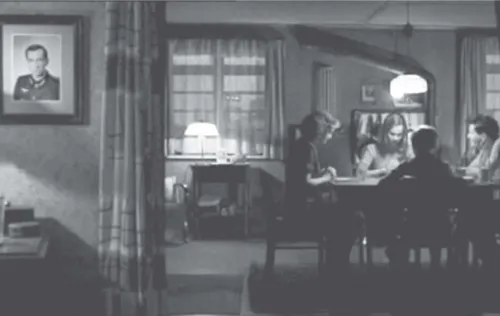
Figure 1.1: The Lubanski family’s living room in Das Wunder von Bern. Image courtesy of Bavaria Film GmbH/Global Screen GmbH.
A slow track in long shot shows a black-and-white photograph of a stern Richard Lubanski in his World War II Wehrmacht uniform. As the camera continues to track right through the family’s living space, the photograph disappears from the frame and we see the Lubanski family sitting at the dinner table. In the scene that precedes this shot, Christa Lubanski reads the letter that her husband is to return, and concludes that “soon [they’ll] be a real family again.” The triple tension of the shot—between black-and-white and color, still photograph and live family, historical uniform and civilian dress—graphically anticipates the conflict between Richard and his family. The tension finds its most startling prefiguration as an Oedipal constellation. When Richard arrives at the train station in Essen-Katernberg, he thinks he spots Christa. He calls out her name and hugs the woman who resembles the face on the photograph he has in hand. In fact it is his daughter Ingrid; Richard turns and faces his aged wife, and a son who he has never seen.
Richard initially rejects Matthias and treats him harshly. In one memorable scene the father announces that he will cook dinner. As the family assembles at the table it becomes clear that Richard has prepared the meal of rabbit by slaughtering Matthias’s pet. The boy begins to cry but Richard remains merciless, telling his son that “German boys don’t cry.” Matthias responds by doting on Rahn all the more.
The entire community unsuccessfully attempts to integrate Richard. Christa tries to help her husband negotiate the new order, curiously enough, by appealing to his old values. Although Richard scolds his children for being overly sensitive and undisciplined, Christa tells him that he has the least self-discipline of all, indeed that he only considers his own feelings. Richard laments to the local priest that “nothing is like it once was.” The priest advises Richard that to be strong he must discuss his memories with his wife and children.
After his initial problems, Richard makes a concerted effort to rejoin his family. He speaks openly about his experiences in Soviet c...
Table of contents
- Cover Page
- Title Page
- Copyright Page
- Contents
- List of Illustrations
- Acknowledgements
- Introduction
- Chapter 1 Rebirth of a Nation: Das Wunder von Bern, the 1950s, and the Reactions to the New German Cinema
- Chapter 2 Pop Retro-vision: Baader, Der Baader Meinhof Komplex, and the RAF Film
- Chapter 3 The Ambivalent View: 23, Historical Paranoia, and the 1980s
- Chapter 4 “Ostalgie,” Historical Ownership, and Material Authenticity: Good Bye, Lenin! and Das Leben der Anderen
- Chapter 5 Unification, Spatial Anxiety, and the Recuperation of Material Culture: Die Unberührbare
- Chapter 6 The Future of the German Past
- Select Bibliography
- Index
Frequently asked questions
Yes, you can cancel anytime from the Subscription tab in your account settings on the Perlego website. Your subscription will stay active until the end of your current billing period. Learn how to cancel your subscription
No, books cannot be downloaded as external files, such as PDFs, for use outside of Perlego. However, you can download books within the Perlego app for offline reading on mobile or tablet. Learn how to download books offline
Perlego offers two plans: Essential and Complete
- Essential is ideal for learners and professionals who enjoy exploring a wide range of subjects. Access the Essential Library with 800,000+ trusted titles and best-sellers across business, personal growth, and the humanities. Includes unlimited reading time and Standard Read Aloud voice.
- Complete: Perfect for advanced learners and researchers needing full, unrestricted access. Unlock 1.5M+ books across hundreds of subjects, including academic and specialized titles. The Complete Plan also includes advanced features like Premium Read Aloud and Research Assistant.
We are an online textbook subscription service, where you can get access to an entire online library for less than the price of a single book per month. With over 1.5 million books across 990+ topics, we’ve got you covered! Learn about our mission
Look out for the read-aloud symbol on your next book to see if you can listen to it. The read-aloud tool reads text aloud for you, highlighting the text as it is being read. You can pause it, speed it up and slow it down. Learn more about Read Aloud
Yes! You can use the Perlego app on both iOS and Android devices to read anytime, anywhere — even offline. Perfect for commutes or when you’re on the go.
Please note we cannot support devices running on iOS 13 and Android 7 or earlier. Learn more about using the app
Please note we cannot support devices running on iOS 13 and Android 7 or earlier. Learn more about using the app
Yes, you can access Postwall German Cinema by Mattias Frey in PDF and/or ePUB format, as well as other popular books in Media & Performing Arts & 20th Century History. We have over 1.5 million books available in our catalogue for you to explore.