In the last five years of the twentieth century, films by the second and third generation of the so-called German guest workers exploded onto the German film landscape. Self-confident, articulate, and dynamic, these films situate themselves in the global exchange of cinematic images, citing and rewriting American gangster narratives, Kung Fu action films, and paralleling other emergent European minority cinemas. This, the first book-length study on the topic, will function as an introduction to this emergent and growing cinema and offer a survey of important films and directors of the last two decades. In addition, it intervenes in the theoretical debates about Turkish German culture by engaging with different methodological approaches that originate in film studies.
eBook - ePub
Turkish German Cinema in the New Millennium
Sites, Sounds, and Screens
- 260 pages
- English
- ePUB (mobile friendly)
- Available on iOS & Android
eBook - ePub
Turkish German Cinema in the New Millennium
Sites, Sounds, and Screens
About this book
Trusted by 375,005 students
Access to over 1.5 million titles for a fair monthly price.
Study more efficiently using our study tools.
Information
II
MULTIPLE SCREENS AND PLATFORMS: FROM DOCUMENTARY AND TELEVISION TO INSTALLATION ART
Chapter 4
ROOTS AND ROUTES OF THE DIASPORIC DOCUMENTARIAN: A PSYCHOGEOGRAPHY OF FATIH AKIN’S WE FORGOT TO GO BACK
Since the mid-1990s, several autobiographical documentaries have emerged in the German media, shot by filmmakers of Turkish or Kurdish descent utilizing the camera as an experiential device for exploring their relationship to their bicultural heritage. As an increasingly global film practice, first-person filmmaking displays myriad stylistic variations: on the one hand, avant-garde abstraction from the indexical image, lyricism, and poetic qualities, and, on the other, an investment in referentiality and history. In some films, the evidentiary status of the self is visibly verifiable and retraces a personal chronology also encompassing family members, while in others authorial self-inscription may only be discernible in the voice-over commentary. Paul John Eakin’s notion of relational identity remains salient in all instances, such that experiences of different individuals are “nested one within the other—self, family, community, set in a physical and cultural geography, in an unfolding history” (1999: 85). What makes the autobiographical stance such a powerful mode of intervention is the use of reflexivity “not to necessarily eradicate the real as much as to complicate referential claims” regarding the self and others (Lane 2002: 18). There is a powerful spatial dimension to this endeavor, one captured in the German term Selbstverortung, implying as it does the localization of self, of getting one’s bearings in space and time, somewhere between past and present, between here and there (Curtis 2006: 7). In negotiating between the subjective intimacies of personal experience, i.e., the world within, and the quasi-objective public nature of historical circumstance, i.e., the world without, this mode also correlates with other scales of spatial negotiation especially pertinent to the interstitial position of the Turkish German filmmaker of dual heritage, the “diasporic documentarian.” Ensconced in the German cultural realm but also possessing internal cultural and linguistic access to Turkish communities in both Germany and Turkey, they are able to shift optics to view both countries and cultures “from afar,” to quote Thomas Arslan’s essay film Aus der Ferne (From Far Away, 2006).
Their geographical traversals of national borders constitute metaphors of heightened mobility that render ambiguous the distinction between points of origin and of return. There is a sustained tension between “routes” and “roots,” as the second generation reverses the path of global capital and flexible labor practices that first lured their parents to Germany, enacting journeys of return that may verge on revalorizing a bounded sense of primordial place in the maternal or paternal village of origin. The ambiguity about which sphere—territorial, cultural, linguistic, discursive—ultimately constitutes the inside and which the outside becomes itself an important source of inspiration as well as friction. To acknowledge the spatial ambiguities that haunt these cultural explorations, however, is by no means to relegate their human subjects to that “imaginary bridge ‘between two worlds’” Leslie Adelson (2001) maintains has haunted sociologically inflected public discourse and scholarly discussion of cultural production by foreign nationals and by variously “hyphenated” Germans. That locus, she suggests, “is designed to keep discrete worlds apart as much as it is pretends to bring them together” (2001: 246). She describes her own object of study, Turco-German literature, as “a threshold that beckons, not a tired bridge ‘between two worlds’” and adds: “Entering this threshold space is an imaginative challenge that has yet to be widely met” (2001: 248).
Homi Bhabha’s notion of third space has also gained popularity among postcolonial scholars. The term has assumed different meanings in his writings, at once describing a cultural locus produced by “wandering peoples who … are themselves the marks of a shifting boundary that alienates the frontiers of the modern nation” (1990: 315), but also the “general conditions of language” (1994: 36), in which the ongoing performance of cultural discourses always produces an excess or non-coincidence of a given culture with itself that enables “third spaces.” Pointing out the potentialities and pitfalls of the concept, Deniz Göktürk has maintained, “the experience of migration can be understood as a productive provocation which creates a transnational ‘third space’ of travel and translation where our traditional patterns of classifying culture are put into question. While celebrating this ‘third space’ however, we ought to be cautious not to forget about local specificities and differences as we create a third box for ‘mixed pickles’” (2001: 133). Having come to mean too many things in too many contexts, I believe the term’s gestural invocation in otherwise cogent scholarly discussions of the Turkish German cultural nexus enacts an ultimately illusory Hegelian Aufhebung (sublation), an unsatisfying resolution of negotiations of perhaps irreconcilable discursive complexity. When such readings produce a valorized third space out of a facile amalgam of purportedly homogeneous German and Turkish realms, they verge on perpetuating precisely those binaries they seek to deconstruct. Although often attributed an emancipatory valence in relation to dominant cultures, the hybridization processes that underpin notions of third space are, moreover, equally at work in the operations of hegemony, and indeed, of capitalism (Mitchell 1997).
My ensuing analysis tries to circumvent static spatial designators, instead working off the dynamic and performative notion of “spatial practices” advanced by Michel de Certeau (1984). The latter theorist employs the term in his exegesis on the practice of everyday life to refer to the ways we variously use, appropriate, and define specific locales or places, and hereby instantiate socially inscribed spaces. In asserting that “space is a practiced place” (1984: 117), de Certeau acknowledges his intellectual debt to Maurice Merleau-Ponty, who first maintained that “space is existential” and “existence is spatial” (Merleau-Ponty 1989: 342). The tension between place and space, i.e., between concrete geographical locations and the spatial operations of historical subjects that produce a space and imbue it with cultural, ideological, and political associations, is salient to the human experience. But it is also inherent to storytelling, “carrying out a labor that constantly transforms places into spaces or spaces into places,” for stories “organize the play of changing relationship between places and spaces” (de Certeau 1984: 118). This assumes a certain medium specificity in cinematic narration, where several layers of spatial organization are operative, from the protagonists who occupy the mise en scène in strategic ways, to cinematographic considerations involving camera placement and movement, to the specific spatiotemporal logic charted by the editing itself.
The type of first-person filmmaking under examination here, in particular, can be understood to function as what Adelson elsewhere has coined Orte des Umdenkens (Sites of Reorientation), defined as “imaginative sites where cultural orientation is being radically rethought” (2001: 247). Via the camera, these filmmakers work through their affinity for, and affiliation with, the respective geographical locales of Germany and Turkey, physically traversing these sites and bringing forth the topological dimensions of the Greek word for recounted or narrated story, diegesis. Functioning at once as author, narrator, and protagonist, they literally enact an itinerary that variously redraws boundaries, charts new vectors between people and places, and expands frontiers.
Fatih Akin’s Wir haben vergessen zurückzukehren (We Forgot to Go Back, 2001) is richly exemplary for these spatial practices. Akin was inspired to make his film after viewing Seyhan Derin’s Ich bin die Tochter meiner Mutter (I Am My Mother’s Daughter, 1996), which constituted her final project in fulfillment of the degree requirements at the Munich School of Film and Television (HFF München). Coincidentally both films trace journeys to the same region of northern Anatolia bordering the Black Sea where their respective families originate. Their production circumstances, however, are quite distinct. Derin’s biographical circumstances, like those of Kurdish German filmmaker Yüksel Yavuz (Mein Vater, der Gastarbeiter/My Father, the Guestworker, 1995), conform to those Jim Lane (2002), writing in the American context, has maintained characterize a genre in which the authors “are not artists with a large body of established work that may engender wide recognition or viewership. The autobiographical documentarist is more often a filmmaker working in anonymity, at a very local level, under low-budget constraints. We enter the film or video with little preconception of the author’s history, a situation akin to such nontraditional written autobiographies as slave narratives, captivity narratives, diaries, and memoirs” (2002: 4). The artist may thereupon gain public recognition, even acclaim, but their initial autobiographical authority depends “less on who they are as public figures and more on their existential interaction with historical events” (2002: 4).
By contrast, Akin had yet to achieve auteur status but had received enough critical acclaim for his first feature-length film Kurz und schmerzlos (Short Sharp Shock, 1998) and the ensuing light-hearted road movie Im Juli (In July, 2000) to induce a heightened awareness of his public self-presentation. This emerging investment in the status of one’s image—a perhaps inevitable liability of international success—arguably makes it more difficult to take the emotional risks that otherwise lend the autobiographical genre its depth of emotion, originality, and discursive complexity. Akin had already drawn media attention for his Turkish heritage, and thus his journey to explore his family background risks overdetermination. The challenge becomes that of not surrendering to pre-existing clichés generated by the popular press about oneself or one’s ethnicity, or alternately, of appropriating them through acts of postmodern citation that defer authorial identity along a string of pre-existing popular culture associations and thereby also deflect any intimate confrontation with the self. This latter approach appears operative in Akin’s film, whether self-consciously fashioned or simply an extension of his general inclination, as a self-identified member of the hip hop generation, to “sample” or borrow from other filmmakers, most particularly American independent cinema.1
Richly evident is, for example, the influence of Martin Scorsese’s family documentary, Italianamerican (1974), also shot before he became an acclaimed auteur but had established himself with three feature films, including Mean Streets (1973). The clumsy, inadvertently humorous, and richly insightful family portrait of Scorsese’s working-class parents and their Sicilian heritage reveals the personal motivation for his early and continuing directorial preoccupation with Italian American street life in New York. Akin’s film takes up techniques and themes from Scorsese’s film and struggles in analogous manner with how much to incorporate the authorial self within the unfolding domestic scene. Scorsese’s relationship to his historically and geographically removed Sicilian heritage is mediated entirely through the oral narratives of his native New Yorker parents. Their description of living standards of an earlier era acquires visual and historical veracity by intercutting still portraits of familial ancestors and stock photos of back alleys of typical New York tenements draped with the laundry of multiple families. References to the “old country,” in turn, posit a romanticized ancestral homeland as structural antinomy to the trope of cultural integration, and, ultimately, of assimilation within multicultural America exemplified in his mother’s self-conscious efforts to appear tolerant of other ethnic groups (e.g., the Irish) in the same neighborhood.
Akin’s project explicitly takes up this multi-culturalist trope, whose prevalence in American popular culture already in his earlier films functions, in the words of Gerd Gemünden, as “a model for social and ethnic integration, cultural hybridity, and progressive notions of immigration and citizenship” (2004: 189). Yet in contrast to Scorsese, whose film was shot entirely in his family’s living room, Akin and other Turkish/Kurdish German documentarists display a more mobile relationship to space. Indeed, their literal border crossings between Turkey and Germany exemplify the more historically immediate nature of their family’s integration into a nation that has emerged only recently as “a land of immigration.” If there is a positive effect to be found in the globalization of American popular culture and of Hollywood in particular, Gemünden maintains it resides in “the fostering of supranational imagined communities that displace those of the nation state. For minorities living in a nation such as Germany … this is an attractive position” (2004: 188). Yet that popular culture, as Fredric Jameson has pointed forth, also “represses social anxieties and concerns by the narrative construction of imaginary resolutions and by the projection of an optical illusion of social harmony” (2000: 138). In participating in this “cultural dominant” involving a postmodern repetition of mass cultural forms, Akin’s documentary treads an uneasy path between utopian longing and reification.
The film was co-commissioned by the Bavarian and West German Public Broadcasting Companies as part of the series, “Denk ich an Deutschland … Filmemacher über das eigene Land” (“When I Think of Germany … Filmmakers Focus On Their Homeland”), whose title draws inspiration from the first verse of a Heinrich Heine poem “Nachtgedanken” (Night Thoughts), which begins with the phrase “Denk ich an Deutschland in der Nacht, dann bin ich um den Schlaf gebracht” (If I think of Germany at night, I am robbed of all sleep). Also featured are documentaries by Doris Dörrie, Andreas Dresen, Andreas Kleinert, Peter Lilienthal, Katja Riemann, and others, which take stock of the increasingly complex social, political, and economic landscape of post-Wall Germany. It is perhaps in this funding framework that Akin dwells more explicitly than other compatriot directors of bicultural heritage engaged in first-person endeavors, on questions of local, national, and cultural affiliation, with consequences for how the biographical, narrational, and profilmic self is articulated and, perhaps, reified relative to different scales of space.
If the initial forty to ninety seconds of a film are among the most self-conscious (Bordwell et al. 1985: 25), this is particularly true for first-person films, which often seal what Philippe Lejeune has coined “the autobiographical pact” by confirming that author, narrator, and protagonist are one and the same (1989: 4). By introducing his film with a photographic portrait of his parents early in their marriage, taken probably in the late 1960s, Fatih Akin appears to displace attention to them as the actual object of his investigation. Yet his accompanying voice-over recollection of being raised with their recurring reminder that “someday we will return [to Turkey], we are not here to stay” underscores not only the young Turkish couple’s initial ambivalence about settling in a foreign country, but also the point of intergenerational tension in the film itself, against which their son Fatih arguably shapes his own identity as that of a native Hamburger, at home within the ensuing referential setting of the film but also fully secure in the role he occupies as its narrator and protagonist.
The pop tune “Family Affair” (Sly and The Family Stone, 1971) initiates the cut to a photo studio portrait from the later 1970s, panning across the faces of individual family members as the title, We Forgot to Go Back is superimposed on the scene. Voice-over, musical lyrics, image, and print text converge to convey that transience and impermanence dwell at the core of this particular version of what Sigmund Freud once coined the “family romance” (1975: 9). The Viennese psychoanalyst and family father of six adopted the term to identify a fantasy the adolescent psyche commonly invokes to aid in the process of parental separation and individuation: that of being freed from the family of birth and becoming associated with one of higher, or otherwise idealized or normative social standing. This desire fundamentally originates out of questions of identity, not relative to the ego or the agency of the mind, but as an effort to locate oneself within a personally viable and meaningful relational history and to use this as the basis for making sense of and in the world. In Akin’s case, the path to individuation involves casting the terms of his origins in such a way as to establish a geographically and culturally secure standing, i.e., of indigeneity and unconditional belonging in relation to a bounded place and socio-cultural context—here, Altona in Hamburg, Germany. Through use of African American pop music from the 1970s as a sound bridge between key scenes, however, he also connotatively aligns this identity with the cosmopolitan consumerism of global youth culture and its tendency to engage in “nostalgia without memory” (Appadurai 1996: 30).
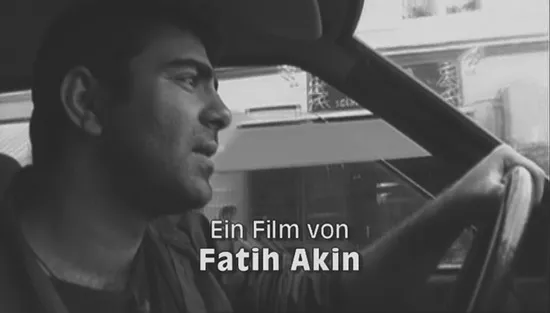
Figure 4.1 Fatih Akin in We Forgot to Go Back, DVD capture
Those musical lyrics trail off precisely on the phrase “One child grows up to be …” and a match edit from his toddler face to Akin in close profile within a car interior, so as to link the trope of “local boy makes good” to a man that had already garnered a degree of celebrity status. The opening voice-over now anchors itself in the diegesis as Akin goes on explain to the unseen passenger beside him—the camera operator and stand-in for the spectator—why he is making this film. The dramaturgical conceit of filming him while driving literally and figuratively underscores that he is in the driver’s seat, in control of the narrative journey on which he is embarking. In contrast to scenes shot in a moving train, which often connote passive contemplation and travel via regulated timetables and along predetermined routes, the automobile has long served in different cultural and historical contexts as a symbol of social mobility lending the driver an aura of bourgeois propriety, and evincing his or her autonomous and...
Table of contents
- Cover Page
- Title Page
- Copyright Page
- Contents
- List of Illustrations
- Introduction
- I. Configurations of Stereotypes and Identities: New Methodologies
- II. Multiple Screens and Platforms: From Documentary and Television to Installation Art
- III. Institutional Contexts: Stars, Theaters, and Reception
- IV. The Cinema of Fatih Akin: Authorship, Identity, and Beyond
- Notes on Contributors
- Works Cited
- Index of Names
- Index of Films
Frequently asked questions
Yes, you can cancel anytime from the Subscription tab in your account settings on the Perlego website. Your subscription will stay active until the end of your current billing period. Learn how to cancel your subscription
No, books cannot be downloaded as external files, such as PDFs, for use outside of Perlego. However, you can download books within the Perlego app for offline reading on mobile or tablet. Learn how to download books offline
Perlego offers two plans: Essential and Complete
- Essential is ideal for learners and professionals who enjoy exploring a wide range of subjects. Access the Essential Library with 800,000+ trusted titles and best-sellers across business, personal growth, and the humanities. Includes unlimited reading time and Standard Read Aloud voice.
- Complete: Perfect for advanced learners and researchers needing full, unrestricted access. Unlock 1.5M+ books across hundreds of subjects, including academic and specialized titles. The Complete Plan also includes advanced features like Premium Read Aloud and Research Assistant.
We are an online textbook subscription service, where you can get access to an entire online library for less than the price of a single book per month. With over 1.5 million books across 990+ topics, we’ve got you covered! Learn about our mission
Look out for the read-aloud symbol on your next book to see if you can listen to it. The read-aloud tool reads text aloud for you, highlighting the text as it is being read. You can pause it, speed it up and slow it down. Learn more about Read Aloud
Yes! You can use the Perlego app on both iOS and Android devices to read anytime, anywhere — even offline. Perfect for commutes or when you’re on the go.
Please note we cannot support devices running on iOS 13 and Android 7 or earlier. Learn more about using the app
Please note we cannot support devices running on iOS 13 and Android 7 or earlier. Learn more about using the app
Yes, you can access Turkish German Cinema in the New Millennium by Sabine Hake, Barbara Mennel, Sabine Hake,Barbara Mennel in PDF and/or ePUB format, as well as other popular books in Media & Performing Arts & Film & Video. We have over 1.5 million books available in our catalogue for you to explore.