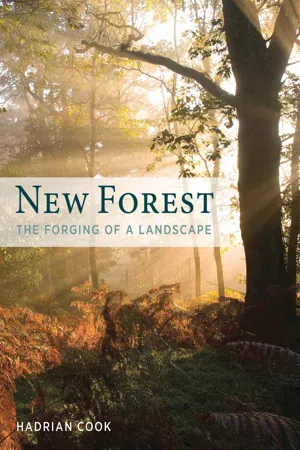
Hadrian Cook's new account of the New Forest in southern England, provides an historical narrative of the occupation and use of a vast area that was, for centuries, important as a Royal Hunting Forest and subject to many contentious laws and regulations, but which includes much economically marginal land. Four critical themes are explored through time: the shaping of the natural environment into human prehistory; human intervention through natural resource management; governance and management of the forest over time, stressing pressures on resources and attempts at exclusion of certain social groups; and policies and designations to conserve the New Forest. Cook aims to reflect a complicated narrative around the evolution caused by changing management and economic objectives reflecting governance arrangements at different times. Once the domain of kings, the New Forest is today, in effect, open-access, largely state-owned land, famous for its pretty villages, mosaic of moorland and woodland, roaming horses and cattle, diverse wildlife and miles of open countryside. But this tranquility belies a complex and contested history.
eBook - ePub
New Forest
About this book
Information
Subtopic
British HistoryIndex
Social SciencesCHAPTER 1
A New Book on the New Forest
Into the forest
Some time ago, John Manwood could write:
‘A forest is a certain territory of woody grounds and fruitful pastures, privileged for wild beasts and fowls of the forest, chase, and warren, to rest and abide there in the safe protection of the King for his delight and pleasure; which territory of ground so privileged is meered [has boundary] and bounded with un-removable marks, meers and boundaries either known by matter of record or by prescription and also replenished with beasts of venery or chase and with great coverts of vert for the succour of the said beasts there so reside...’1
By no means all covered by trees, a (legally defined) medieval forest was a mix of woodland, heath, pasture and scrub whose management was devoted to hunting by the king and those he favoured.2 There were also forest dwellers, people who were of lower social rank, whose economic interests lay elsewhere. Furthermore there is nothing in this late sixteenth century passage concerning commercial forestry as may be understood in a modern sense (previously and more attractively termed ‘silviculture’) or about public enjoyment, conservation of landscape value and certainly nothing that even borders on the romantic. For Manwood, after all, was a lawyer.
Back in the mythical realms, it is also noted that hunting of both boar and deer was important in Celtic societies, evidenced by the boar Twrch Trwyth that appears in the Welsh epic The Mabinogion. He gave chase across the west of Britain and, like boar, deer (stags in particular) had mythic status among Celtic peoples.3 Herne the Hunter, a ghostly figure and likely a thinly disguised horned deity of uncertain pagan origins (Germanic, Celtic or both) is usually linked with Windsor Great Park. Tales of hunting and folklore in ancient forests indicate, at least, cultural links with antiquity.
As an identifiable wooded entity, what we know as the New Forest has a history dating back millennia, but the significant legal event was the creation of the royal forest, possibly about 1079 by William I, ‘the Conqueror’ (who reigned 1066–1087). His son, William II ‘the Rufus’ (reigned 1087–1100), was killed (or assassinated, it is unclear) while out hunting there in 1100. The Normans had furthermore imposed a governance system where there was already an established manorial system from the late Saxon period.
It was Domesday Book (1086) that caused the area first to be referred to as the New Forest (Nova Foresta).4 The term ‘forest’, as already noted originally a legal term, defined the laws of a defined area set apart from the common laws of England. And it was then felt appropriate to describe it as ‘new’, perhaps because of the new legal status it was to receive. This new status permitted the Crown to exact its (often arbitrary) rule in a fashion that, even to the Normans, would not have been possible where the manorial system operated alone. The open spaces in the New Forest, dominated by heath, sometimes gorse scrub, sometimes bog, remain because tree plantation has been controlled, and only permitted within the ‘inclosures’. Technically, these actually form ‘exclosures’ for large grazing animals whose grazing maintains the open areas where turf was also removed for domestic burning. Heaths have a history of their own, linked to peat cutting and burning, while the rabbit-grazed lawns appear as golf greens in a landscape rugged by lowland British standards.
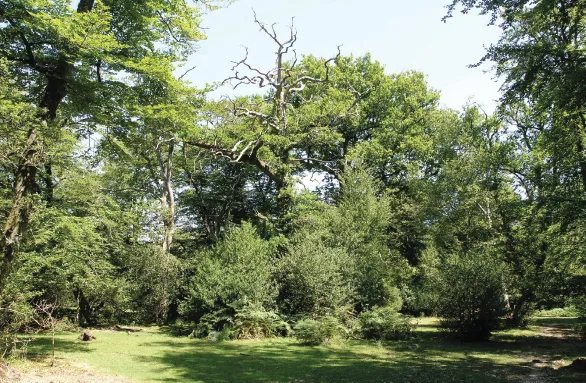
FIGURE 1.1. The ‘vert’: a typical New Forest Scene.
PHOTO: AUTHOR
PHOTO: AUTHOR
The Sovereign remains the legal owner of the Crown Estate which is in effect under Treasury regulation. Medieval monarchs inevitably made choices that would affect ordinary folk. Individual kings’ (and some queens’) desires and priorities affected royal forests. In management of the royal forests, we see the whim of individual rulers offering them as dower, selling of produce and taking an interest or otherwise in the venison, and a dwindling involvement in their management as the ‘vert’ (forest vegetation, Fig. 1.1) until wider state interests would replace the whims of the royal household. However, it is all too easy to become pre-occupied with the actions of the rich and powerful; ordinary people struggled to make a living from poor quality land in a highly regulated environment.
Overall, human actions have made an indelible mark on the land cover and land use patterns within the Forest. The social, economic and political influences are no less interesting. We have a first glimpse of the nature of the most powerful of the forest laws in the Assizes of Henry II (1166),5 the monarch who seems to have presided over forest law at its maximum development and imposition in order to protect the king’s interests in hunting.6 The Assize of the Forests, held at Woodstock, is dealt with in Chapter 5, and was apparently most savage indeed.
‘Bad’ King John granted away part of the forest to the Cistercians in 1204 demonstrating that there evidently remained a call on relatively better quality land in the formation of Beaulieu Abbey in 1204. There was thus created an agricultural estate in the south of the forest. Interestingly, their abbey was to be dissolved by that even more popular royal despot, Henry VIII (reigned 1509–1547). Well before Henry, reform was perhaps inevitable.
Legal reforms and management changes
Into a world infamous for alleged despotic rulers and like the more famous Magna Carta of 1215, the Carta de Foresta (Charter of the Forest) of 12177 actually limited the expansion of aristocratic interests and went further to ensure the ‘rights’ of ordinary people against feudal overlords. The charter can therefore be seen as part of the long democratisation process in England as well as providing us with an early glimpse of forest governance in which Nova Foresta was a significant player. Given time, aristocratic interest in hunting waned yet what remained – or even grew – was the economic imperative of maintaining crown revenues.
As a result, we see efforts to reform silvicultural management. Coppicing, everywhere else in Britain today celebrated by conservationists and landscape historians, apparently was to fail as a system of economic return. It was the later construction and naval interests that benefitted from far-sighted re-afforestation in the seventeenth century that supplied shipyards at Buckler’s Hard. Governance, however, was to present problems for centuries and confusion was intertwined with genuine efforts to make this large tract of marginal land viable.
From Tudor times onwards, there was clear governmental interest (as distinct from crown interest) in the New Forest. The creation of new officials outside the royal forest hierarchy, and this time at the behest of the Exchequer, would be problematic, for these acted to improve, later maximise, revenue from the forest while the ancient officers with sinecures, were still in place. A Divisum Imperium (divided jurisdiction) thus arose in the mid-sixteenth century. It arose from the creation of the post of Surveyor General of Woods, Forests, Parks and Chases and his deputy surveyors by central government. It might have been seen that the old (Norman) governance system remained in parallel and this would be the case until the abolition of the post of Lord Warden in the nineteenth century. Legal and governmental reform would lead to a de facto recession of crown interests with the abdication of responsibilities to the Office of Woods.
More unfortunately, and well into the eighteenth century, there was corruption caused by incompetence and greedy forest officials, yet the national interest in sorting these problems resulted from a desire for efficient production of timber for the navy. Consequently legal changes in the nineteenth century within the forest were draconian. Then, in the immediate post-First World War period, the newly formed Forestry Commission (1919) replaced the Office of Woods and took charge of commercial forestry, a situation that pertains to the present. Throughout all this time, commoners’ rights to graze and use resources of timber and turf continued so as to create an interesting arena for conflict in resource management.
The New Forest as it stands is ‘typical’ of many royal hunting forests established by the Normans. It is also atypical because it has survived relatively intact, unlike (for example) the nearby Forest of Bere.8 This is likewise situated on an area of poor soil, is relatively close to the New Forest and it also supplied timber to the navy. The New Forest we experience today remains an outcome of changing political objectives combating economic interests and more nebulous cultural values that have shaped and preserved its landscape.
Previous accounts
William I’s officials apparently saw the New Forest as of sufficient merit to produce its own section in the Domesday Survey of 1086. In a masterful account of the royal forests of Northamptonshire (Rockingham, Whittlewood and Salcy forests) between 1558 and 1714, P. A. J. Pettit succeeded in synthesising economy, law, geography, history, land use and other facets of royal forests.9 Interest specifically in the New Forest is documented by many accounts written from very differing perspectives and meaning that a study of the literary accounts gave insight into the values of the writer and his time.
John Wise’s The New Forest, its History and...
Table of contents
- Cover
- Title
- Copyright
- Contents
- List of Illustrations
- Preface
- Acknowledgements
- Glossary of Historic Terms
- 1 A New Book on the New Forest
- 2 Under the Greenwood Tree
- 3 A Hungry Land (10,000 BC–AD 1066)
- 4 The Medieval Forest (1066–1500)
- 5 Forest Governance in Medieval Times
- 6 The Increase and Preservation of Timber (1500–1700)
- 7 Decline of the Old Ways (1660–1900)
- 8 The Search for the Workable (1900–1980)
- 9 The Rise of the National Park (1980–Present)
- Bibliography
Trusted by 375,005 students
Access to over 1.5 million titles for a fair monthly price.
Study more efficiently using our study tools.
Frequently asked questions
Yes, you can cancel anytime from the Subscription tab in your account settings on the Perlego website. Your subscription will stay active until the end of your current billing period. Learn how to cancel your subscription
No, books cannot be downloaded as external files, such as PDFs, for use outside of Perlego. However, you can download books within the Perlego app for offline reading on mobile or tablet. Learn how to download books offline
Perlego offers two plans: Essential and Complete
- Essential is ideal for learners and professionals who enjoy exploring a wide range of subjects. Access the Essential Library with 800,000+ trusted titles and best-sellers across business, personal growth, and the humanities. Includes unlimited reading time and Standard Read Aloud voice.
- Complete: Perfect for advanced learners and researchers needing full, unrestricted access. Unlock 1.5M+ books across hundreds of subjects, including academic and specialized titles. The Complete Plan also includes advanced features like Premium Read Aloud and Research Assistant.
We are an online textbook subscription service, where you can get access to an entire online library for less than the price of a single book per month. With over 1.5 million books across 990+ topics, we’ve got you covered! Learn about our mission
Look out for the read-aloud symbol on your next book to see if you can listen to it. The read-aloud tool reads text aloud for you, highlighting the text as it is being read. You can pause it, speed it up and slow it down. Learn more about Read Aloud
Yes! You can use the Perlego app on both iOS and Android devices to read anytime, anywhere — even offline. Perfect for commutes or when you’re on the go.
Please note we cannot support devices running on iOS 13 and Android 7 or earlier. Learn more about using the app
Please note we cannot support devices running on iOS 13 and Android 7 or earlier. Learn more about using the app
Yes, you can access New Forest by Hadrian Cook in PDF and/or ePUB format, as well as other popular books in Social Sciences & British History. We have over 1.5 million books available in our catalogue for you to explore.