- 133 pages
- English
- ePUB (mobile friendly)
- Available on iOS & Android
eBook - ePub
A Practical Guide for Holistic Project Management
About this book
Project management is a multidisciplinary profession requiring not only knowledge and experience but also a lot of personal skills. A project is defined as: A temporary organisation that is created for the purpose of delivÂering one or more business products according to an agreed business case (Prince2 [1]). A project is executed on behalf of and by people. In fact it is all about people. This book is a holistic approach of project management which not only describes items such as risk management in a very practical way but also pays attention to the project impact and psychological part. Furthermore the challenges regarding outsourcing are described in order to reduce the amount of 'surprises'.
Information
CHAPTER 1
Project Management
1.1 Introduction
Project manager is a role. People within projects may have different roles, for instance a particular person can have the project manager role as well as the lead architect role.

This principle is rather important especially when human resource and/or financial planning needs to be performed. For instance, the hourly rate of a project manager might be different compared to that of a lead architect. You can also monitor more easily the hours spent by the different roles which could have different budgets.
Management also means delegating and monitoring what’s going on rather than performing as much tasks as possible yourself. Delegation, however, means that you are still responsible! When the person to whom you delegated a task and problems arise, you are in trouble as well.
1.2 Why Holistic Project Management?
In Greek, the word “holos” stands for the idea that the properties of a system (physical, technical, biological, etc.) are more than the sum of its parts.
More and more people are becoming aware that we are part of something much bigger and that everything is connected.
Now let’s make the step to project management.
A project has an impact on its environment, which also consists of people in this context. People are directly affected by the project. This could be in a number of perspectives. They might need to change the way they are working for many years, which will cause resistance. Pushing these changes onto these people is neither respectful nor will result in a positive result. People will, rather often consciously, be trying to jeopardize the project.

Imagine . . . how would you react in this situation?
So as project manager you should have a broad and holistic view as well, especially regarding people.
During my psychosynthesis education, one of the often repeated remarks was: “listen to your body.” It took some time to make that step and become aware of what my body was trying to tell me. We human beings have a body, mind, and emotions. We have a thought (mind) that generates an emotion which is expressed by our body.
I’ve seen courses about body and mind language in the Netherlands, by Jos Dolstra, and I have read the book Coaching with Body & Mind Language, which made me even more aware that we need to listen to our body.
Our living attitude reflects the way we have been living. In body and mind language, our body memory is activated. A combination of body language (attitude, movement) and spoken language is used. What shows the body? What is being said and expressed? Which deeper reasons have been hidden?
How many people have stiff shoulders (in fact the whole area between neck, the neck itself, and the shoulders and the upper part of our back)? What do we carry? Worries? Why are we worrying? How are we looking at our reality? Do we fight our reality or do we accept our reality (even though that reality is not what we want)? What do we normally do (take a painkiller)? Do we have the nerves to go into confrontation with ourselves? Are we afraid of being “rejected” by our manager?
1.3 Why Project Management?

Searching the Internet for information regarding project failures (let’s learn from the past), you can find tons of information and causes. The Standish Group is a company performing many research programs regarding project management.
Projects are rather often in the news, especially when they are out of control not only due to finishing must later than planned but also due to budget overruns.
The Standish Group has done a lot of research on this [1].
The majority, about 30%, of the ICT projects has a cost overrun between 50% and 100%. The average across all kinds of companies is around 180% regarding cost overruns.
Regarding time overruns, about 35% of the ICT projects deliver with a delay between 100% and 200%. The average across all kinds of companies is around 220% regarding time overruns.
The next question is: What is being delivered compared to what has been agreed (value for money)? The majority, about 40%, of the ICT projects did deliver what had been agreed between 75% and 100%. The average across all kinds of companies is around 60% regarding what should have been delivered.
In the Netherlands, projects for the Dutch government are terminated after 17 years while there is still no clarity when the project will be finished and how much more the project will cost (which is already tens of millions over budget).
In other words . . . “room for improvement!”
What are the main reasons for project failures (top five covering approximately 55%)?
- Requirements are incomplete (ambiguous, vague, etc.).
- Users are not involved (the people for whom the outcomes are intended).
- Lack of resources (right people at the right time, financials, dependencies [e.g., hardware is not available], etc.).
- Expectations are not realistic (lack of “expectation management” which will also be discussed in this book).
- Lack of executive management support (including the project sponsor of course).
1.4 The Project Manager
The project manager is ideally the sheep with five legs . . . (as you can see I didn’t find one and if there would be one it would be a genetic defect).

The project manager is quite often considered to be “all mighty” (also based on my own experience). A project manager is “only” a human being with limitations like anyone else. A project should also “fit” to the project manager. Executive management should be cautious during project assignments. This is also in their own interest. The remark “only you can do this” is pure manipulation and might land you in big trouble. I turned one deeply troubled project into a success (4th project manager). On another project, I couldn’t make it a success.
It is in your own interest to be assertive as well. Get a good picture of the project, and possible history, before making a decision.
What kinds of skills are pretty handy for a project manager? Let me list a number of the most important skills.

- Be able to work with and build bridges between any type of person both in easy and difficult circumstances (especially pressure when the going gets tough). Networking is key as project manager. Think about dealing with executive management, business management, technical specialists, etc., with different objectives, interests, and agendas as well.
- Patience, flexible, and creative. Things are not going the way you have planned. Murphy is also one of your team members (and the one you have no control over).
- Technical expertise. You should know what the project is about. Not the complete detail, but this makes it much easier for you to understand what is going on and to perform, for example, risk management.
- Planning. The planning is the base for project execution and will definitely be different than the reality. Be happy, otherwise you would lose a lot of fun in your work.
- Administration and preciseness. You need to have your project properly administered. In case you get ill other project managers can take over with not too much trouble. You should be able to produce the project status, financials, risks, changes, etc., more or less on the spot. Show executive management that you are in control. This will save you a lot of hassle and time.
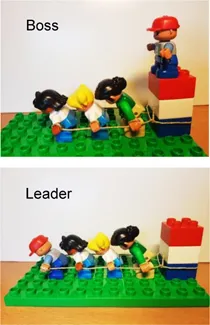
- Leadership. I consider the project manager part of the team. You stand by your people. If they have to work overtime, you will be there as well and support them where you can (e.g., arranging facilities).As you can see . . . not only children can use Duplo (Lego) to express themselves . . .
- Pragmatic and practical. The biggest challenge is to find a balance: sticking to processes and procedures versus getting the job done. Always ask yourself what the real objective is. Beware of satisfying processes and procedures instead of applying/using what is needed. Processes and procedures are intended to help people.
- High perseverance and high energy. Project management is normally not a 9 to 5 job. This also has an impact on your personal life and for instance your family. When you are working overtime frequently due to project issues this will also have an impact on your family/relation. The pressure might also increase at home at the same time. Be aware of this and discuss at home as well to create understanding (and hopefully get support as well).
- Negotiation. Try to create a win–win situation. Think both short term and long term.
- Empathy. This is one of the most difficult and important ones. You are dealing with people, not with things. The chapter about psychology is diving into this subject.
1.5 My View
I would like to share my personal view on (project) management in this section. I see the modern (project) manager as an “enabler” and spider in the web: the person who creates the conditions to enable the team members to perform the assigned tasks; the person who stands by his team; the person who supports his team especially during ...
Table of contents
- Cover
- Half Title Page
- Title Page
- Copyright Page
- Contents
- Purpose
- Management Summary
- Pictures
- Chapter 1 Project Management
- Chapter 2 Project Start
- Chapter 3 Project Execution
- Chapter 4 Project Closure
- Chapter 5 Outsourcing
- Chapter 6 Psychology
- Chapter 7 Personal Development
- Chapter 8 Presentation Tips
- Appendix A. Terms and abbreviations
- Appendix B. References
- About the Author
- Index
Trusted by 375,005 students
Access to over 1.5 million titles for a fair monthly price.
Study more efficiently using our study tools.
Frequently asked questions
Yes, you can cancel anytime from the Subscription tab in your account settings on the Perlego website. Your subscription will stay active until the end of your current billing period. Learn how to cancel your subscription
No, books cannot be downloaded as external files, such as PDFs, for use outside of Perlego. However, you can download books within the Perlego app for offline reading on mobile or tablet. Learn how to download books offline
Perlego offers two plans: Essential and Complete
- Essential is ideal for learners and professionals who enjoy exploring a wide range of subjects. Access the Essential Library with 800,000+ trusted titles and best-sellers across business, personal growth, and the humanities. Includes unlimited reading time and Standard Read Aloud voice.
- Complete: Perfect for advanced learners and researchers needing full, unrestricted access. Unlock 1.5M+ books across hundreds of subjects, including academic and specialized titles. The Complete Plan also includes advanced features like Premium Read Aloud and Research Assistant.
We are an online textbook subscription service, where you can get access to an entire online library for less than the price of a single book per month. With over 1.5 million books across 990+ topics, we’ve got you covered! Learn about our mission
Look out for the read-aloud symbol on your next book to see if you can listen to it. The read-aloud tool reads text aloud for you, highlighting the text as it is being read. You can pause it, speed it up and slow it down. Learn more about Read Aloud
Yes! You can use the Perlego app on both iOS and Android devices to read anytime, anywhere — even offline. Perfect for commutes or when you’re on the go.
Please note we cannot support devices running on iOS 13 and Android 7 or earlier. Learn more about using the app
Please note we cannot support devices running on iOS 13 and Android 7 or earlier. Learn more about using the app
Yes, you can access A Practical Guide for Holistic Project Management by Lex van der Heijden in PDF and/or ePUB format, as well as other popular books in Business & Project Management. We have over 1.5 million books available in our catalogue for you to explore.