Exploring the lifeworlds of Halima, Omar and Mohamed, three middle-aged Somalis living in Melbourne, Australia, the author discusses the interrelated meanings of emplacement and displacement as experienced in people's everyday lives. Through their experiences of displacement and placemaking, Being-Here examines the figure of the refugee as a metaphor for societal alienation and estrangement, and moves anthropological theory towards a new understanding of the crucial existential links between Sein (Being) and Da (Here).
- 260 pages
- English
- ePUB (mobile friendly)
- Available on iOS & Android
eBook - ePub
About this book
Trusted by 375,005 students
Access to over 1.5 million titles for a fair monthly price.
Study more efficiently using our study tools.
Information
PART I
Thinking What We Are Doing
Mohamed took this photo while driving through the heart of Mogadishu. The image’s dreamlike mood, its multilayered perspective, its sense of rhythm and its exceptional framing immediately captivated me. Before knowing the photographer’s account, the image stirred something inside me. It told me stories of the faceless people sitting on and in the truck, stories of the dusty roads they were travelling through, stories of their journeys, and stories of the onlooker behind the window of another car, capturing this blink of a moment.
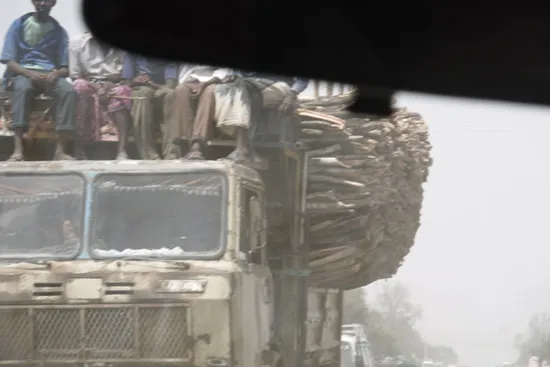
Figure PI.1 Civilians driving a military truck through Mogadishu. Image courtesy of Mohamed Ibrahim
‘There are a lot of things you can comment on this,’ Mohamed, the onlooker, explained later, when I asked him what had moved him about that very moment. ‘First of all what I noticed was that this was no civilian truck. It’s a military truck. Who am I to ask those questions? But if you really asked the proper question than you would have to ask: “How comes that these guys are using government property?” They would say: “But what government? Who cares?” So that’s one level. One can actually say that things are so chaotic that now these guys can drive a stolen military truck in the middle of the town and nobody even recognizes it. Nobody cares. I care, because I can tell.’
Mohamed paused and gave me a knowing look. He could tell and with him I could see. But who were we to question the habits of a place we did not inhabit? Mohamed continued: ‘That’s one thing. The other thing is the wood it’s carrying. Even now, despite the famine and the lack of rain, they are still cutting down the trees. And then on top there are people sitting, these people are probably traders. So within this image there is so much that summarizes the problem in Somalia: The stealing of the national asset, the national resources, the safety issues, because they are sitting on top, and probably, if you look at the whole picture you might even find some people with guns, also sitting somewhere. So that alone gives us a snapshot of the whole problem.’ Mohamed shook his head at the idea of this snapshot. It contains so many displacements: a truck, stolen from a state whose very existence seems to have become questionable, carrying wood from a mangrove forest that is dying through the middle of a town that has lost its balance. And capturing all these displacements is the eye of the man behind the camera, Mohamed, who remembers the city from times when things were in their proper place.
Yet for the people sitting on top of the truck, life goes on. Somehow, for them, things are in their proper place now, for they deal with the place as it happens. With all the displacements that have led to the disintegration of the place as Mohamed remembers it, to the people who live there it is a reality they have to live and deal with. So who is he to ask them questions about it? For the photographer, the returnee who positions himself strangely within and yet outside, the place depicted becomes something that is at once alienating and touching. The image captures place in all its material, storied and disputed dimensions. At the same time, it gives room to the many displacements that are also part of the photographer’s ways of seeing the place.
And thus the question arises: How to approach place in a way that takes all these layers into account? How to approach it in its lived, sensed, felt density? How to find ways of understanding Dasein in its openness of being-here, even if this here is shattered by painful, violent or disorienting events?
1
Walkers of the Everyday
What always struck me as peculiar about Melbourne was the fact that so many birds, rather than flying in the sky or perching in the trees, inhabited the ground. Proudly and confidently they strutted on the ground, a world that was fully theirs. Their territories were the open spaces in the large parklands or the backyards where people planted herbs and held barbeques. I faced these tough little creatures, who seemed fearless even as I stepped close to shoo them away, with a mixture of amazement and horror. I encountered them when riding on the bike trail along the Yarra River; they paraded on the concrete path, not making the slightest move to get out of my way, so that I felt I had to swing my bike around not to hit them. Waking up to the peculiar warble of the large black and white Australian magpies often made me feel strangely foreign.
While living in Melbourne I was frequently asked about my background. Whether ordering a cup of tea, chatting about the weather to the staff at the local bottle shop, or responding to someone asking for directions, my accent stirred up a lot of curiosity. Once I had explained that I had moved from Austria to Australia in late 2009 on a scholarship to conduct research on Somali refugees, I was often asked how I liked Melbourne. When this happened I was always tempted to talk about the birds and how they reminded me of living ‘down under’ (or maybe rather ‘upside down’) every day. I wanted to say that even the blueness of the sky and the greyness of the clouds were so typical for Melbourne that they gave my being-here a specific texture. But instead, I fell back into the rehearsed everyday tales people like to repeat to reassert each other. ‘People are friendly here,’ I heard myself saying, ‘it’s easy to settle down as a foreigner in such a multicultural city.’
Yet there is much more to be said about the way I experienced Melbourne. By experiencing I do not just mean a way of intellectually making sense of my surroundings; I am also referring to the slow process of getting to know a place, of befriending it, of becoming emplaced. How to find words for the smells, the web of street names, or the sounds and unspoken rules that make up this sense of emplacement? And how to convey the timidity that accompanied my first steps through Melbourne, an utter feeling of strangeness – as if even my way of walking, the way I chose to step into the world, revealed the fact that I was not part of the wholeness to which everyone else seemed to belong?
In The Practice of Everyday Life, Michel de Certeau speaks of this wholeness of place when he thinks about the poetry of looking down at Manhattan from the 110th floor of the World Trade Centre. Looking down from so far above the city conveys a feeling of seeing the whole without its single parts:
To be lifted to the summit of the World Trade Center is to be lifted out of the city’s grasp. One’s body is no longer clasped by the streets that turn and return it according to an anonymous law; nor is it possessed, whether as player or played, by the rumble of so many differences and by the nervousness of New York traffic. When one goes up there, he leaves behind the mass that carries off and mixes up in itself any identity of authors or spectators. An Icarus flying above these waters, he can ignore the devices of Daedalus in mobile and endless labyrinths far below. His elevation transfigures him into a voyeur. It puts him at a distance. It transforms the bewitching world by which one was ‘possessed’ into a text that lies before one’s eye. (De Certeau 1984: 92)
Thus, the world turns into a text ready to be read and understood, while the ordinary practitioners of everyday city life are down below, ‘below the thresholds at which visibility begins’, as de Certeau (1984: 93) puts it. He calls them Wandersmänner (walkers), whose bodies follow an urban text they write without being able to read it. ‘It is as though the practices organizing a bustling city were characterized by their blindness,’ he notes. ‘The networks of these moving, intersecting writings compose a manifold story that has neither author nor spectator, shaped out of fragments of trajectories and alterations of spaces: in relation to representations, it remains daily and indefinitely other’ (De Certeau 1984: 93).
When Halima arrived in Melbourne on a winter evening in 2002, she was overwhelmed by the darkness of the city. Upon leaving the airport and driving towards the place that was to become her new home, she felt disoriented and confused by the sea of darkness that surrounded her. In the United Arab Emirates, where she had spent the last twelve years, the streets and buildings were saturated with such dazzling lights that even in the middle of the night there was no real darkness. ‘So when I came here I thought: “What’s going on? This is a developed country, what happened? Why is it so dark?”,’ Halima said.
Years later and drinking cups of sweet Somali tea in the living room of her house in Maidstone, she could share a laugh over the memories of her first encounters with Melbourne. Halima told me that driving through this darkness had made her question whether she had actually arrived in the right place. ‘I thought I came to the wrong place, that it was not Australia,’ she laughed. ‘And my little adopted son, my nephew who grew up with my kids, he said: “Mum, I think we came to the wrong place, it’s not Australia!”’ Trying to describe this feeling of disorientation that accompanied Halima’s first moves through Melbourne, she said that her experience of the place was strange, ‘almost not real’. The silhouettes of the first suburban houses she could see made the order of this place even more ungraspable. ‘I found that all the houses were small, small, small,’ Halima said, ‘because where I came from in Dubai I was surrounded by high-rises. Everything was very strange.’
It was from this feeling of strangeness, from the fear that upon awakening the next day the city would turn into an incomprehensible maze, that Halima’s sister used all her strength to protect her. Sahra, who had arrived in Melbourne ten years before and already knew the paths and ways of the city, tried to loosen the sense of disorientation by being around her – day and night. ‘For the first month she was with me,’ Halima said. ‘We were even sleeping in the same bed together.’ And, thinking about it for a while she added: ‘I don’t think I could have survived if my sister hadn’t been here.’ It was by tackling the initial incomprehensibility of the city with someone else, by walking and talking through it together, that the feeling of alienation waned and Halima began to make sense of her surroundings. Beyond the Icarus-view of the city as a readable text, it was only in connection with others that Halima began to grasp rather than decipher the different parcels that constitute the wholeness of Melbourne and began to inhabit the place she had come to live in socially.
Consider the way clouds in the sky or birds on the ground filter into my way of walking through and perceiving Melbourne. And think of the way Melbourne’s darkness occasioned a feeling of strangeness in Halima, a strangeness that only dissolved by beginning, step by step, to understand the way this place was organized. If the space of the city shapes us at the same time as it is shaped by us, then how can we come to an understanding of the fragile processes that form and shape place into a dwelling? How can we overcome the tension between the way we see, feel and live place and the way we come to conceptualize, think, decipher and read it? While de Certeau’s observant eye deciphering the smooth wholeness of Manhattan from the top of the World Trade Centre suggests a clear and frictionless way of understanding place intellectually, in everyday life people do not lift themselves out of the city’s grasp in order to interpret place as a text. Rather, the walkers of the everyday cannot but make sense of the wholeness of a place by walking, feeling, living, struggling in its manifold and ambiguous tracks.
This has important implications for me, the anthropologist, attempting to understand the ways people make sense of the places they live in, have left behind, lost, or are moving towards. Instead of becoming an Icarus, gliding over people’s lives, deciphering the world from the skies above, it seems that I need to take on the role of a Daedalus, throwing myself into the mobile and endless labyrinths of everyday life. Yet, given everyday lives’ ever-moving character, it is equally as important not to get lost in its maze of ambiguities and contradictions, thereby losing track of the sense of wholeness and direction that also constitutes our being-in-place. In the context of everyday religious practices Samuli Schielke and Liza Debevec (2012: 7) poignantly describe this tension as the interplay of ‘ordinary lives’ and ‘grand schemes’, posing the question of how we can ‘account for the relationship of articulations of a coherent world-view and the practice and knowledge of living a life’.
My research was propelled by this question of how to find a balance between the everyday practices that shape our engagements with places and the larger structures that have the power to inhibit and control our movements and actions within them. Whilst trying to understand the particularities of the ways three individuals actively made sense of the places they had come to or left behind, it was equally important not to overlook the bigger political and historical processes that play into these dynamics. Like de Certeau, I came to see the importance of an approach to everyday placemaking practices that accommodates both – the larger structures that attempt to order and regulate places, and the walkers of the everyday, who constantly appropriate and challenge these efforts. This insight did not grow in isolation, but in direct conversation with Halima, Mohamed and Omar. It was by walking and talking our way through Melbourne together that I became aware of the importance of establishing an approach that would allow me to address both the Daedalus perspective, in which even the tiniest nuances of places such as the darkness of the sky or birds on the ground have such a force that they come to permeate and shift our lifeworlds, and the means people use to integrate such experiences into an Icarus view onto the world as a whole.
In this chapter I sketch the outlines of such an approach. By zooming in on the particularities of my work with Halima, Omar and Mohamed, I will show the interplay of the three core themes that came to shape my approach to place and displacement: experience, storytelling and existential anthropology. In a first step I will show the importance of developing a methodological framework that allows me to address the movements of the walkers of the everyday from an experiential perspective – to not impose predetermined explanations and theorizations upon the phenomena we aim to understand, but to focus on what there is instead. In a second step I will shed light on the dialogical nature of my collaboration with Halima, Mohamed and Omar to make transparent the at times complex and ambiguous processes underlying anthropological knowledge-production. This will lead me to reread important analytical categories, such as ‘refugee’, ‘life story’ or ‘lived experience’. Finally, I will shed light on the politics and poetics of storytelling that shaped the stories that made their way into this book.
What There Is
From our first encounters, Omar told me stories about his life. He spoke about many details of his long journey to Australia at the end of the 1980s. He tried to explain to me what it means to see one’s country crippled by war and famine from afar. He told me about his struggle to get his mother and siblings out of Somalia when the civil war broke out, and how he had met his wife, who had just fled to Nairobi, while he was waiting there for his family. During none of our first meetings did it occur to me that Omar and his family were not refugees. My project was to write about the life stories of Somali refugees and many of his stories dealt with the war in Somalia, so I never doubted that what I was attempting to understand had to be framed in terms of displacement. One day, however, when I used the word refugee to describe his situation, Omar protested. He told me that he did not believe he was a refugee. He said it with such conviction and sobriety that I realized I had stumbled upon something important. Seeing my puzzled look, he laughed. ‘Okay,’ Omar said. ‘I will explain it.’ In order to understand him, he added, he needed to talk about the Somali word for refugee, qaxooti:
Qax means to run away. Qaxooti is the one who is actually doing that. So it’s the one who’s running away from something. But it never meant before to move from one country to another. Maybe it used to be from one place to another place in the same area. And that word was used when there was a fire and the people were evacuated, or there was a flooding and they ran away to a higher place for safety. It has never been to run from your own country to another country.
When I asked Omar what he thinks when people call him a refugee, he said: ‘Qaxooti has got one meaning: If you call me qaxooti, then I’m qaxooti – qaxooti means running away from something. Am I running away from something now? After twenty-three years in Australia? No.’ ‘So you would say that this word only applies to someone who is in the immediate action of running?’ I asked Omar. ‘Yes,’ he answered. ‘And afterwards – unless you still believe that I am running away from something.’ Thinking about the absurdity of this idea we both began to laugh. ‘Am I running away from something after twenty-three years?’
That afternoon, we spent a long time talking about the power of words. Omar struggled to find a suitable alternative to the term qaxooti/refugee that was open enough to capture the complexity of his experience. The verb Somalis use for travelling, he said, the Arabic safar, did not fit. Safar, Omar explained, is an adventure people choose, ‘a kind of drifting’, as he put it, out of the pure joy of movement. His journey away from Somalia was partially driven by a curiosity to see other places, but it was also prompted by the instability in his own country. To describe his movement to Australia as safar would therefore not capture the complexity of his lived experience. Omar also rejected the label migrant, or soogalooti. He explained that in the Somali context, the noun soogalooti is used to describe ‘someone who has come from a different culture or a different environment, or someone who is new to a particular place’. Like refugee, he said, it had the potential to mark him as an outsider, as someone who did not belong to Australian society. Being a migrant, he said, had to have a limit. ‘Because if you call me “migrant” then what will come into my mind is: “I’m not like anyone else, I’m not Australian, I’m not Aussie”.’ He concluded that he did not like to be put into a box at all. Instead, he preferred to be accepted as a member of Australian society, regardless of what had brought him here in the first place. ‘What I want to feel and what I want my children to feel is that we are Australian,’ he said. ‘Full stop. Nothing more, nothing less.’
As I cycled home that day, it struck me that none of the people who were telling me their life stories, neither Halima, nor Mohamed, nor Omar, and none of the members of their families, had ever referred to being a refugee. For me, I realized, the word had become a metaphor that embodied urgent questions of our time, such as the intertwined forces of inclusion and exclusion that mark the nation state, as well as the movement and general sense of homelessness that seems to characterize our era. To uncritically assume that my Somali friends would think likewise, however, would mean beginning with an intellectual structure and ignoring phenomena as they are actually felt, lived and experienced by the people who are labelled as such. When confronted with the absence of refugeeness in Omar’s lifeworld, I was radically reminded that as an anthropologist I cannot set myself above what matters to the people I am working with. Instead of approaching my research from a pregiven analytical lens, I needed to develop a perspective that gives preference to the ways phenomena are lived through and made sense of by the people I worked with.
This is not to suggest an anti-intellectual stance that throws all established theories overboard. Analytical concepts such as migration or forced migration can be valuable tools to grasp complex and multilayered processes. Yet, I agree with Sonia Silva’s (2015: 127–28) warning that we need to pay attention to the ways such concepts tend to become reified, leading scholars to lose touch with the realities of the people whose lived experiences they attempt to understand, thereby turning them into ‘a lesser, one-dimensional version of themselves’. That afternoon when Omar told me that he was not a refugee, I came to see that if I were to keep this analytical framework, I would reduce the complexity and multidimensionality of his being-here to a simplistic, one-dimensional portrayal of being-out-of-place. To stay with Omar’s analogy, if I continued describing him as a refugee/qaxooti my analysis would have been running away with him, while he himself was actually doing everything in his power to stay put. To keep on describing Omar as a refugee would have created an unbridgeable gap between my analytical thinking and the world it was attempting to understand. The conversation with Omar brought home to me the fact that I could no longer impose analytical concepts on the phenomena I was intending to understand whilst ignoring my participants’ own objections against them. Close to the phenomenological doctrine to return ‘to the things themselves’ (die Sache an sich), I needed to develop a methodology that would allow me to attend to the ambiguities of being-here without, to paraphrase Hans Lucht (2015: 122), ‘squeezing the life out of it’. Instead of understanding anthropological knowledge as something about the world, I needed to approach it as something ‘urgently of and for the world’ (Jackson 1996: 37, emphasis added). In developing such a framework I could take my cues from the phenomenological tradition.
Phenomenology, often described as the scientific study of experience, attempts to understand the given, ‘the things themselves’ as they appear to our consciousness prior to theoretical abstraction. It grew from a deep dissatisfaction with the abstract and rationalist character of Western theoretical thought, which tended to tame the u...
Table of contents
- Cover
- Title Page
- Copyright Page
- Dedication
- Contents
- Illustrations
- Acknowledgements
- Introduction: Greeting Xamar
- PART I. Thinking What We Are Doing
- PART II. Emplacement
- PART III. Displacement
- Final Juncture: Concluding Words
- Bibliography
- Index
Frequently asked questions
Yes, you can cancel anytime from the Subscription tab in your account settings on the Perlego website. Your subscription will stay active until the end of your current billing period. Learn how to cancel your subscription
No, books cannot be downloaded as external files, such as PDFs, for use outside of Perlego. However, you can download books within the Perlego app for offline reading on mobile or tablet. Learn how to download books offline
Perlego offers two plans: Essential and Complete
- Essential is ideal for learners and professionals who enjoy exploring a wide range of subjects. Access the Essential Library with 800,000+ trusted titles and best-sellers across business, personal growth, and the humanities. Includes unlimited reading time and Standard Read Aloud voice.
- Complete: Perfect for advanced learners and researchers needing full, unrestricted access. Unlock 1.5M+ books across hundreds of subjects, including academic and specialized titles. The Complete Plan also includes advanced features like Premium Read Aloud and Research Assistant.
We are an online textbook subscription service, where you can get access to an entire online library for less than the price of a single book per month. With over 1.5 million books across 990+ topics, we’ve got you covered! Learn about our mission
Look out for the read-aloud symbol on your next book to see if you can listen to it. The read-aloud tool reads text aloud for you, highlighting the text as it is being read. You can pause it, speed it up and slow it down. Learn more about Read Aloud
Yes! You can use the Perlego app on both iOS and Android devices to read anytime, anywhere — even offline. Perfect for commutes or when you’re on the go.
Please note we cannot support devices running on iOS 13 and Android 7 or earlier. Learn more about using the app
Please note we cannot support devices running on iOS 13 and Android 7 or earlier. Learn more about using the app
Yes, you can access Being-Here by Annika Lems in PDF and/or ePUB format, as well as other popular books in Social Sciences & Anthropology. We have over 1.5 million books available in our catalogue for you to explore.