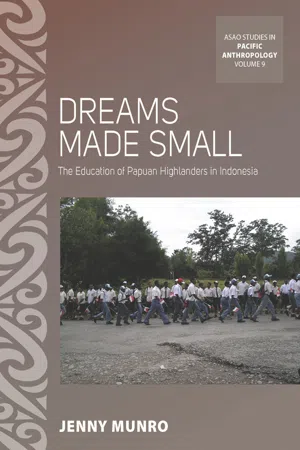
For the last five decades, the Dani of the central highlands of West Papua, along with other Papuans, have struggled with the oppressive conditions of Indonesian rule. Formal education holds the promise of escape from stigmatization and violence. Dreams Made Small offers an in-depth, ethnographic look at journeys of education among young Dani men and women, asking us to think differently about education as a trajectory for transformation and belonging, and ultimately revealing how dreams of equality are shaped and reshaped in the face of multiple constraints.
- 238 pages
- English
- ePUB (mobile friendly)
- Available on iOS & Android
eBook - ePub
About this book
Trusted by 375,005 students
Access to over 1.5 million titles for a fair monthly price.
Study more efficiently using our study tools.
Information
1
Ethno-racial and Political Dreams of Education in Wamena
‘Andy, get ready for school! Where’s Andy?? Andreas, have you bathed yet?’, called out Andy’s older brother Laurence, home from university on holidays.1 A forlorn-looking Andy appeared outside my hut, holding a garden spade that towered over his petite ten-year-old frame. ‘Do I have to go to school? I’m helping with the garden’, Andy implored. ‘Nayak [Dani language, ‘friend’, greeting used between males], you have to go to school. If you don’t go to school we’ll marry you off. Do you want to get married? You better get your pigs ready so you can get married’, teased Laurence.
Rather than bathe in the icy, turbulent We River and go to school on an empty stomach, children like Andy become enthusiastic about labouring in the garden. Around them in Wouma village, women are in motion, collecting cabbage and sweet potatoes from their gardens and piling them into net bags (noken in Indonesian, su in Dani) to carry to the local Misi market. Older children are chasing younger siblings to get them to bathe and put on their school uniforms, while old men squat and smoke cigarettes, keeping warm in the chilly morning air. After the fog lifts, the sun will heat the rocks along the river to the perfect temperature for warming up after a lunchtime swim. Women who are not going to sell vegetables in town are washing clothes along the riverbank. A handful of children never make it to school; they run off with their friends, play in the woods, and regroup later at the river to swim with their aunties and sisters.
The conversation between Andy and Laurence seemed to capture important questions about how school fits into daily life for Valley Dani, and what social and political imaginaries inspire the pursuit of education. Going to school might seem like an obvious activity for a ten year old to undertake, but Andy’s situation is not so straightforward. Andy’s parents did not attend Indonesian school. His father went to Dutch school for three years in the late 1950s. Moreover, going to school is challenged by a lack of clean clothes, bathing facilities, breakfast and mothers who are available to coordinate the effort. Yet in their conversation, school is the ‘modern’ and appropriate activity for Andy to undertake, while getting married is the traditional, and amusing, alternative. Raising pigs, paying bridewealth and getting married, which are crucial parts of Dani sociality and social reproduction, are placed on a par with education as a pathway for Andy. Because Andy is ten years old, the option of marriage generates a laugh from Laurence, but what if Andy was seventeen years old? Or twenty-five years old? What if Andy was a girl? Their conversation asks us to think deeply about the meanings attached to education, and how schooling and educational pursuits mesh with cultural and social expectations, especially amid racial structures, poverty and violence. Going to school, as this chapter illustrates, requires persistent, daily and sometimes complex efforts, and it conveys certain capabilities, commitments and moralities.
I travelled to Wamena after living with Dani students in North Sulawesi for nine months. I wanted to better understand their seemingly immense dreams of both transforming their homeland and achieving personal success. These dreams appeared incongruous with their circumstances abroad: often, they had barely enough to eat, were plagued by stereotypes and suspicious government officials, were bogged down in administrative delays on campus and struggled to balance their sense of collective obligations with expectations of individual progress and achievement. In Wamena, I spent much of my time with rural parents and young children, those individuals who arguably make most of the sacrifices, and perform most of the labour, that goes into supporting formal education. This chapter is not about where Dani university students might be going, but rather about where they are coming from. Through the increasing proximity of ‘modernity’ in the form of school uniforms, roads, offices, shops and, critically, Indonesians, Dani are assessing themselves and others around them in novel moral and ethno-racial terms. Dani view education as a way to catch up with Indonesians and demonstrate modern commitments. The Indonesian governmental and bureaucratic system uses a lack of education against Dani, even those of considerable social standing in their communities. In their encounters with Indonesian bureaucrats, shopkeepers and teachers, Dani sometimes express feeling inadequate. Education conveys some status, though not enough to fundamentally alter relationships with Indonesians. Equally of interest are the ways in which education has come to matter in Dani families and marriage preferences, in judgements about sexuality, and gender expectations. Education dreams thus emerge in and through racial, political, gendered and sometimes violent dynamics.
Although it is only an hour’s flight from the provincial capital, the Baliem Valley, like other mountain valleys throughout New Guinea island, has an entirely different atmosphere from the coast. Arriving on a morning flight, a blast of cold, crisp air greets passengers descending the stairs from one of the old Trigana Air ATR-72 to the tarmac. Until 2016, there was no baggage carousel at this airport; instead, baggage was placed in a corner of the arrival hall behind a wooden barrier. Passengers were required to climb over the wooden barrier and drag their luggage back over the wall. A chorus of becak (bicycle-powered pedicabs), a common form of public transport in Wamena city, surrounds the entrance to the airport. No flights will land at the airport after about 3 pm; by this time the clouds have descended from the mountains to obscure the only entrance to the valley, aptly named ‘Pass valley’. On the ground, this is the time of day when what locals call the ‘Kurima wind’ (angin Kurima) starts to blow through town from the southeast. People without jackets chew betel nut and walk fast to stay warm.
Wamena and smaller towns in the central highlands can only be accessed by air from the coast, but a growing network of roads in the highlands links Wamena to towns like Tiom and Bokondini. While the local populations are certainly mobile from rural to urban areas in the highlands, there does not appear to be a large-scale outmigration for labour, and not much in the way of remittances is sent back to relatives in the highlands. If anything, Baliem Valley crops and pigs are used to help support relatives outside the region. Small communities of Dani live on the coast in and around Jayapura, enjoying the bustle of urban living and the tropical climate (see Farhadian 2001, 2005 for an ethnography of Dani in Jayapura). Dani relatives swap tropical and temperate produce by putting large packages of betel nut, vegetables, tubers, and fruit wrapped in used rice sacs or plastic bags on the daily flights between Wamena and Sentani airport in Jayapura. Those on the coast receive cabbage, tuber greens, avocado, sweet potatoes or taro; highlanders hope to receive a package of prized betel nut that can be sold for up to 2,000 Indonesian rupiah (about US$.20) per nut. While most of this trade occurs between Dani relatives, Dani people living on the coast might have arrangements with local Papuans or migrants with land to access the commodities in the first place. I met Dani students in Jayapura who worked someone else’s betel trees and took their pay in kind to send betel nut up to the highlands. Some Dani men and women also fly to Timika, the city that serves the Freeport (Tembagapura) gold mine in the southern highlands, to search for gold pieces in the mine’s tailings or to sell their produce at inflated prices. Within the central highlands, there is migration of young people to Wamena city for schooling as well as to seek cash by providing manual labour to construction projects. In rural areas, there are typically only primary schools, if that, so any students continuing their education must make their way to Wamena.
Indonesians and ‘Wamena people’ (Dani, Lani and Yali) share the streets of Wamena, but, with a few exceptions, are not deeply interconnected in each other’s lives. Unlike coastal areas of Papua, intermarriage between Indonesians and highlanders is rare. During public celebrations surrounding Independence Day (17 August) and the visit of President Yudhoyono (July 2006), Dani and settlers flooded the streets but rarely interacted. Local relations between Indigenous and non-Indigenous inhabitants in Wamena are complex, rapidly changing and different in diverse parts of the city. Misi is very near to traditional villages and is considered a rawan or potentially dangerous, less ‘civilized’ part of Wamena. The We Bridge is an important symbolic and physical link between Dani settlements like Wouma, and Misi, the oldest part of Wamena city, where there are many Indonesians now. The bridge has several times had most of its wooden planks torn off by Indigenous men wishing to sever ties with the city, the state and the military, which now runs a base right next to the bridge in Misi. In 2015 a new concrete bridge was finished, positioned beside the old bridge, perhaps symbolizing that the Indonesian presence is permanent and will inevitably expand over the bridge into predominantly Indigenous areas. Dani and Indonesians watched the parade in this mixed, politically saturated space, and did not speak to each other. In this area, most Dani and Indonesians are not well acquainted, even though the same Indonesian shopkeepers open up the same rows of stalls each morning and the same Dani sell produce or transport people on pedicabs (becak) each day.
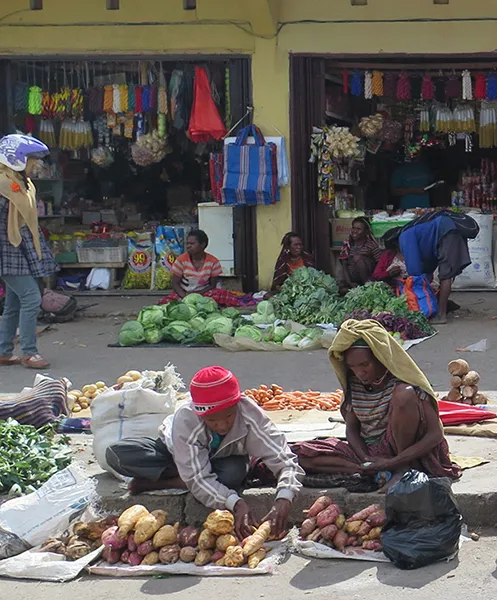
Figure 1.1. Misi market area, Wamena. Photo by author
Schooling in Wamena is commonly disrupted not just by absentee teachers or principals, but also by violence and its aftermath of tension. When going to school means venturing out on foot or by bicycle through the centre of town or across a bridge to a rural area the day after a military rampage or a police incident, education becomes politicized not just as an idea, in terms of future aspirations or past injustices, but also because accessing it requires overcoming fear and hostile surroundings. Young people were explicit about conditions of fear, abuse and inequality in highlands Papua. For example, Benyamin said: ‘The conditions on the ground in Wamena are terrible; people are chased like animals by the military.’ Sam stated: ‘People are afraid, there are so many soldiers, they do sweeping [search operations], sometimes they get angry for no reason … If someone says something, it will create big problems.’ According to Lavinia: ‘The Indigenous people have nothing, no clothes, sometimes they even starve. The “straight-hairs” have everything.’ Anton (from Wouma) said: ‘Indonesians never go into the villages, except for the military. Even in my village near the city, they never go there. We are here, they are there.’
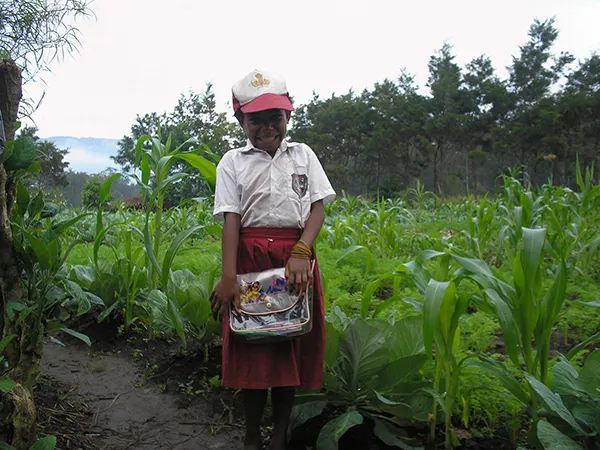
Figure 1.2. A young girl ready for school in Wouma. Photo by author
Before moving into the local meanings of education, it is important to describe how and when schooling emerged in Wamena. Potent ideas of transforming and civilizing the Dani were enacted through foreign agendas of political control amid conditions of violence.
The History of Education in Wamena
Historically, the project of education in the Baliem Valley was inseparable from colonialism, violence, racialization and missionization. The bulk of the first formal education effort was in the hands of the missions, beginning in the mid to late 1950s, while the Dutch government provided financial subsidies (Naylor 1974: 198). Lessons in the missionary-run schools primarily involved Bible literacy and Christian ideology. The Christian and Missionary Alliance focused on spreading the gospel and training local people to become pastors. Charles Farhadian (2003: 55) suggests that evangelical missionaries, possessing unbelievable material wealth, focused on telling the Dani about the Christian heaven and spreading the message that Jesus would save them from their sins. Missionaries brought ‘a new organisation with new rules and social expectations’ (Farhadian 2003: 64), sometimes using forceful techniques. A missionary report asserts: ‘If a group resists the Gospel, they should be roughed up, and then they will “find their hearts” and embrace the Gospel’ (cited in Farhadian 2003: 56). Evangelical missionaries, like colonial authorities, had a particular vision for the new life they would create for the Dani.
The Order of Saint Francis, a Catholic mission, which established a station in 1958, was interested in development activities, such as animal husbandry, a housing resettlement project, an agricultural cooperative and a brickworks (Naylor 1974: 184–93). The Catholic missionaries opened the first schools. Formal education in this period consisted of two to three years of school. Graduates could carry on for another two years (Naylor 1974: 198). The prevailing perception of the Dani was that although they had many intricate cultural beliefs and practices of their own, they would have to abandon these traditions and learn ‘everything’ from foreign teachers. O’Brien (1962: 82) writes that schools were intended to bring ‘a whole new conditioning and change in basic psychological attitudes’.
From 1963 to 1966, the Indonesian government worked to consolidate control over the Baliem Valley. From 1966, Indonesian soldiers filled the Baliem Valley in preparation for the ‘Act of Free Choice’ referendum, to be held in 1969. During this time, the inhabitants experienced great brutality and oppression (Naylor 1974: 13). In the Baliem Valley between October 1966 and January 1967, for example, Indonesian soldiers are alleged to have shot dead 103 Dani males and hanged a ten-year-old boy (Van den Broek and Szalay 2001: 78).
The presidential decrees passed with the Act of Free Choice in 1969 outlined plans for developing West Papua’s ‘inland’ (pedalaman) communities (Naylor 1974). Indicating the importance of education in the occupation of the highlands, Karl Heider (1979) reports that the first thing Indonesian bureaucrats wanted to do after colonization was to send all Dani children to boarding schools on Papua’s coast. Education was to be a core component of development and modernization, and it was to be carried out by Indonesians (including those from Christian areas of eastern Indonesia) and a handful of Europeans. Indonesia’s first development agenda in the highlands was called the Koteka Operation. On paper at least, it came into effect in 1971. The main goals related to developing, educating and civilizing the Indigenous population, a radical change of their lifestyles and living patterns, and, obviously, getting Dani men to exchange the penis gourd for clothes. Not surprisingly, given the name of the agenda, it was to be led by the Indonesian military and included territorial defence goals (Naylor 1974: 149–50). The sentiments behind the Koteka Operation reveal what Jan Pouwer (1999: 178) calls ‘a barely concealed scorn of Papuan cultures’. Education was thus racialized from the outset because it enacted existing racial hierarchies that placed Indonesians as superior role models for Dani to emulate. When the early days of government schooling in the highlands did not seem to modernize the Dani in the way that the Koteka Operation intended, this ‘failure’ justified and facilitated the government’s transmigration programme on the grounds that Indonesian transmigrants would provide examples of ‘modern men’ for the Dani (Soepangat 1986: 330).
The Koteka Operation also illustrates the entanglement of violence, politics and militarism with educational goals and logistics. Indeed, in 1977, not long after the intervention began, the Indonesian military invaded the Baliem Valley on the pretence of ending a tribal war between the Dani and the Western Dani. It is not known how many Dani were killed in the subsequent napalm attacks by Indonesian forces (Bertrand 2004: 149). Today, Dani still talk about the need for resolution and compensation for losses they suffered in the 1977 war.
The Koteka Operation is thus one of the earliest examples of how Indonesians’ thinking and perceptions of Papuans shaped what kinds of development and education would be offered to highlanders, and the ways in which race and violence would be inseparable from education. In the government’s depictions of Papuans as completely devoid of modern attributes, it is easy to forget that educated Papuans were expelled from government positions they held during the Dutch era or were forced to leave during the crackdown on nationalist and resistant sentiments in the 1960s (Pouwer 1999: 177). Thus, education was always politicized and was intended to cultivate a particular sort of modern Papuan highlander who was acquiescent and who shared rather than challenged Indonesia’s vision of development and the future. Of course, Indonesia’s monopoly on violence and power over the narrative about highlanders does not mean that highlanders saw, or see, things the same way.
Controlling Efficacy and Regaining Power: Contemporary Dani Perspectives on Education
Dani describe education as new knowledge and experience brought by missionaries and the Dutch. These were opportunities that Dani took advantage of and that strengthen, or could be used to restore, traditional systems disrupted by Indonesian rule. Dani informants also portray education as a way to regain power from Indonesians who were able to colonize Wamena because of their superior education and knowhow. They hope that education will assist Dani to establish modern, Christian and prosperous lives in which they are equal to Indonesians. Dani informants describe how they and their parents saw the first foreign educators, namely Christian missionaries, as offering something that could change social status. For instance, Agus, a Dani government employee aged about forty, suggested the following history:
When the first education started at the mission stations, some of the parents took their children to the missionaries. They left them there and the missionaries raised them. Almost all of those children were the children of big men. If they were good students the missionaries sent them to Biak or Jayapura to high school, otherwise after three years of school the students were able to lead church services and spread the gospel. Some of those first students are still alive. One of the men who went to the coast [later] became the Regent of Jayawijaya. The people who got this first education used it to their advantage and they got their children into education and so on.
In Agus’ narrative, it is not clear why the ‘big men’ took their children to the missionaries, but it is clear to him that it resulted in long-term benefits. Viewed retrospectively, education creates positions of status and leadership, and the benefits are intergenerational.
Another informant, a Wouma big man, Molama, argued that he was among the first to be baptized as a Catholic. By his account, he took advantage of the funds that the Catholic missionaries were offering to build a house, which he used as the first church in the area. He still uses the building as his home, as a new church was built in later years to service the Wouma population. He explained his decision as follows:
I saw what they were doing as a good opportunity for my people, and I thought we needed the right kind of place for this activity. We could not do it properly in our traditional huts. Therefore, I asked them for money and built the house and we used it for religious services.
Molama indicated that he and others wished to take advantage of a new activity that appeared efficacious. Building the church helped him with his goal of doing good things for his community, and thus aligned with traditional forms of leadership. In the above perspectives, Dani take advantage of formal education. Agus Alua (2006: 171) and others remember things differently:
[I] was born into a family who wore koteka [penis gourd] and cawat [fibre skirt] in the Kurulu region in Yiwika, Baliem Valley, Wamena. Because of this my exact date of birth is unknown, but it is estimated that I was born in late 1960 … A team of elementary school teachers on patrol at night time looking for new students captured me and I was forced to attend school by missionaries against the wishes of my parents.
Dani associate the entrance of formal education with their experiences of Dutch colonialism and Christianity. Looking back, therefore, formal education is associated with ‘the word’, ‘the light’ and becoming Christians.
While the older generation focused on the arrival of education via missionaries, for younger informants, school is associated with the Indonesian government. Markus said: ‘School, clothes, these things are from the government (pemerintah). They are good things that we did not have...
Table of contents
- Cover
- Title Page
- Copyright Page
- Contents
- Figures and Maps
- Acknowledgements
- Introduction. New Promises, Old Problems
- Chapter 1. Ethno-racial and Political Dreams of Education in Wamena
- Chapter 2. ‘Newcomers’ and ‘Masters of the Land’ in North Sulawesi
- Chapter 3. Dani Encounters with Racial and Political Formations in North Sulawesi
- Chapter 4. Aspirations and Encounters on Campus
- Chapter 5. Belonging, Expertise and Conflict in Highlanders’ Social World Abroad
- Chapter 6. Sexuality, Pregnancy and Survival in the ‘City of Free Sex’
- Chapter 7. Doing Good Things in a Dani Modernity
- Chapter 8. Koteka Questions
- Bibliography
- Index
Frequently asked questions
Yes, you can cancel anytime from the Subscription tab in your account settings on the Perlego website. Your subscription will stay active until the end of your current billing period. Learn how to cancel your subscription
No, books cannot be downloaded as external files, such as PDFs, for use outside of Perlego. However, you can download books within the Perlego app for offline reading on mobile or tablet. Learn how to download books offline
Perlego offers two plans: Essential and Complete
- Essential is ideal for learners and professionals who enjoy exploring a wide range of subjects. Access the Essential Library with 800,000+ trusted titles and best-sellers across business, personal growth, and the humanities. Includes unlimited reading time and Standard Read Aloud voice.
- Complete: Perfect for advanced learners and researchers needing full, unrestricted access. Unlock 1.5M+ books across hundreds of subjects, including academic and specialized titles. The Complete Plan also includes advanced features like Premium Read Aloud and Research Assistant.
We are an online textbook subscription service, where you can get access to an entire online library for less than the price of a single book per month. With over 1.5 million books across 990+ topics, we’ve got you covered! Learn about our mission
Look out for the read-aloud symbol on your next book to see if you can listen to it. The read-aloud tool reads text aloud for you, highlighting the text as it is being read. You can pause it, speed it up and slow it down. Learn more about Read Aloud
Yes! You can use the Perlego app on both iOS and Android devices to read anytime, anywhere — even offline. Perfect for commutes or when you’re on the go.
Please note we cannot support devices running on iOS 13 and Android 7 or earlier. Learn more about using the app
Please note we cannot support devices running on iOS 13 and Android 7 or earlier. Learn more about using the app
Yes, you can access Dreams Made Small by Jenny Munro in PDF and/or ePUB format, as well as other popular books in Social Sciences & Education General. We have over 1.5 million books available in our catalogue for you to explore.