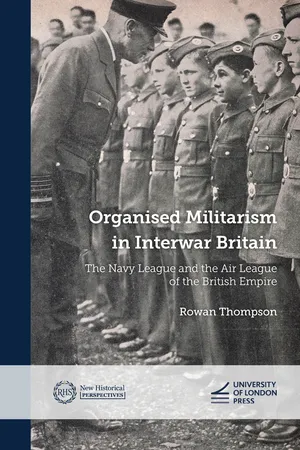
While militaristic and patriotic organisations formed an important part of Edwardian political culture, 1918 often marks a terminus for histories of organised militarism in Britain. Taking the end of the First World War as its starting point instead, this book is the first full-length study of militarism and militaristic associational culture in interwar Britain. It argues that militarism was able to survive the 1914–1918 conflict, despite the competing rise of liberal internationalism, pacifism and anti-war sentiment. Focusing on the ideas, aims and activities of the Navy League and the Air League of the British Empire – two extra-parliamentary organisations established to promote naval and aerial supremacy – the book examines how the Leagues negotiated the trauma of the First World War and how they contributed to the societal and military preparation for a second global conflict as the clouds of war gathered in the late 1930s.
Drawing on extensive archival research, the book explains how these Leagues mobilised broad public and political support and what the story of each organisation tells us about the impact of war on British society and culture, civil-military relations, political and private activism, military theatre and commemoration, youth, and the politics of disarmament, collective security, internationalism and national defence. In doing so, it demonstrates that martial and militaristic sentiment remained an important part of mainstream British political culture, despite the ravages of war.