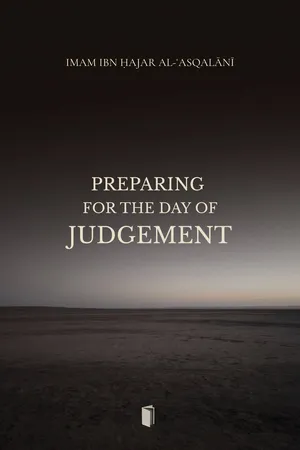
A Treasury of Islamic Wisdom for Eternal Preparation
In an age of constant distraction and worldly preoccupation, Preparing for the Day of Judgement offers Muslims a profound antidote to spiritual heedlessness. This classical compilation by the hadith master Imam Ibn Hajar al-'Asqalani gathers essential wisdom from three generations of Islamic luminaries: the Prophet Muhammad (peace be upon him), his Companions, and the early ascetics and scholars who embodied these teachings.
The book’s title confronts readers with an unavoidable truth emphasized in the foreword: one’s personal Day of Judgement begins not when the world ends, but when one’s life ends—and that moment may arrive unexpectedly. This awareness transforms the text into an urgent manual for spiritual readiness.
A Unique Pedagogical Structure
This work stands apart through its innovative numerical organization. Ibn Hajar arranged the material into ten chapters, progressing from "Counsel in Twos" to "Counsel in Tens". Each chapter gathers sayings grouped by number—for example, the chapter on fours may include statements such as: “Four things are good but four others are better,” or “The believer fears six matters.”
This structure enhances memorization and internalization, showcasing the compiler’s encyclopedic command of Islamic literature and ability to recall and categorize abundant wisdom according to numerical patterns.
Within each chapter, Ibn Hajar follows a consistent hierarchy: Prophetic hadith appear first, establishing the foundational guidance. These are followed by sayings of the Companions, then wisdom from the pious predecessors (salaf). This arrangement demonstrates the continuity of Islamic spiritual teachings across generations.
Core Themes and Spiritual Guidance
The counsels address the essential challenges of the spiritual path, with several major themes recurring throughout:
The Transience of Worldly Life: Many sayings warn against excessive attachment to dunya. The message is not absolute renunciation but proper perspective—using this world as a tool while keeping the Hereafter as the ultimate goal.
Death Awareness and Preparation: The work repeatedly emphasizes that death is both inevitable and unpredictable. Sayings describe the grave as “the gathering place of deeds” and remind that the wise person prepares provisions before entering it.
The Battle of the Soul: Numerous teachings address the struggle between the nafs (lower self) and the 'aql (intellect) guided by revelation. The text provides practical strategies for this inner jihad—moderation in eating and sleeping, consistency in prayer, righteous companionship, and frequent remembrance of Allah.
Balancing Fear and Hope: Ibn Hajar navigates the balance between khawf (fear of Allah’s justice) and raja' (hope in His mercy). Neither despair nor complacency brings salvation; the believer cultivates both awe and trust.
Signs of Spiritual Health and Disease: The text gives readers criteria for self-examination, addressing questions such as: What are the signs of sincere repentance? How does one know if the heart is spiritually alive? These indicators help readers assess and refine their spiritual state.
Wisdom That Transcends Time
Though compiled in the 15th century, the wisdom in these counsels addresses timeless human challenges. Warnings against “the delusion of long hopes,” “the love of praise,” and “self-admiration” remain strikingly relevant today. Likewise, exhortations toward contentment, gratitude, and sincere worship speak to perennial spiritual needs.
The chapter on threes contains the beautiful counsel: “Glad tidings to the one who leaves the dunya before it leaves him, prepares for his grave before entering it, and pleases his Lord before meeting Him.”
Another insight states: “The one who admits his shortcomings is always praised, and admitting shortcomings is a sign of acceptance.” Such wisdom encourages humility and spiritual honesty.
The Compiler’s Scholarly Excellence
Ibn Hajar’s selection and arrangement reflect both scholarly precision and spiritual insight. His numerical organization is a pedagogical innovation, allowing students to memorize structured units of wisdom with ease.
His mastery of hadith sciences ensured proper authentication of Prophetic narrations, while his biographical expertise enabled him to select reliable sayings from Companions and ascetics. The result is a rigorously sourced and spiritually profound compilation.
For Contemporary Readers
Modern life—marked by endless information, entertainment, and distraction—makes this work especially valuable today. It serves as a counterweight to heedlessness, reorienting readers toward consciousness of the Hereafter.
The book supports several modes of engagement: reading devotionally for daily reflection, studying systematically in structured programs, or using it as source material for lessons and sermons. Teachers will appreciate the numerical structure, which simplifies referencing and teaching.
For newcomers to Islamic spirituality, the book offers an accessible introduction to foundational concepts—taqwa, zuhd, ikhlas, tawba, sabr. For advanced practitioners, it provides refined insights from masters of the spiritual path.
Conclusion
Preparing for the Day of Judgement stands as a testament to Islam’s enduring focus on spiritual development and ultimate accountability. In a time when death is often hidden, entertainment dominates attention, and worldly success overshadows eternal priorities, this book calls readers back to what truly matters: meeting their Creator with purified hearts, sincere actions, and sufficient provisions for the eternal journey.
The foreword reminds us: “Verily, we are in need of such counsel, for our Day of Judgement begins not when the world ends, but when our life comes to an end—which is indeed imminent.” This work provides precisely such counsel—distilled from the wisest voices of Islamic tradition, structured for memorability, and translated for readers seeking authentic spiritual guidance.