Providing access to clean water continues to be a challenge for governments. To date, at least 1.8 billion people use drinking water sources that are contaminated and an estimated 663 million people across the globe do not have access to improved drinking water sources. The selected case briefs provide an insight on the various partnerships created to improve local water utility operations and service delivery provision. Find out how peer-to-peer learning and mentoring can be used to spread expertise and best practices in the field of water utility operations to further improve sustainable water and wastewater service delivery.
- 62 pages
- English
- ePUB (mobile friendly)
- Available on iOS & Android
eBook - ePub
About this book
Information
Subtopic
Gestione ambientale
Photo: ADB Photo Library
SUSTAINABILITY
• Improving Operational Efficiency of Small-Scale Systems in Nepal | 41 |
• Fiji and Australia’s Partnership Resulting to a More Professionalized Water Operations | 43 |
• Optimizing Water Supply Services Through Improved Operations in Vientiane, Lao People’s Democratic Republic | 45 |
• System Improvements for a More Efficient Service in Baotou City, the People’s Republic of China | 47 |
• Focusing on Lao People’s Democratic Republic Provincial Nam Papas | 49 |
• Improved Water Operation Resilience in Thailand | 51 |
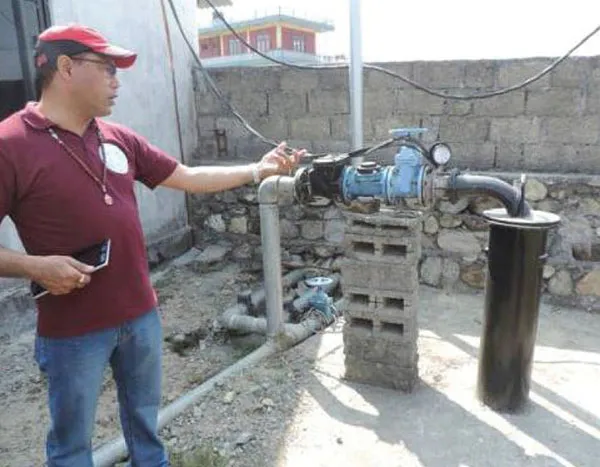
Photo: MWSI
LSTWSSUC appreciates the result of the WOPs Program, especially having made history in Nepal by improving water operators’ capacity. As such, they have set aside a yearly budget for similar endeavors. In succeeding years, when mentors and ADB visit Nepal, they will see how LSTWSSUC’s services have transformed because of the partnership.
Improving Operational Efficiency of Small-Scale Systems in Nepal
Outside Nepal’s capital, Kathmandu, water supply and sanitation services are provided by small- scale operators called water users and sanitation committees (WUSCs). These WUSCs are supported by the Department of Water Supply and Sewerage (DWSS), the agency responsible for building institutional capacities of all water service providers in the country. This includes the National Water Supply and Sanitation Training Center (NWSSTC), formerly known as the Central Human Resources Development Unit (CHRDU), which designs and implements training programs for WUSCs with the goal to improve the latter’s operational efficiency
Seeking to deviate from the usual training programs, DWSS participated in the WOPs Program and requested to receive mentoring in the fields of water loss or nonrevenue water (NRW) management and water quality management.
Leknath Small Town Water Supply and Sanitation User Committee (LSTWSSUC), which manages around 6,100 connections and provides drinking water services in Leknath, was chosen as the frontline operator to test out this unconventional, on-the-field type of training.
The mentor under this partnership is Maynilad Water Services Incorporated (MWSI), a private water and wastewater service provider in Manila, the Philippines. Its coverage area includes 17 cities and municipalities comprising the west zone of the Greater Metro Manila Area.
Though seemingly in contrast with the Leknath operator in terms of scale and customer base, MWSI has used a formula that is suitable for Leknath. It successfully improved its NRW levels from 67% in 1997 to 31% in 2015.
MWSI’s Maynilad Water Academy (MWA), in coordination with NWSSTC, led the twinning partnership between LSTWSSUC and MWSI. The partnership focused on the development and implementation of a curriculum for NRW management and water quality management of small-scale water systems, as well as developing LSTWSSUC’s capacity.
MWSI, DWSS, and LSTWSSUC developed a joint work plan spanning 27 months (from May 2013 to August 2015), which included a series of site visits, training sessions, continuous communication (through e-mail and video chat) in between visits, and training of trainers. The twinning arrangement also consisted of upgrading the CHRDU to NWSSTC to be more professionally managed and able to provide technical training courses in water loss and water quality management to local operators in Nepal, and training DWSS personnel on the establishment of district metered areas (DMAs) and its analysis.
The partnership was highly successful. By March 2016, at the concluding workshop, the noted accomplishments included:
• The formation of 10 DMAs, which served as “laboratory” for the operators;
• Training by MWSI experts on step testing, identification and installation of pressure points, and identification and documentation of reported leakages benefitting DWSS and local operators;
• Establishment of a customer meter inventory (around 7,000 meters profiled) and facilitating the installation and/or replacement of water meters and regular metering program;
• Improvement of institutional capacity of NWSSTC and acquisition of an ISO9001 certification;
• Development of a training course for local operators provided in the native language; and
• Improvement of laboratories, identification and installation of 18 sampling points, and development of a water quality monitoring protocol.
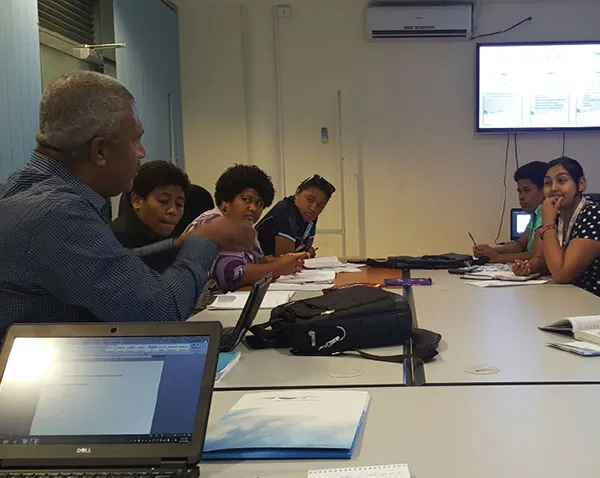
Photo: Hunter Water Australia
In the Pacific, although water operations are small, every problem is heightened and much more pronounced. WAF’s unique situation makes them appreciate even more the value of a twinning program, where they can learn about operational best practices from more sophisticated fellow operators. For WAF, it’s a privilege to get this kind of assistance.
Fiji and Australia’s Partnership Resulting to More Professionalized Water Operations
The Water Authority of Fiji (WAF) is the Pacific’s largest and leading water utility. It provides water and wastewater services to over 144,000 residential and nonresidential metered connections in mostly urban areas and around 700,000 people in rural areas nationwide.
Given its considerable coverage and the demands of providing better and improved services to customers, WAF aims to pursue innovations that would help attain this objective. The operator decided to participate in the WOPs Program to improve its operational efficiency and key business functions. Specifically, WAF sought technical assistance on improving its wastewater operations and NRW management that is tailored to a business management training.
Hunter Water became their mentor under the program, which is supported by the Pacific Region Infrastructure Facility. Hunter Water refers to the group of companies comprising Hunter Water Corporation, the public water and wastewater provider for the lower Hunter region of New South Wales, Australia, and its subsidiary company, Hunter Water Australia (HWA), a specialist technical and operations firm in water and wastewater. An exhaustive list of topics were covered with Hunter Water’s guidance:
• Water quality. A refresher course was given to WAF’s National Water Quality Laboratory personnel, focusing on the HWA laboratory methods for analysis and suitability of techniques employed, equipment used, technical skills needed, and safety and quality assurance practices.
• Service level and business case. Sessions included accounting management, water loss management, and operational efficiency of treatment plants (i.e., exploring various energy- saving measures, energy audit, maintenance, etc.).
• Water system modeling. This consisted of meter exchange, data analysis of customer meter reading and consolidated consumption data, application of modeling software, data trimming, and familiarization exercise.
The mentoring program brought about tangible results in such a short duration. These included:
• Establishment of a NRW unit to focus more on water flow monitoring and the implementation of a meter management program (this unit was instrumental in the replacement of around 26,000 meters that contributed to bringing down NRW levels from 51% in 2013 to 46% in 2015);
• Institutionalization of the conduct of energy audits in WAF operations, which generated savings estimated to be around $1.3 million in less than 2 years;
• Reduction in the number of areas with intermittent water supply from 67 (2013) to 14 (2015) as a result of the water system modeling conducted;
• Generating additional income ranging from $2,000 to $6,000 per quarter as a result of the above, and reducing water carting cost of about $900,000;
• Increased capital funding from $33 million (2014) to $82 million (2015) as a result of the business planning exercise;
• Review and update of master plan; and
• Improvement of laboratory processes and procedures with the acquisition of new equipment and the integration of new methods.
The twinning engagement, which was initially set for only one year, was soon extended. WAF management, upon seeing the immediate results of the program and realizing the vast potential it can bring, requested to pursue a second phase of the arrangement. This was keenly supported by ADB. By the end of the extension, WAF and HWA were able to develop a capital expenditure works procedure manual and wastewater modeling using advanced software. The two also initiated methodologies for project delivery and detailed design.
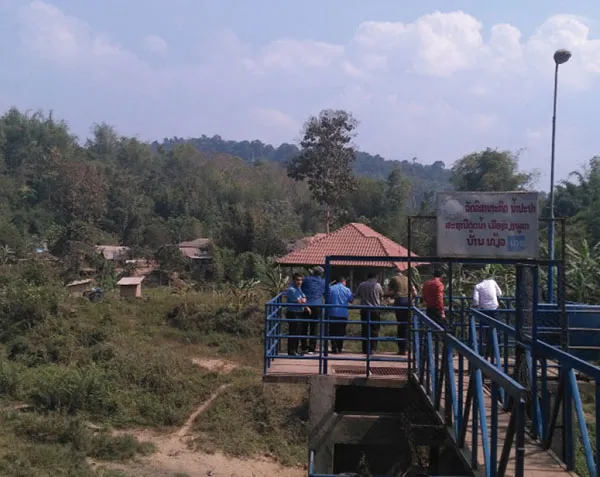
Photo: BIWASE
The close relationship with NPNL encouraged BIWASE to pursue at winning program supported by ADB. The twinning not only strengthened BIWASE’s technical competencies but also their ties with fellow utilities experts.
Optimizing Water Supply Services through Improved Operations in Vientiane, Lao People’s Democratic Republic
Vientiane, home to nearly 800,000 residents (as of 2015), is the capital and the largest city of Lao People’s Democratic Republic (Lao PDR). It is the driving force of the national economy, in large part due to its thriving tourism industry, which attracts a steady influx of tourists annually thanks to its renowned temples and Buddhist monuments. The inflow of foreign investments in the city over the recent years has also contributed immensely to the country’s overall economic development.
The provision and maintenance of the city’s basic infrastructure and services are vital in sustaining the gains from this reinvigorated economic activity. Interventions that meet the public’s growing needs must also be in place.
In terms of water supply, the responsibility falls on Nam Papa Nakhone Luang (NPNL), a state-owned and-controlled corporation. NPNL is responsible for sourcing, treating, and delivering potable water supply to the residents of six towns and two suburbs in Vientiane.
Water supply coverage is currently estimated at around 67%, comprising about 100,000 service connections. With continued rapid population growth an...
Table of contents
- Front Cover
- Title Page
- Copyright Page
- Contents
- Acknowledgments
- Abbreviations
- Introduction
- Asset Management
- Nonrevenue Water Management
- Wastewater Management
- Public-Private Partnership
- Sustainability
- Back Cover
Trusted by 375,005 students
Access to over 1.5 million titles for a fair monthly price.
Study more efficiently using our study tools.
Frequently asked questions
Yes, you can cancel anytime from the Subscription tab in your account settings on the Perlego website. Your subscription will stay active until the end of your current billing period. Learn how to cancel your subscription
No, books cannot be downloaded as external files, such as PDFs, for use outside of Perlego. However, you can download books within the Perlego app for offline reading on mobile or tablet. Learn how to download books offline
We are an online textbook subscription service, where you can get access to an entire online library for less than the price of a single book per month. With over 1.5 million books across 990+ topics, we’ve got you covered! Learn about our mission
Look out for the read-aloud symbol on your next book to see if you can listen to it. The read-aloud tool reads text aloud for you, highlighting the text as it is being read. You can pause it, speed it up and slow it down. Learn more about Read Aloud
Yes! You can use the Perlego app on both iOS and Android devices to read anytime, anywhere — even offline. Perfect for commutes or when you’re on the go.
Please note we cannot support devices running on iOS 13 and Android 7 or earlier. Learn more about using the app
Please note we cannot support devices running on iOS 13 and Android 7 or earlier. Learn more about using the app
Yes, you can access Forging Partnerships Among Water and Wastewater Operators by in PDF and/or ePUB format, as well as other popular books in Tecnologia e ingegneria & Gestione ambientale. We have over 1.5 million books available in our catalogue for you to explore.