Winner of the Children's Literature Association's 2020 Edited Book Award
Contributions by Hena Ahmad, Linda Pierce Allen, Mary J. Henderson Couzelis, Sarah Park Dahlen, Lan Dong, Tomo Hattori, Jennifer Ho, Ymitri Mathison, Leah Milne, Joy Takako Taylor, and Traise Yamamoto
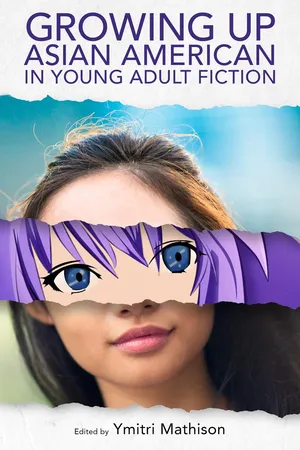
Often referred to as the model minority, Asian American children and adolescents feel pressured to perform academically and be disinterested in sports, with the exception of martial arts. Boys are often stereotyped as physically unattractive nerds and girls as petite and beautiful. Many Americans remain unaware of the diversity of ethnicities and races the term Asian American comprises, with Asian American adolescents proving to be more invisible than adults. As a result, Asian American adolescents are continually searching for their identity and own place in American society. For these kids, being or considered to be American becomes a challenge in itself as they assert their Asian and American identities; claim their own ethnic identity, be they immigrant or American-born; and negotiate their ethnic communities.
The contributors to Growing Up Asian American in Young Adult Fiction focus on moving beyond stereotypes to examine how Asian American children and adolescents define their unique identities. Chapters focus on primary texts from many ethnicities, such as Chinese, Korean, Filipino, Japanese, Vietnamese, South Asian, and Hawaiian. Individual chapters, crossing cultural, linguistic, and racial boundaries, negotiate the complex terrain of Asian American children's and teenagers' identities. Chapters cover such topics as internalized racism and self-loathing; hypersexualization of Asian American females in graphic novels; interracial friendships; transnational adoptions and birth searches; food as a means of assimilation and resistance; commodity racism and the tourist gaze; the hostile and alienating environment generated by the War on Terror; and many other topics.
- 252 pages
- English
- ePUB (mobile friendly)
- Available on iOS & Android
eBook - ePub
Growing Up Asian American in Young Adult Fiction
About this book
Information
Publisher
University Press of MississippiYear
2017Print ISBN
9781496825520
9781496815064
eBook ISBN
9781496815071
Reaching across the Barbed Wire: Interracial Friendships in Young Adult Japanese American Incarceration Literature
Traise Yamamoto
The bombing of Pearl Harbor on December 7, 1941, remains a defining moment in Japanese American history. The incarceration of some 120,000 persons of Japanese descent—which included anyone with a one-sixteenth Japanese blood quantum—laid the groundwork of and the terms for their collective relationship to the US nation-state and to Nikkei identity.1 Fully two-thirds of those forcibly dislocated and imprisoned were American citizens, putting into crisis the issue and meaning of US citizenship; national, social, and cultural inclusion; and loyalty and group identification. President Roosevelt’s signing of Executive Order 9066 signified the extent to which the rights of citizenship and national identity could not be assumed as a consequence of birth but rather were conferred or granted. While the state benefits from subjects’ affective identification as American—that is, the emotional and social identification with “Americanness”—it simultaneously reserves the right to juridically grant or deny the legal rights of citizenship from which that affective identification comes.
Thus, the story of World War II Japanese American incarceration is a story about state power rather than simply about injustice.2 Although the latter invariably involves power, and more particularly its misuse, focusing on injustice can too often leave the fact of power itself uninterrogated, emphasizing as it does the deployment of power rather than its constitution. The dual nature of citizenship—both affective and juridical—finds its corollary in the emotional sense of injustice and unfairness, on one hand, and the restricted range of agency due to governmental misuse of power and the failures of democracy, on the other. Too often, the affective dimension of citizenship is deployed to invoke and emphasize an interpersonal, private feeling, leaving questions of personhood, legal citizenship, and public subjectivity by the wayside.
In young adult literature written about Japanese American incarceration during World War II, the necessity of relaying the historical realities for young readers, most of whom have been taught little to nothing about it in school, must also be entwined with an engaging character-driven narrative whose resolution follows the arc from removal to release. In the texts discussed in this chapter, published between 1945 and 2011, the incarceration is enfolded in storylines that feature an interracial friendship between the Japanese American protagonist and a non-Japanese friend. The extent to which the legal modalities of citizenship are subordinated to the narrative of friendship differs in these texts: in some the incarceration becomes the historical backdrop against which the friendship unfolds in tandem with a sentimentalized narrative of honorably endured injustice. Thus, friendship is constructed as a metaphor for the affective mode of citizenship, through which register the injustice of incarceration is counterbalanced by a non-Japanese American friend who, despite general national hysteria, remains loyal to the Japanese American protagonist. In other texts, the friendship is a metaphor for both the limits and the possibilities of coalitional relationships across racial and ethnic lines. In these narratives, friendship does not follow from ideological discourses about equality but rather flourishes despite the nation’s failure to live up to those ideals. That is, there is a significant shift from liberal multi-culturalist frameworks that position interracial friendship as following from and fulfilling the promise of equality to a more critical awareness that such friendships are formed despite national practices of differential racism.
This chapter argues that juridical issues of American citizenship are either subordinated or foregrounded in young adult literature dealing with Japanese American incarceration and that tracing these different responses in young adult (YA) literature between 1945 and the present registers the shifting discourses around race, citizenship, and state power. The six key texts under discussion here—The Moved-Outers (1945), Journey to Topaz (1971), Journey Home (1978), The Moonbridge (1992), Weedflower (2006), and Sylvia and Aki (2011)—constitute an overwhelming percentage of YA texts dealing with the Japanese American incarceration. That all feature an interracial friendship speaks to the significant role of friendship as a site for thinking through the often conflicting vertices of juridical, social, and affective citizenship. It is of note that most of those books published in the immediate aftermath of the war and through the end of the twentieth century feature Caucasian female friends; however, in the past decade, interracial friendship has begun to be represented differently, in terms of both race and gender. In these more recent texts, the interracial relationship is not Japanese–white but rather between a Japanese American protagonist and a friend—in one instance, a male friend—who is a person of color. In these texts, issues of power are much more foregrounded: the experiences of the two friends register the modes of state power in relation to different communities of color.
In Disturbing the Universe: Power and Repression in Adolescent Literature, Roberta Seelinger Trites asserts that adolescence is the period during which the subject becomes aware of how subjectivity is both constrained and constituted by multiple vertices of power. She argues that literature written for adolescents “itself serves as a discourse of institutional socialization” and that this is clearest when novels directly address the realm of the political.3 “When ideologies in YA novels focus specifically on government,” she writes, “they tend to convey to adolescents that they are better served by accepting than by rejecting the social institutions with which they must live. In that sense, the underlying agenda of many YA novels is to indoctrinate adolescents into a measure of social acceptance.”4 Though such novels do not function in a reductively didactic way, Trites here recognizes the ways in which narrative works to secure, articulate, and, in some senses, argue for the subject’s identificatory relationship to the social order as she or he moves from childhood to young adulthood.
However, examining the differing representations of interracial friendship in YA literature about Japanese American incarceration suggests that such texts increasingly argue against uncritical identification with the dominant social order and the state, offering instead models of resistance and critique that do not simply reiterate the clichés of American democratic ideology. Thus, the extent to which affective citizenship is used, or not used, to override the uneven and racialized application in the juridical and social realms indexes the degree of identification with hegemonic discourses of the state.
Liberal Multiculturalism in The Moved-Outers and The Moonbridge
Though nearly half a century divides the publication dates of the first two texts to be discussed, their pairing reveals the endurance of liberal democratic ideals in their more recent incarnation as (liberal) multiculturalism. The common root is the discourse of “inclusion” and “tolerance” that characterizes both. The logic of inclusive tolerance, however, is not a mechanism for change: the social structure itself does not change but merely accommodates. Difference is permissible, even welcome as variety, so long as it remains contained and accounted for within the given structure. When that structure is the prevailing political and social order, the discourse of inclusion is, then, the discourse of the status quo with which, as Trites suggests, the subject must identify.
Nowhere is the role of YA literature as a catalyst for cathecting to the social order clearer than in a very early novel about the incarceration, The Moved-Outers, published in 1945, before the very last of the concentration camps had been closed.5 Written by Florence Crannell Means (1891–1980), The Moved-Outers received a Newbery Honor award in 1946. Means wrote several books for children and young adults, spanning from the 1930s to the 1960s, and she was one of the first authors to write novels featuring young people of color as main characters. As scholars have pointed out, it was rare for YA novels published prior to 1970 to feature non-white characters either prominently or with much complexity. This reflected both the blind spots of the largely white authors and the tenor of the times and level of readers’ receptiveness.6 Despite having been recognized by the prestigious Newbery award, for instance, The Moved-Outers did not receive widespread attention. As Kay E. Vandergrif notes, “the reception … proved to be a mixed one. In spite of its literary awards, many schools and libraries did not purchase this book. Anti-Japanese feelings, even against the Nisei or those born and educated in this country, still ran high at its time of publication on February 28, 1945, especially on the West Coast.”7 Furthermore, even those who were more sympathetic to what had happened to Japanese Americans during the war “were often embarrassed by the actions of this country’s War Relocation Authority and did not want to expose their shameful actions to young people. For these reasons, The Moved-Outers did not achieve the readership or visibility it deserved and was, for a long time, one of those Newbery Honor books available but not generally known by young people.”8
The Moved-Outers is a clearly sympathetic account of what happened to the Nikkei during World War II, and given the social and racial climate of the mid-1940s, the time during which it was written and published is important to take into account. That said, it is instructive to use Means’s text as a point of orientation in the arc of YA literature written about the incarceration. The message of inclusion and the implicit argument for racial equality evident in Means’s text must be understood to resonate in one way at the time of its publication—one marked by still-virulent anti-Japanese sentiment—and another in the present, wherein such models of inclusion are understood to leave the prevailing social, political, and national order uninterrogated and unchanged. In other words, as ahead of its time as it was in the postwar period, The Moved-Outers attests to a model of liberal democratic humanism (we are all the same) as well as a model that looks forward to liberal multiculturalist models whose logic of difference and inclusion (difference as an enriching variation on a theme) does not interrogate, undermine, or seek to dismantle given frameworks.
The Moved-Outers offers the story of a Nikkei family, the Oharas, whose teenaged daughter Sue/Sumiko is the main character. The narrative begins on the Friday afternoon before Sunday, December 7, 1941. The text’s fourth sentence introduces Sue’s best friend since kindergarten, Emily Andrews. By page 2 of the text, it is established that the Ohara family celebrates Christmas, and by page 3 we are told that Sue’s oldest brother, Tad, is in the army. Thus, within the very first pages of the text, readers are to understand that Sue’s best friend is a white American; that the Oharas, including the Japanese parents, celebrate Christian holidays; and that the family has patriotically committed to the United States through their enlisted son. The family’s adherence to social codes of “normalcy” is well established. Furthermore, the Oharas’ place in the community of Cordova, California, is secured by their twenty-five-year residency, but more importantly, “being the only Japanese inside the town, the Oharas had been judged more on their worth as individuals than if they had been members of a close-packed colony, like most of the West Coast Japanese.”9 Thus not only are the Oharas depicted as solidly in line with normative national and religious values, but they are also represented as interacting regularly with their white neighbors, schoolmates, and friends rather than primarily with other Japanese. Additionally, the discourse of individualism, by which the Oharas’ “worth” has been “judged,” oddly suggests that they are just like everyone else, except for their Japanese features.
Sue’s second oldest brother, Kim/Kimio, is first introduced just after he has triumphed in a school debate, in which “he quoted the Bible and Lincoln and poetry and the encyclopedia,” finishing with “chunks of the Gettysburg Address” and “fiery patriotism.”10 If, as theorist Louis Althusser suggests, the education system is a primary state ideological apparatus through which persons are interpellated—the process through which persons are constructed as subjects, and therefore subject to the state—this opening scene doubles the scene of interpellation. Within the diegetic frame of the text, Kim and his fellow students’ debate is really not one that critiques the ideologies of democracy and patriotism; rather, the debate is how best to fulfill what are assumed to be unassailable national values. Kim Ohara’s sense of affective citizenship, then, is predicated on the extent to which he accedes to the ideologies of the nation-state. Moreover, the text “itself serves as a discourse of institutional socialization”11 in that it implicitly addresses itself to its presumed young readers, demonstrating for them the emotional response (“fiery patriotism”) appropriate to discourses of democracy and national identity.
Significantly, it is Kim who, during the process of removal and incarceration, begins to question what democracy might mean in such a situation. Taking issue with what he sees as his community’s acquiescence, he protests, “I can’t see why you want to perpetuate this nightmare.… Hugging your chains!”12 It is clear from the narrative context that Kim’s anger threatens to undermine his identification with America. However, when another boy Kim’s age angrily comments that “being herded like cattle … shows how much democracy’s worth,” Kim passionately defends the wartime measures that must be taken: “A democracy can’t function so democratically when it’s got a war on its hands.”13 Sue, looking on, notes that the other boy “looked like the cartoons labeled ‘Jap’ in the newspapers.”14
Appearance, apparently like democracy, is malleable and context dependent. The Moved-Outers inadvertently reinforces the wartime suspicion that the Nikkei could be “flipped,” provoked or not. The logic of visual difference at work here is that Japanese features are illegible, indeed inscrutable, in relation to issues of loyalty. Only unequivocal support of US democratic ideals renders the Nikkei sympathetic as victims of a harsh governmental mandate. Any critique is constructed as “Jap”-like, thus subtly supporting the logic of the incarceration. The Japanese body is always already suspect; it is only through the discourse of American ideologies of democracy, freedom, and patriotism that that body’s alien and potentially traitorous capacities are redirected and properly molded. Indeed, the extent to which the Japanese body must be subordinated to Americanness is suggested in the differences between the American-born Nisei and their immigrant p...
Table of contents
- Cover
- Title Page
- Copyright
- Dedication
- Contents
- Acknowledgments
- Introduction: Growing Up Asian American in Young Adult Fiction
- The Monkey and the Colonoscopy Machine: On the Destruction of Racism and Stereotype in Gene Luen Yang’s American Born Chinese and Level Up
- Moving from the Margins: Confronting the Hypersexualization of Asian American Females in Graphic Fiction
- The Productive Pedagogy of Ambiguity in Lynda Barry’s One Hundred Demons
- Identifying the Filipino American Bildungsroman: Whiteness, Ambivalence, and Masculinity in Brian Ascalon Roley’s American Son
- Reaching across the Barbed Wire: Interracial Friendships in Young Adult Japanese American Incarceration Literature
- “It Is Part of Our Adoption Life Journey”: Birth Searching and Transnationally Adopted Koreans in Young Adult Fiction
- Consuming Vietnamese America One Bite at a Time: Stealing Buddha’s Dinner and Inside Out & Back Again
- South Asian American Children’s Search for Identity in the Aftermath of 9/11 in South Asian American Young Adult Fiction
- The Melting Pot Boiled Over: Hawaiian American Ethnicities and Self-Authorship in Lois-Ann Yamanaka’s Name Me Nobody and Blu’s Hanging
- Adorable Aloha: Tracing the Tourist Gaze in the American Girl Books
- Contributors
- Index
Trusted by 375,005 students
Access to over 1.5 million titles for a fair monthly price.
Study more efficiently using our study tools.
Frequently asked questions
Yes, you can cancel anytime from the Subscription tab in your account settings on the Perlego website. Your subscription will stay active until the end of your current billing period. Learn how to cancel your subscription
No, books cannot be downloaded as external files, such as PDFs, for use outside of Perlego. However, you can download books within the Perlego app for offline reading on mobile or tablet. Learn how to download books offline
Perlego offers two plans: Essential and Complete
- Essential is ideal for learners and professionals who enjoy exploring a wide range of subjects. Access the Essential Library with 800,000+ trusted titles and best-sellers across business, personal growth, and the humanities. Includes unlimited reading time and Standard Read Aloud voice.
- Complete: Perfect for advanced learners and researchers needing full, unrestricted access. Unlock 1.5M+ books across hundreds of subjects, including academic and specialized titles. The Complete Plan also includes advanced features like Premium Read Aloud and Research Assistant.
We are an online textbook subscription service, where you can get access to an entire online library for less than the price of a single book per month. With over 1.5 million books across 990+ topics, we’ve got you covered! Learn about our mission
Look out for the read-aloud symbol on your next book to see if you can listen to it. The read-aloud tool reads text aloud for you, highlighting the text as it is being read. You can pause it, speed it up and slow it down. Learn more about Read Aloud
Yes! You can use the Perlego app on both iOS and Android devices to read anytime, anywhere — even offline. Perfect for commutes or when you’re on the go.
Please note we cannot support devices running on iOS 13 and Android 7 or earlier. Learn more about using the app
Please note we cannot support devices running on iOS 13 and Android 7 or earlier. Learn more about using the app
Yes, you can access Growing Up Asian American in Young Adult Fiction by Ymitri Mathison in PDF and/or ePUB format, as well as other popular books in Literature & Literary Criticism. We have over 1.5 million books available in our catalogue for you to explore.