![]()
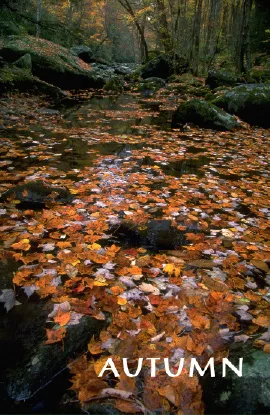
AUTUMN
![]()
Trees
Trees and the Sacred
As a graduate student, I recollect the Professor of Divinity reading the following passage from the Hebrew philosopher Martin Buber (1878–1965) for discussion in a seminar:
I consider a tree.
I can look at it as a picture: stiff column in a shock of light, or a splash of green shot with the delicate blue and silver of the background.
I can perceive it as movement: flowing veins on clinging pith, suck of the roots, breathing of the leaves, ceaseless commerce with earth and air—and the obscure growth itself. I can classify it in a species and study it as a type in its structure and mode of life. . . .
It can, however, come about, if I have both will and grace, that in considering the tree I become bound up in relation to it. The tree is no longer It. I have been seized by the power of exclusiveness. . . .
Everything belonging to the tree is in this: its form and structure, its colors and chemical composition, its intercourse with the elements and with the stars, are all present in a single whole. . . . Let no attempt be made to sap the strength from the meaning of relation: relation is mutual. [I and Thou, trans. Ronald Gregor Smith (Edinburgh: T. and T. Clark, 1937), pp. 7–8]
I remember the sound of supercilious, muffled laughter that greeted the reading of the passage, and yet it seems now so sensible and sympathetic. Christian orthodoxy still wishes to revere the Creator but not Creation.
Trees in Shinto
In Shinto a tree may be a kami (shinboku) around whose wide trunk a thick twisted rope, a shimenawa, is tied to show its sacred status. There are too many famous shinboku throughout Japan to detail. Nearly every village or town has one in the precincts of its largest shrine. Some are famous because of historical incidents that happened to them and others simply because of their venerable age.
In Shinto rituals, the kami descend upon evergreens, principally the sakaki, unique to Japan and related to the camellia. It was in the forests and groves of Japan that the sense of sacred places found its origin. Many of these sites subsequently became shrines.
In these places we can contemplate not only our human dependence upon the tree for continued life but also the tree as a symbol of the creative and protective powers of nature. The litany here seeks to draw attention to this.
The Litany of the Tree
OBSERVATION: KANNAGARA
Leader Trees teach us about growth
They also stand for shelter
They are, like water, living organisms
Ponder the meaning of growth and development
Think of how we know nature through our senses, our eyes, our taste, our sense of smell and touch, our awareness and deep intuitions
Let us think of the self-disclosure of the divine in the providence and power of nature
Let us think of the trees as expressions of beauty, power, and energy united in endless renewal
All Our senses have been dulled and dimmed, and we see nature not as the environment of our life, but as a tool to be used, trees for building and burning
Our senses are blind to its mystery and meaning
Our senses need the purification that will enable us to see nature as our teacher and guide
INVOCATION: DAISHIZEN
Leader In the life of a tree, we may see a microcosm of the universe
All Great Trees, speak to us and teach us your wisdom
In opening ourselves to nature, in seeking its purification, and in hearing what it has to teach us, may we find enlightenment as we share in the fusion of ourselves with the universe that brings us back to the divine that is within the human
INSPIRATION: KAMI
Leader Speak to us of the flow of life as growth and not as completion, not as alpha and omega, but as the beginning that never ends and the end that never ceases—like the acorn that grows into the mighty oak
Speak to us of the meaning of change, purification, and the communion of elements within the process of becoming eternally new
All Teach us the meaning of purity, brightness, and the uprightness of the soul
Teach us how to return to our higher origins
Teach us the power of purification
PURIFICATION: HARAI
Leader Let us repeat the words of the Rokkon-shojo with careful minds
All Although the impure and polluted appears before my eyes, I will not let it blind me
Although it strikes my ears, I will not le...