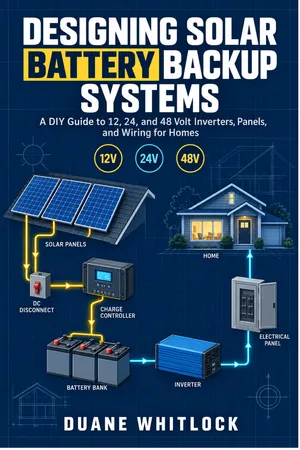
A backup system either carries your loads through the outage or it does not, and the difference is arithmetic you can do yourself.
This guide walks you through that arithmetic step by step, from the first load audit to the final commissioning check. You will measure real appliance draw and build an honest watt-hour budget, size an array from peak sun hours, correct string voltage for the coldest morning of the year, and choose a maximum power point controller that matches it. No hand-waving, no rule-of-thumb shortcuts that fail in February.
You will compare lithium iron phosphate and lead-acid banks, size amp-hours to your runtime, decide between 12, 24 and 48 volt buses, select inverter continuous and surge ratings, and size conductors, fuses, disconnects and bonding correctly. Closing chapters cover the critical loads subpanel, transfer switching, permits, commissioning and fault finding. Written for capable homeowners, cabin and van builders, and new solar installers who want a system that works when the grid does not.
What you will learn:
• Four ways to build a backup system and how to choose the right architecture for your site
• How to run a load audit that measures real appliance draw and produces an honest watt-hour budget
• How to size a solar array from peak sun hours and correct string voltage for the coldest morning of the year
• How to select and configure a maximum power point charge controller that matches your array and bank
• How to compare lithium iron phosphate and lead-acid batteries and size amp-hours to your required runtime
• How to choose between 12, 24 and 48 volt buses and select inverter continuous and surge ratings
• How to size conductors, overcurrent protection, disconnects, grounding and bonding correctly
• How to connect to the house with a critical loads subpanel and transfer switching, including permits
• How to commission, monitor, maintain and troubleshoot the system once it is running
This book is for capable homeowners, cabin and van builders, and new solar installers who want a backup system that carries the loads that matter. If you can read a multimeter and follow a wiring diagram, you can build and maintain the system described here.