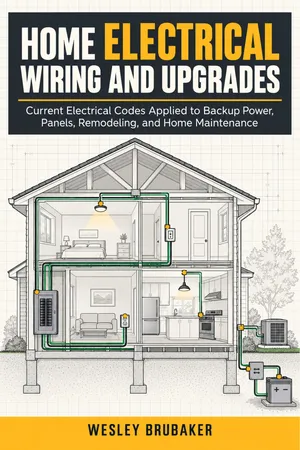
Wiring that passes inspection is wiring you can explain. This book teaches you to do both.
Most electrical guides show you how to connect wires. This one teaches you why the connection is made that way, how the code is organized, and what an inspector actually checks before signing off. You will work through service entrances, panelboards, busbars, and breaker selection before running a single cable, so every decision is grounded in the requirements that govern it.
From there, you will perform standard and optional dwelling load calculations, size conductors with temperature and bundling corrections, check voltage drop on long runs, count box fill, and get grounding and bonding right from electrode to equipment conductor. Device chapters cover ground-fault and arc-fault protection, three-way and four-way switching, smart-device neutrals, and dimmer compatibility. Later chapters take on subpanels, detached buildings, panel upgrades, generator interlocks and transfer switches, battery storage, vehicle charging circuits, old wiring, and systematic troubleshooting.
What you will learn:
• How the electrical code is structured and what an inspector looks for during a permit inspection
• Service entrance, meter, and panelboard installation, including busbar and breaker selection
• Standard and optional dwelling load calculations and circuit planning
• Conductor sizing with temperature and bundling corrections, voltage drop checks, and box fill
• Grounding and bonding from the electrode to the equipment grounding conductor
• Receptacles, switches, GFCI and AFCI protection, and smart-device wiring requirements
• Lighting and controls, including three-way and four-way switching and dimmer compatibility
• Room-by-room circuit requirements for kitchens, baths, bedrooms, and living areas
• Subpanels, feeders, detached buildings, panel upgrades, generator interlocks, transfer switches, battery storage, and EV charging circuits
• Remodeling, older wiring methods, and systematic troubleshooting techniques
Written for homeowners, remodelers, and apprentice electricians, this book builds the knowledge to plan, install, and explain residential electrical work with confidence. Whether you are upgrading a panel, adding a subpanel to a detached garage, wiring a backup power system, or preparing for inspection, the chapters give you a clear path from code language to finished, compliant work.