- English
- ePUB (mobile friendly)
- Available on iOS & Android
eBook - ePub
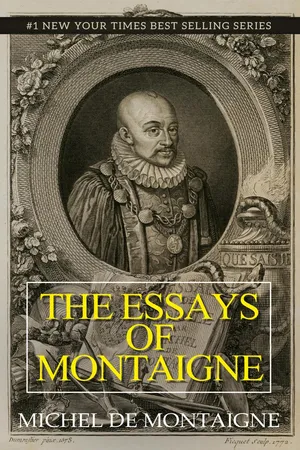
THE ESSAYS OF MONTAIGNE, COMPLETE
About this book
Considered the inventor of the essay itself, Michel de Montaigne published Essays (Essais, literally "Attempts") in 1850. Known for his skill at merging serious intellectual debate with personal anecdotes, his vast work collects together some of the most influential essays the world has ever seen, shaping the thoughts Blaise Pascal, René Descartes, Ralph Waldo Emerson, Stefan Zweig, Friedrich Nietzsche, Jean-Jacques Rousseau and Isaac Asimov among others. Montaigne stated that his aim in writing these works was to describe humankind, including himself, with complete frankness.The Essays of Michel de Montaigne cover a wide range of topics and explore his thoughts, his life and learning in written form. The essays are widely regarded as the predecessor of the modern essay: a focused treatment of issues, events and concerns past, present and future. Montaigne wrote in a kind of crafted rhetoric designed to intrigue and involve the reader, sometimes appearing to move in a stream-of-thought from topic to topic and at other times employing a structured style which gives more emphasis to the didactic nature of his work. His arguments are often supported with quotations from Ancient Greek, Latin and Italian texts, which he quotes in the original source. Montaignes stated goal in his book is to describe man, and especially himself, with utter frankness and honesty ("bonne foi"). He finds the great variety and volatility of human nature to be its most basic features, which resonates to the Renaissance thought about the fragility of humans. According to the scholar Paul Oskar Kristeller, "the writers of the period were keenly aware of the miseries and ills of our earthly existence". A representative quote is "I have never seen a greater monster or miracle than myself." He opposed the conquest of the New World, deploring the suffering it brought upon the natives. He is highly skeptical of confessions obtained under torture, pointing out that such confessions can be made up by the suspect just to escape the torture he is subjected to. In the middle of the section normally entitled "Mans Knowledge Cannot Make Him Good," he wrote that his motto was "What do I know?". The essay on Sebond ostensibly defended Christianity. However, Montaigne eloquently employed many references and quotes from classical Greek and Roman, i.e. non-Christian authors, especially the atomist Lucretius. Montaigne considered marriage necessary for the raising of children, but disliked the strong feelings of romantic love as being detrimental to freedom. One of his quotations is "Marriage is like a cage; one sees the birds outside desperate to get in, and those inside desperate to get out." In education, he favored concrete examples and experience over the teaching of abstract knowledge that is expected to be accepted uncritically. The remarkable modernity of thought apparent in Montaignes essays, coupled with their sustained popularity, made them arguably the most prominent work in French philosophy until the Enlightenment. Their influence over French education and culture is still strong.Michel de Montaigne was one of the most influential figures of the Renaissance, singlehandedly responsible for popularising the essay as a literary form. This Penguin Classics edition of
The Complete Essays is translated from the French and edited with an introduction and notes by M.A. Screech.In 1572 Montaigne retired to his estates in order to devote himself to leisure, reading and reflection. There he wrote his constantly expanding assays, inspired by the ideas he found in books contained in his library and from his own experience. He discusses subjects as diverse as war-horses and cannibals, poetry and politics, sex and religion, love and friendship, ecstasy and experience. But, above all, Montaigne studied himself as a way of drawing out his own inner nature and that of men and women in general.
Information
Subtopic
ClassicsIndex
LiteratureTable of contents
- I. TO MONSIEUR DE MONTAIGNE
- II. TO MONSEIGNEUR, MONSEIGNEUR DE MONTAIGNE.
- III. TO MONSIEUR, MONSIEUR DE LANSAC,
- IV. TO MONSIEUR, MONSIEUR DE MESMES, LORD OF ROISSY AND MALASSIZE, PRIVY
- V. TO MONSIEUR, MONSIEUR DE L’HOSPITAL, CHANCELLOR OF FRANCE
- VI. TO MONSIEUR, MONSIEUR DE FOLX, PRIVY COUNCILLOR, AND AMBASSADOR OF HIS MAJESTY TO THE SIGNORY OF VENICE.
- VII. TO MADEMOISELLE DE MONTAIGNE, MY WIFE.
- VIII. TO MONSIEUR DUPUY,
- IX. TO THE JURATS OF BORDEAUX.
- X. TO THE SAME.
- XI. TO THE SAME.
- XII.
- XIII. TO MADEMOISELLE PAULMIER.
- XIV. TO THE KING, HENRY IV.
- XV. TO THE SAME.
- XVI. TO THE GOVERNOR OF GUIENNE.
- CHAPTER I THAT MEN BY VARIOUS WAYS ARRIVE AT THE SAME END.
- CHAPTER II OF SORROW
- CHAPTER III THAT OUR AFFECTIONS CARRY THEMSELVES BEYOND US.
- CHAPTER IV THAT THE SOUL EXPENDS ITS PASSIONS UPON FALSE OBJECTS, WHERE THE TRUE ARE WANTING
- CHAPTER V WHETHER THE GOVERNOR OF A PLACE BESIEGED OUGHT HIMSELF TO GO OUT TO PARLEY
- CHAPTER VI THAT THE HOUR OF PARLEY DANGEROUS
- CHAPTER VII THAT THE INTENTION IS JUDGE OF OUR ACTIONS
- CHAPTER VIII OF IDLENESS
- CHAPTER IX OF LIARS
- CHAPTER X OF QUICK OR SLOW SPEECH
- CHAPTER XI OF PROGNOSTICATIONS
- CHAPTER XII OF CONSTANCY
- CHAPTER XIII THE CEREMONY OF THE INTERVIEW OF PRINCES
- CHAPTER XIV THAT MEN ARE JUSTLY PUNISHED FOR BEING OBSTINATE IN THE DEFENCE OF A FORT THAT IS NOT IN REASON TO BE DEFENDED
- CHAPTER XV OF THE PUNISHMENT OF COWARDICE
- CHAPTER XVI A PROCEEDING OF SOME AMBASSADORS
- CHAPTER XVII OF FEAR
- CHAPTER XVIII THAT MEN ARE NOT TO JUDGE OF OUR HAPPINESS TILL AFTER DEATH.
- CHAPTER XIX THAT TO STUDY PHILOSOPY IS TO LEARN TO DIE
- CHAPTER XX OF THE FORCE OF IMAGINATION
- CHAPTER XXI THAT THE PROFIT OF ONE MAN IS THE DAMAGE OF ANOTHER
- CHAPTER XXII OF CUSTOM, AND THAT WE SHOULD NOT EASILY CHANGE A LAW RECEIVED
- CHAPTER XXIII VARIOUS EVENTS FROM THE SAME COUNSEL
- CHAPTER XXIV OF PEDANTRY
- CHAPTER XXV OF THE EDUCATION OF CHILDREN
- CHAPTER XXVI THAT IT IS FOLLY TO MEASURE TRUTH AND ERROR BY OUR OWN CAPACITY
- CHAPTER XXVII OF FRIENDSHIP
- CHAPTER XXVIII NINE AND TWENTY SONNETS OF ESTIENNE DE LA BOITIE
- CHAPTER XXIX OF MODERATION
- CHAPTER XXX OF CANNIBALS
- CHAPTER XXXI THAT A MAN IS SOBERLY TO JUDGE OF THE DIVINE ORDINANCES
- CHAPTER XXXII THAT WE ARE TO AVOID PLEASURES, EVEN AT THE EXPENSE OF LIFE
- CHAPTER XXXIII THAT FORTUNE IS OFTEN-TIMES OBSERVED TO ACT BY THE RULE OF REASON
- CHAPTER XXXIV OF ONE DEFECT IN OUR GOVERNMENT
- CHAPTER XXXV OF THE CUSTOM OF WEARING CLOTHES
- CHAPTER XXXVI OF CATO THE YOUNGER
- CHAPTER XXXVII THAT WE LAUGH AND CRY FOR THE SAME THING
- CHAPTER XXXVIII OF SOLITUDE
- CHAPTER XXXIX A CONSIDERATION UPON CICERO
- CHAPTER XL THAT THE RELISH FOR GOOD AND EVIL DEPENDS IN GREAT MEASURE UPON THE OPINION WE HAVE OF THEM
- CHAPTER XLI NOT TO COMMUNICATE A MAN’S HONOUR
- CHAPTER XLII OF THE INEQUALITY AMOUNGST US.
- CHAPTER XLIII OF SUMPTUARY LAWS
- CHAPTER XLIV OF SLEEP
- CHAPTER XLV OF THE BATTLE OF DREUX
- CHAPTER XLVI OF NAMES
- CHAPTER XLVII OF THE UNCERTAINTY OF OUR JUDGMENT
- CHAPTER XLVIII OF WAR HORSES, OR DESTRIERS
- CHAPTER XLIX OF ANCIENT CUSTOMS
- CHAPTER L OF DEMOCRITUS AND HERACLITUS
- CHAPTER LI OF THE VANITY OF WORDS
- CHAPTER LII OF THE PARSIMONY OF THE ANCIENTS
- CHAPTER LIII OF A SAYING OF CAESAR
- CHAPTER LIV OF VAIN SUBTLETIES
- CHAPTER LV OF SMELLS
- CHAPTER LVI OF PRAYERS
- CHAPTER LVII OF AGE
- BOOK THE SECOND
- CHAPTER I OF THE INCONSTANCY OF OUR ACTIONS
- CHAPTER II OF DRUNKENNESS
- CHAPTER III A CUSTOM OF THE ISLE OF CEA
- CHAPTER IV TO-MORROW’S A NEW DAY
- CHAPTER V OF CONSCIENCE
- CHAPTER VI USE MAKES PERFECT
- CHAPTER VII OF RECOMPENSES OF HONOUR
- CHAPTER VIII OF THE AFFECTION OF FATHERS TO THEIR CHILDREN
- CHAPTER IX OF THE ARMS OF THE PARTHIANS
- CHAPTER X OF BOOKS
- CHAPTER XI OF CRUELTY
- CHAPTER XII. APOLOGY FOR RAIMOND SEBOND.
- CHAPTER XIII OF JUDGING OF THE DEATH OF ANOTHER
- CHAPTER XIV THAT OUR MIND HINDERS ITSELF
- CHAPTER XV THAT OUR DESIRES ARE AUGMENTED BY DIFFICULTY
- CHAPTER XVI OF GLORY
- CHAPTER XVII OF PRESUMPTION
- CHAPTER XVIII OF GIVING THE LIE
- CHAPTER XIX OF LIBERTY OF CONSCIENCE
- CHAPTER XX THAT WE TASTE NOTHING PURE
- CHAPTER XXI AGAINST IDLENESS
- CHAPTER XXII OF POSTING
- CHAPTER XXIII OF ILL MEANS EMPLOYED TO A GOOD END
- CHAPTER XXIV OF THE ROMAN GRANDEUR
- CHAPTER XXV NOT TO COUNTERFEIT BEING SICK
- CHAPTER XXVI OF THUMBS
- CHAPTER XXVII COWARDICE THE MOTHER OF CRUELTY
- CHAPTER XXVIII ALL THINGS HAVE THEIR SEASON
- CHAPTER XXIX OF VIRTUE
- CHAPTER XXX OF A MONSTROUS CHILD
- CHAPTER XXXI OF ANGER
- CHAPTER XXXII DEFENCE OF SENECA AND PLUTARCH
- CHAPTER XXXIII THE STORY OF SPURINA
- CHAPTER XXXIV OBSERVATION ON THE MEANS TO CARRY ON A WAR ACCORDING TO JULIUS CAESAR
- CHAPTER XXXV OF THREE GOOD WOMEN
- CHAPTER XXXVI OF THE MOST EXCELLENT MEN
- CHAPTER XXXVII OF THE RESEMBLANCE OF CHILDREN TO THEIR FATHERS
- BOOK THE THIRD
- CHAPTER I OF PROFIT AND HONESTY
- CHAPTER II OF REPENTANCE
- CHAPTER III OF THREE COMMERCES
- CHAPTER IV OF DIVERSION
- CHAPTER V UPON SOME VERSES OF VIRGIL
- CHAPTER VI OF COACHES
- CHAPTER VII OF THE INCONVENIENCE OF GREATNESS
- CHAPTER VIII OF THE ART OF CONFERENCE
- CHAPTER IX OF VANITY
- CHAPTER X OF MANAGING THE WILL
- CHAPTER XI OF CRIPPLES
- CHAPTER XII OF PHYSIOGNOMY
- CHAPTER XIII OF EXPERIENCE
- APOLOGY:
Trusted by 375,005 students
Access to over 1.5 million titles for a fair monthly price.
Study more efficiently using our study tools.
Frequently asked questions
Yes, you can cancel anytime from the Subscription tab in your account settings on the Perlego website. Your subscription will stay active until the end of your current billing period. Learn how to cancel your subscription
No, books cannot be downloaded as external files, such as PDFs, for use outside of Perlego. However, you can download books within the Perlego app for offline reading on mobile or tablet. Learn how to download books offline
Perlego offers two plans: Essential and Complete
- Essential is ideal for learners and professionals who enjoy exploring a wide range of subjects. Access the Essential Library with 800,000+ trusted titles and best-sellers across business, personal growth, and the humanities. Includes unlimited reading time and Standard Read Aloud voice.
- Complete: Perfect for advanced learners and researchers needing full, unrestricted access. Unlock 1.5M+ books across hundreds of subjects, including academic and specialized titles. The Complete Plan also includes advanced features like Premium Read Aloud and Research Assistant.
We are an online textbook subscription service, where you can get access to an entire online library for less than the price of a single book per month. With over 1.5 million books across 990+ topics, we’ve got you covered! Learn about our mission
Look out for the read-aloud symbol on your next book to see if you can listen to it. The read-aloud tool reads text aloud for you, highlighting the text as it is being read. You can pause it, speed it up and slow it down. Learn more about Read Aloud
Yes! You can use the Perlego app on both iOS and Android devices to read anytime, anywhere — even offline. Perfect for commutes or when you’re on the go.
Please note we cannot support devices running on iOS 13 and Android 7 or earlier. Learn more about using the app
Please note we cannot support devices running on iOS 13 and Android 7 or earlier. Learn more about using the app
Yes, you can access THE ESSAYS OF MONTAIGNE, COMPLETE by MICHEL DE MONTAIGNE in PDF and/or ePUB format, as well as other popular books in Literature & Classics. We have over 1.5 million books available in our catalogue for you to explore.