![]()
PART ONE
The House and First Families of the Past
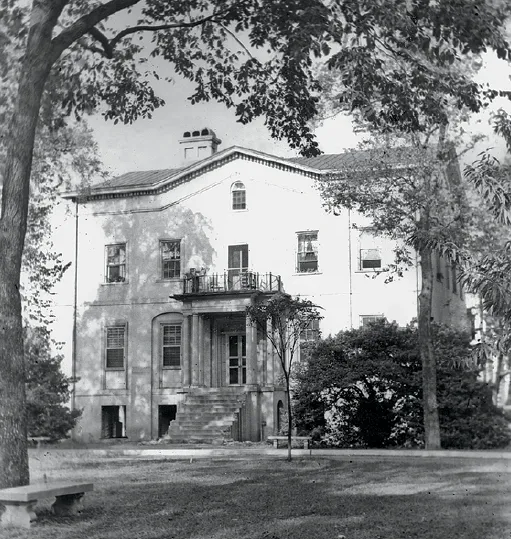
The original President’s House, circa 1910. UNIVERSITY ARCHIVES.
![]()
The Original President’s House
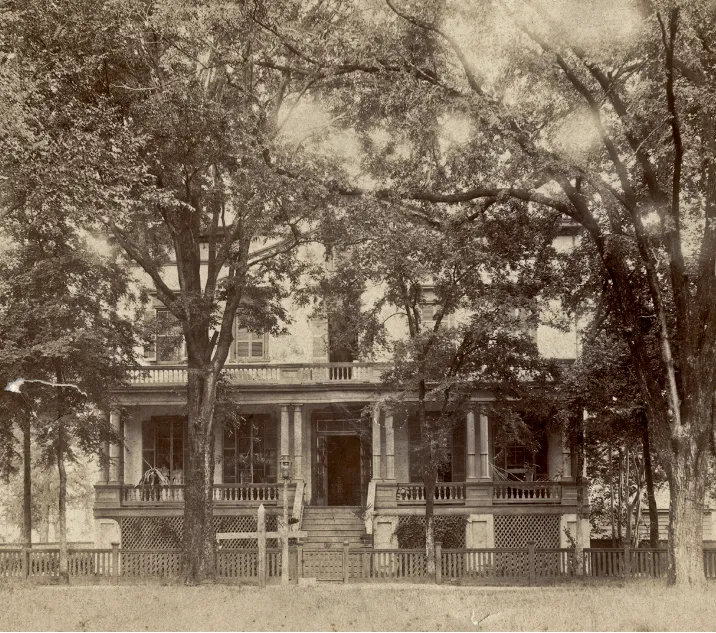
The first President’s House on campus was located at the top of the historic Horseshoe, where the McKissick Museum stands today. It was a two-story brick building, completed in 1807 for eight thousand dollars. Jonathan Maxcy, the first university president (1804–1820), lived off campus with his wife, Susanna Hopkins Maxcy, and family until the residence was finished. They then resided in the President’s House throughout the rest of President Maxcy’s tenure, which ended with his untimely death at the age of fifty-two in 1820.
The building survived two earthquakes, one in 1811 and the other in 1886. In 1849 the house was updated with running water. The building was repaired in 1856, and front and rear porches were added. And in 1857 gas lines were installed.
Students were boisterous in the early years of South Carolina College. Various practical jokes—such as sneaking behind the house to paint the president’s horse an “unnatural color”—and even student demonstrations were not rare.
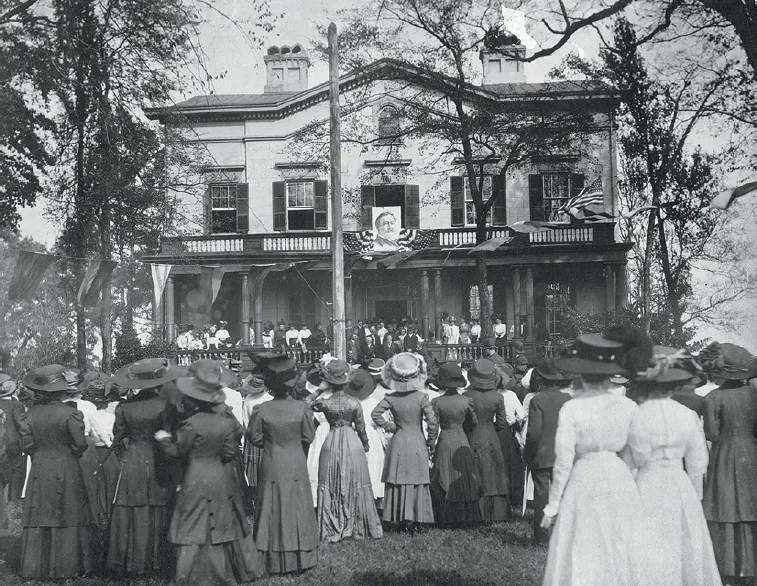
President William Howard Taft speaking from the porch of the original President’s House, 1909. UNIVERSITY ARCHIVES.
In one instance students burned an effigy of a professor while President Maxcy pleaded for order. The professor, George Blackburn, had reported students trying to steal the college bell. In retaliation a large cohort of students not only burned his effigy but broke into DeSaussure College on campus, ransacked the library, and stole the bell anyway. The local militia had to be called to restore control.
In 1862, during the Civil War, the college closed, and the Confederate Army used most campus buildings as a hospital. The original President’s House, left vacant in 1862 and 1863, was then rented until 1865, when it became an officers’ hospital.
When the college reopened as the University of South Carolina in 1865, it did not have a president but rather a chairman of the faculty. From then until 1873, the President’s House became a faculty residence. In that year the state legislature created a normal school for the training of school-teachers, which was open to both black and white students. Even though the school was not formally part of the University of South Carolina, some of the courses were taught at the President’s House.
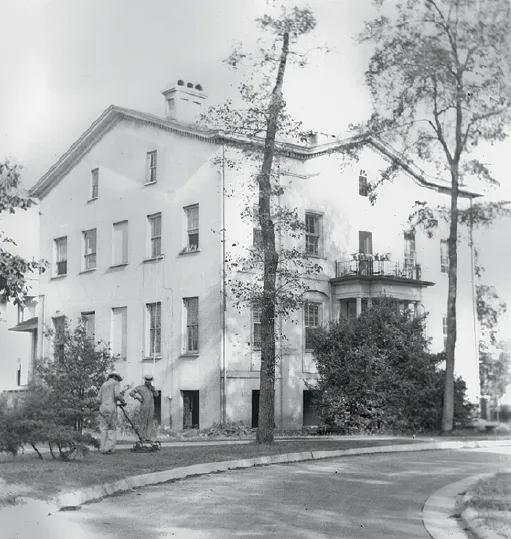
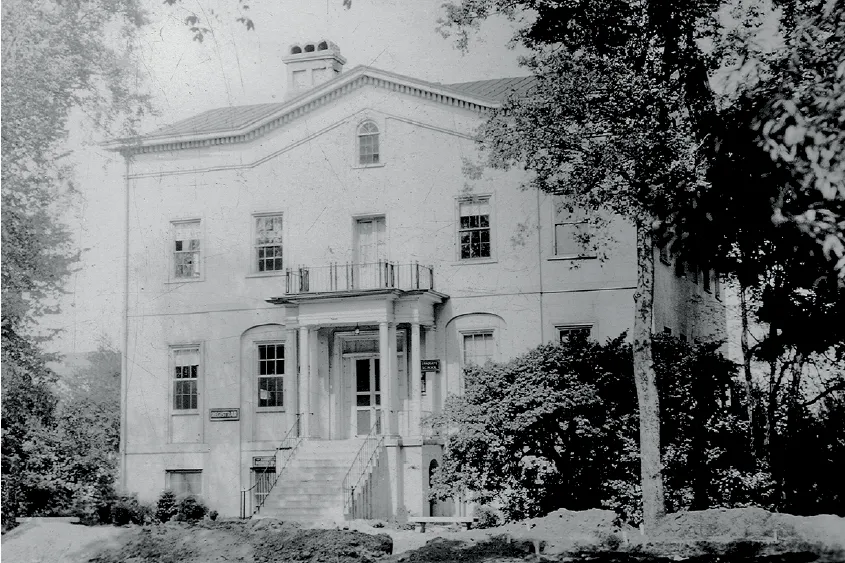
Two views of the original President’s House, circa 1920. UNIVERSITY ARCHIVES.
From the conclusion of the Civil War until 1877 the university was the only one in the South to operate in an integrated fashion, including African American students, faculty, and trustees. In 1877 it closed its doors until 1880, when it reopened as the whites-only South Carolina College of Agriculture and Mechanics. During the time the university was closed, the President’s House was rented to private individuals. When the school reopened, the house became the president’s residence once again and so it remained for forty-two years. Though the university reorganized and changed names again, the house continued as the president’s residence until William D. Melton was named president in 1922 and decided to remain in his private Columbia home, rather than move into the official President’s House. At that time the house was converted into university offices, including the registrar’s office, the personnel bureau, graduate and alumni offices, the dean of women’s office, and the university’s news service.
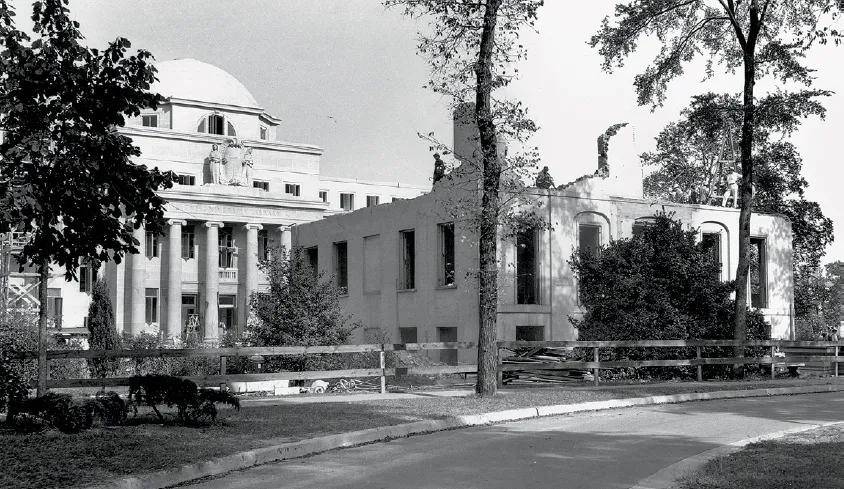
In the early 1930s the building was condemned. As plans to build what was later named the McKissick Library were developed, it was first suggested that the home could be relocated, but in 1939 that plan was deemed unfeasible and the original President’s House was demolished.
The original Presient’s House, circa 1930, when it was used as USC offices. UNIVERSITY ARCHIVES.
Demolition of the original President’s House in front of the newly constructed library (now McKissick Museum). UNIVERSITY ARCHIVES.
![]()
The History of the Building We Now Call the President’s House
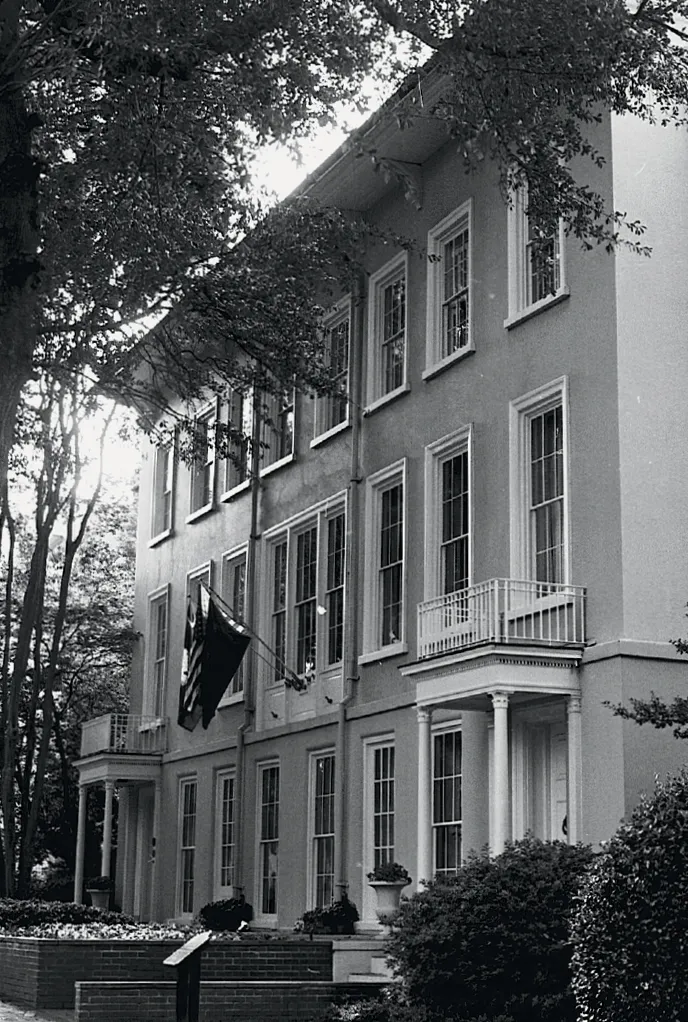
The home that we know as the President’s House today was built as faculty housing in 1854. A regency-style duplex, it was designed to accommodate two families. Building the house cost eleven thousand dollars, and it was considered “a great improvement on the plan and style of the college residencies” (Edwin L. Green, History of the Buildings of the University of South Carolina, 1909). It had thirteen fireplaces and high ceilings.
Some of the notable faculty who resided here were chemistry professor William B. Burney, who taught at the university for more than fifty years, and Dr. George Armstrong Wauchope, an English professor who wrote the lyrics to the alma mater in 1911.
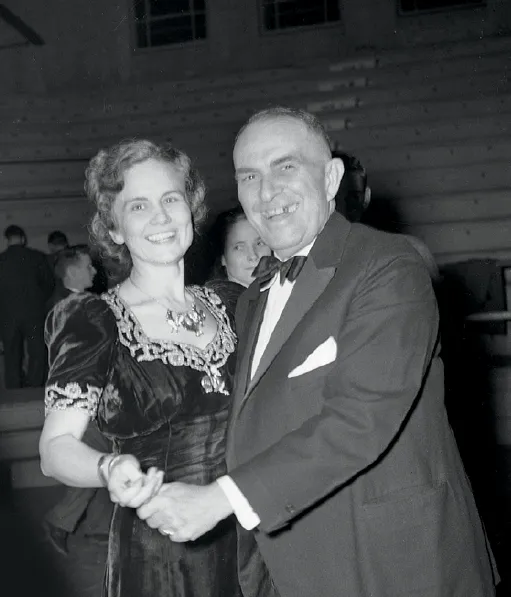
J. Rion McKissick and his wife, Caroline Dick McKissick, moved into the house in 1931 when he was dean of the School of Journalism. He then became the first president to live here when he was elected president in 1936. He remained in the house until his death in 1944.
Between President McKissick’s tenure and the residence being converted to the official President’s House in 1952, the building was used as a women’s dorm and was shared by two sororities, Alpha Delta Pi and Pi Beta Phi. Both moved to Sims College on campus in 1949. For a time part of the property was used for the university radio station. During the years 1945–1952, university presidents lived in their own private homes near campus.
President J. Rion McKissick and Mrs. Caroline McKissick dancing, 1940. UNIVERSITY ARCHIVES.
HISTORIC USES OF THE CURRENT PRESIDENT’S HOUSE BUILDING
| 1854 | The regency-style duplex is opened as a residence for two faculty families. |
| 1865 | Trinity Episcopal Church rents the east side for a brief time. |
| 1883–1930 | Chemistry professor William B. Burney resides in the east side of the house for forty-seven of the fifty-one years he teaches at the University of South Carolina. |
| 1903–1943 | English professor George A. Wauchope, author of the lyrics to “We Hail Thee Carolina,” resides in the west side of the house. By the early 1900s the house is known as the Wauchope House. |
| 1931–1944 | Dean of Journalism J. Rion McKissick moves into the east side of the house. He continues living there after becoming university president in 1936, remaining until his death in 1944. |
| 1944–1949 | The residence serves as women’s housing. |
| 1949–1952 | The house is vacant and in need of repair. |
Source: Elizabeth Cassidy West and Katharine Thompson Allen, On the Horseshoe: A Guide to the Historic Campus of the University of South Carolina (Columbia: University of South Carolina Press, 2015).
An 1875 photograph of the faculty duplex that became the President’s House in 1952. UNIVERSITY ARCHIVES.
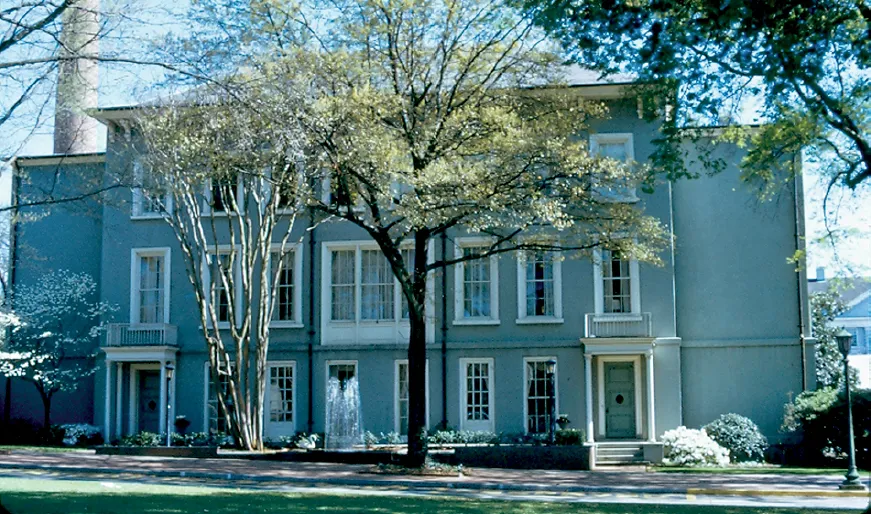
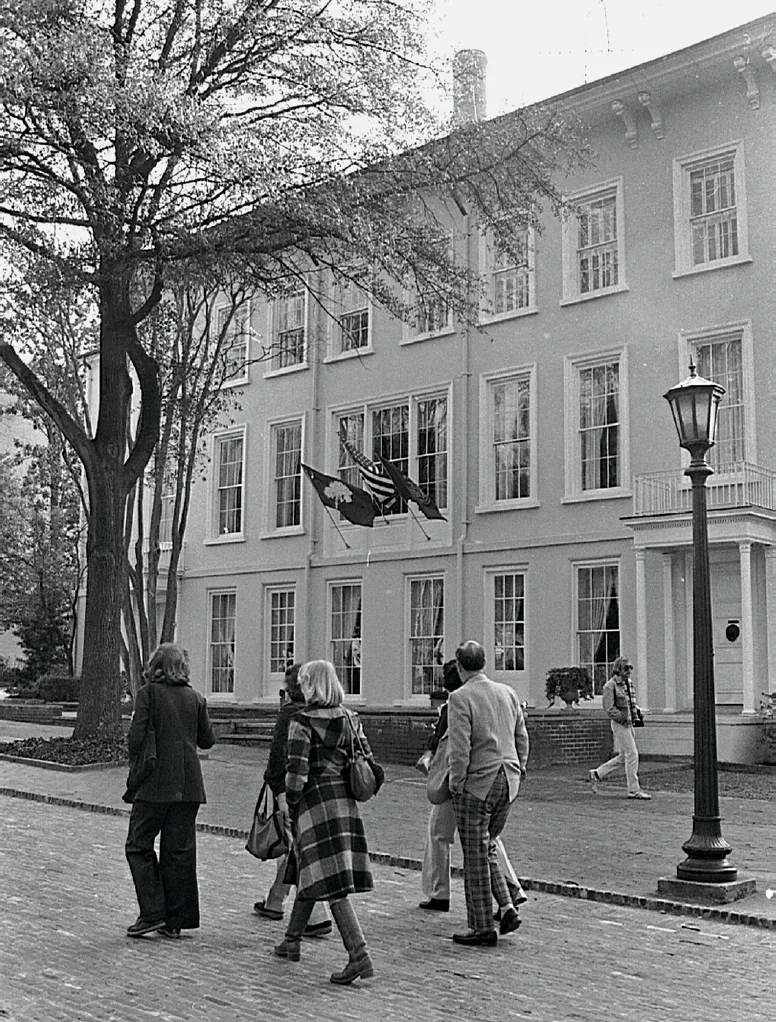
Two views of the front of the President’s House before the 1970s renovation project, when parking was still allowed on the Horseshoe and the fountain was still in front of the house. UNIVERSITY ARCHIVES.
The President’s House after the renovations, probably late 1970s or early 1980s. UNIVERSITY ARCHIVES.
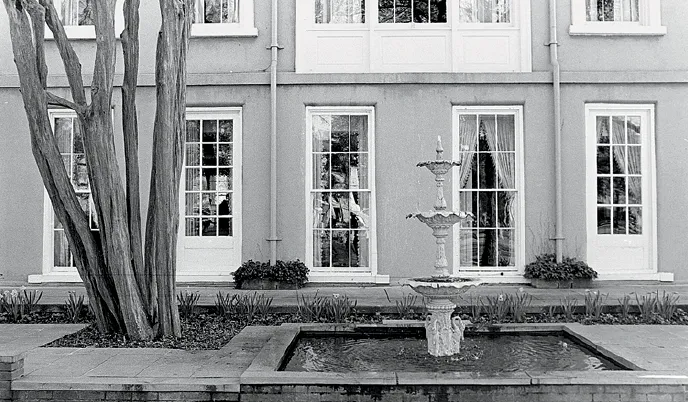
The fountain in front of the President’s House before it was moved to the back garden in the mid-1970s. UNIVERSITY ARCHIVES.
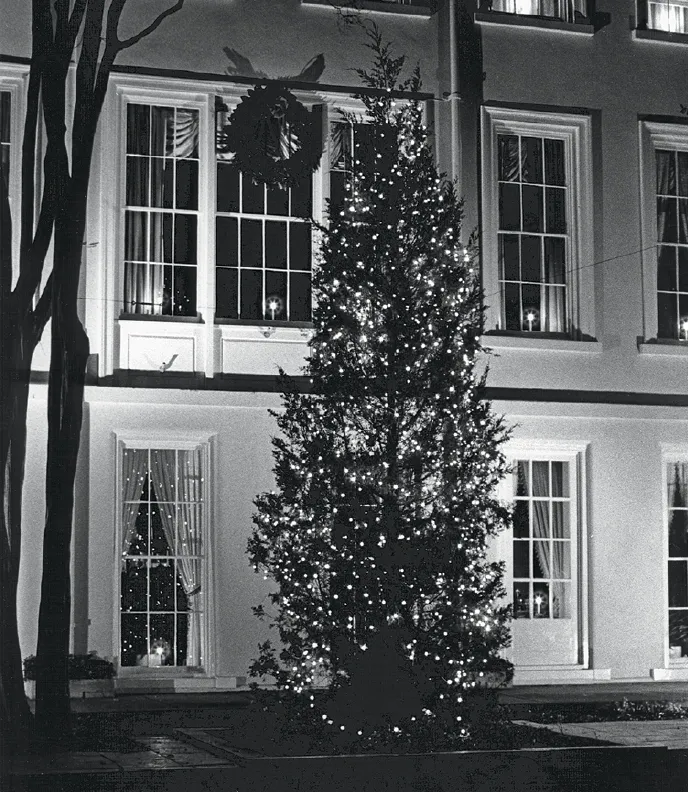
The President’s House at Christmas in the 1980s after the fountain was moved. UNIVERSITY ARCHIVES.
The President’s House in the 1990s. UNIVERSITY ARCHIVES.
![]()
First Families Who Resided in the Current President’s House
Since 1952 eight families have lived in the President’s House. I have the pleasure of sharing some of their memories here.
1952–1957: The Russell Family
The twenty-first president, Donald S. Russell, and his wife, Virginia Utsey Russell, converted the house into the single-family President’s House, where their family of six was the first to reside. Their children are Donald, Mildred, Scott, and John.
The Russells moved from Spartanburg when he assumed the presidency of the University of South Carolina in 1952. President Russell did not accept a salary, and he and Mrs. Russell took it upon themselves to renovate the somewhat run-down duplex, which at that point had become known as the McKissick-Wauchope House, into the beautiful single-family President’s House.
The Russells’ eldest child, Donald Jr., resided in the President’s House from the middle of his junior year at University High School until his junior year at the University of South Carolina, when he moved into an apartment with some fraternity brothers. I enjoyed hearing Donald talk about life in the President’s House. One of his earliest memories is of the university treasurer visiting his father in the house and asking if he was aware of the amount of money Mrs. Russell was spending on the renovation. President Russell admitted he was not but added, “I suppose we should pay for that too.”
To accommodate their massive book collection, Mrs. Russell had bookcases built that covered all the walls of the living room. Even though some of them have since been covered with paneling, we still refer to the room as the library. Adjacent to the library, the front dining room was used for formal dinners, and the back dining room was for family meals.
Mrs. Russell hired the foremost American interior designer of the day, William Pahlmann, to find beautiful pieces for the house. Probably the most spectacular is the wallcovering in the reception room on the second floor. In a pattern known as Procession Chinoise, the wallcovering dates back to approximately 1811 and was made in France. Because of its age, its exact provenance is difficult to trace, but Donald remembers his parents’ declaration that it was “extraordinarily select.” Depicting a European fantasy of a Chinese wedding scene, the wallpaper w...