![]()
The Artistry of Mary Whyte
On the stairway leading up to her Seabrook Island studio, Mary Whyte has inscribed the following words in a calligraphic script:
Coraggio
Ispirazione
Visione
Perseveranza
Forza
Fantasia
Fede
These words have served as the artist's guiding principles, and are encapsulated in her life and her art. She selected Italian as a reminder of the year she spent in Rome as an art student, and, perhaps, because that language is uplifting and inspirational. With their longstanding commitment to an artistic and operatic way of life, Italians are consummate models for a dedicated and ambitious painter who feels passionately about her art and her subjects.
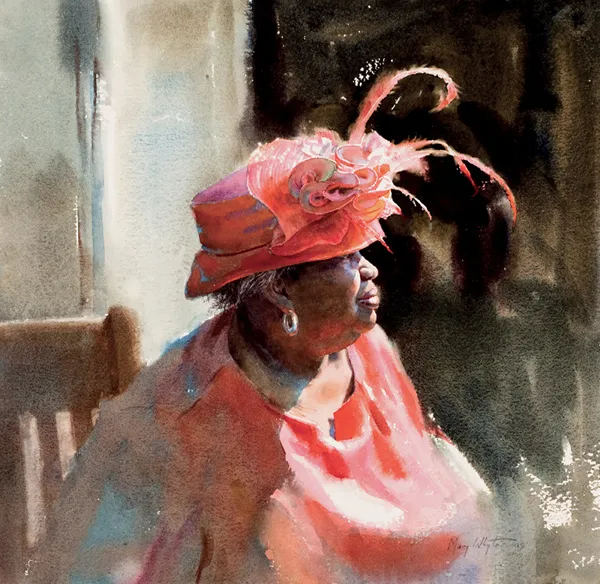
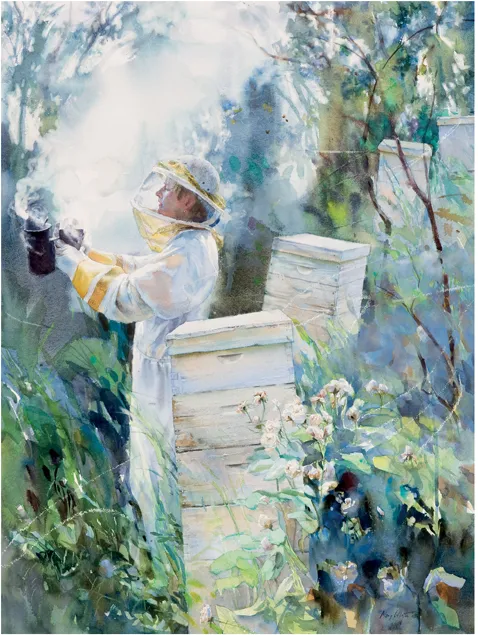
Coraggio, or courage, describes the way Whyte chooses her subject matter and the conviction with which she practices her profession. Usually she is an outsider who makes tentative steps to get to know her sitters, whether they are members of a rural Amish community in Ohio or Gullah women in South Carolina who gather weekly to make quilts. She succeeded in earning the trust and the affection of the latter; Alfreda, the titular head of the group, even called Whyte “my vanilla sister.” Their mutual feelings of love and friendship radiate from such paintings as Red, where Alfreda is decked out in a brilliant Sunday hat. Courage was also called for when Whyte donned a cumbersome suit and mask so she could experience firsthand the responsibilities of beekeeping. Beekeeper's Daughter reflects her appreciation and understanding of how smoking the bees calms them down.
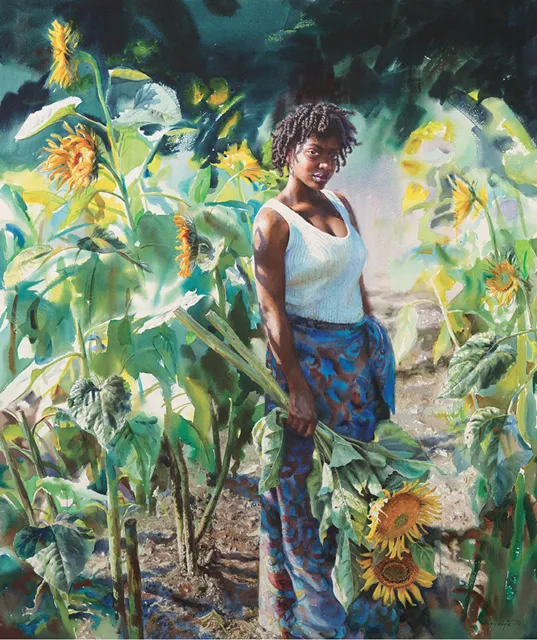
September, 2003
Watercolor on paper, 47 × 39 ½ inches
Collection of TD Bank
Red, 2009
Watercolor on paper, 18 ½ × 18 ½ inches
Private collection
Beekeeper's Daughter, 2008
Watercolor on paper, 28 ¾ × 21 ¾ inches
Private collection
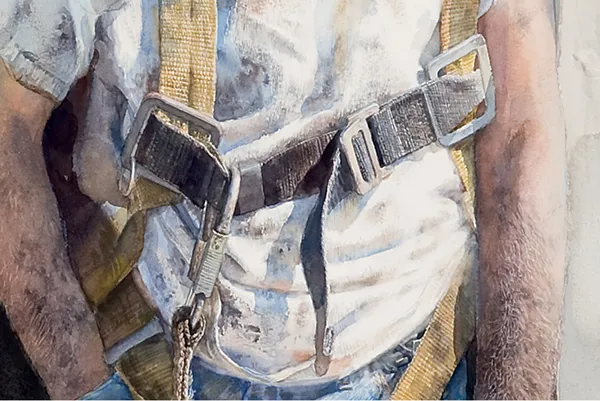
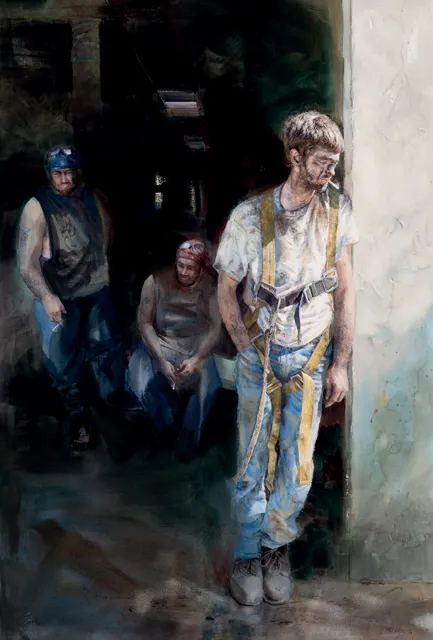
It also took a good deal of nerve for Whyte to approach a rough and dirty threesome in a diner, but she was curious about their occupation, wondering if it would fit into her series featuring vanishing industries across the South. The three men agreed to let her sketch them, and the end result is the compelling Fifteen-Minute Break, one of the grittiest paintings Whyte has ever done.
Ispirazione, or inspiration, is what Whyte derives from the people she paints, the scenery she passes as she drives through the countryside, and the colors and textures she relishes painting.
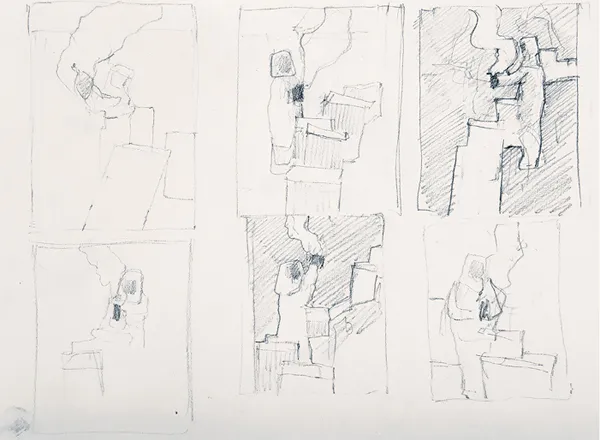
Thumbnail sketches for Beekeeper's Daughter, 2008
Graphite on paper, 12 × 8 ¼ inches
Collection of the artist
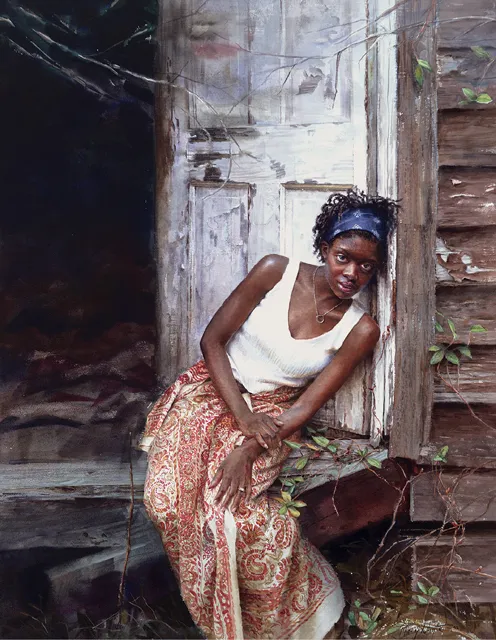
“Many of the ideas for my paintings start with a fleeting glimpse: a figure hanging laundry, a shadow of a tree, a snippet of a shrimp boat on the river in the distance. Seeing these unfinished stories is sometimes like hearing only the middle words of a conversation and having to imagine the beginning and the end. These tiny flashes of life are sometimes the catalyst for a major series of works. For me ideas are more plentiful than the hours to paint them, and I worry that I cannot get to all my thoughts before they are forgotten or are pushed aside by more pressing concerns.” She speaks of how she might see a camellia bush in bloom and wonders to herself what Tesha might look like if she stood before it. Tesha Marsland has been Whyte's model since the early 1990s, and she has posed with horses, in doorways, and in chicken coops. She has developed a very comfortable working relationship—and friendship—with the artist. The painting Waiting has special meaning for both of them: Tesha had just learned that she was pregnant, telling Whyte, who then conveyed both quiet joy and anxious weariness in the final composition. It remains Tesha's favorite painting.
Close-up of Fifteen-Minute Break
Fifteen-Minute Break, 2008
Watercolor on paper, 58 × 38 ¾ inches
Collection of the Greenville County Museum of Art
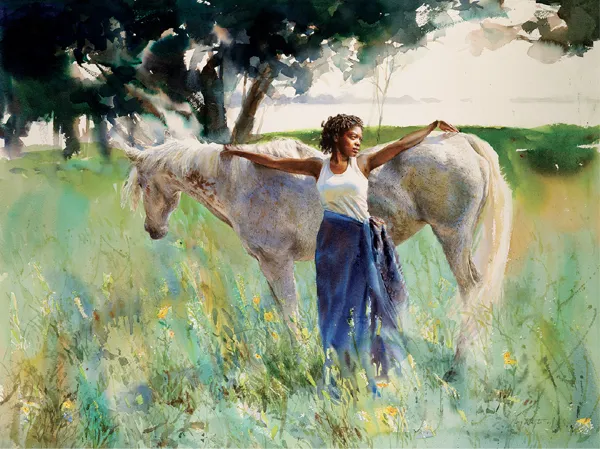
Summer Solstice, 2003
Watercolor on paper, 30 × 39 ¼ inches
Private collection
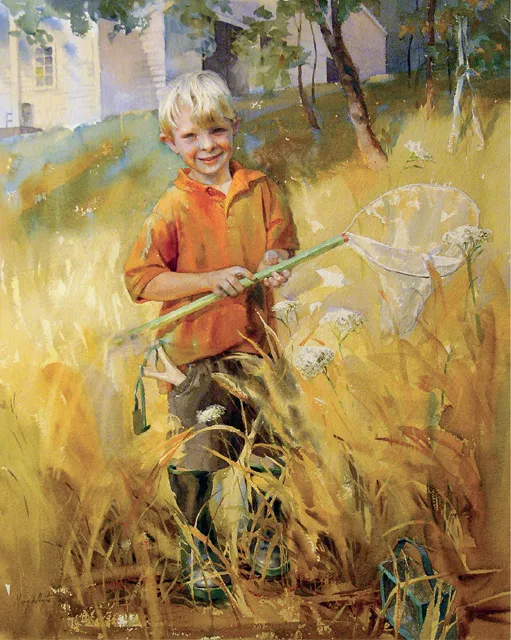
Explorer, 2008
Watercolor on paper, 27 × 20 inches
Private collection
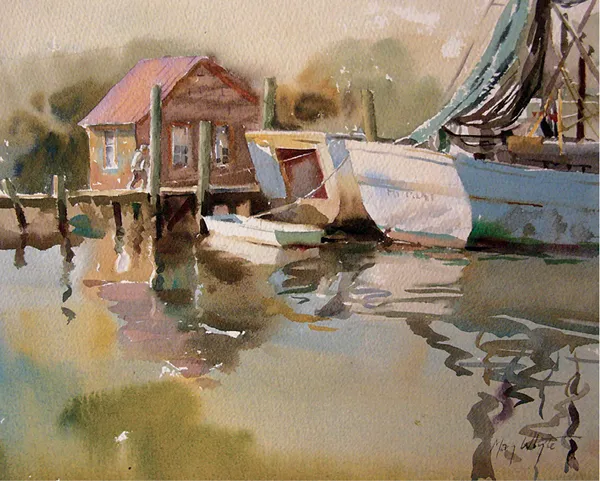
End of High Tide, 2009
Watercolor on paper, 18 ¼ × 20 ¼ inches
Private collection
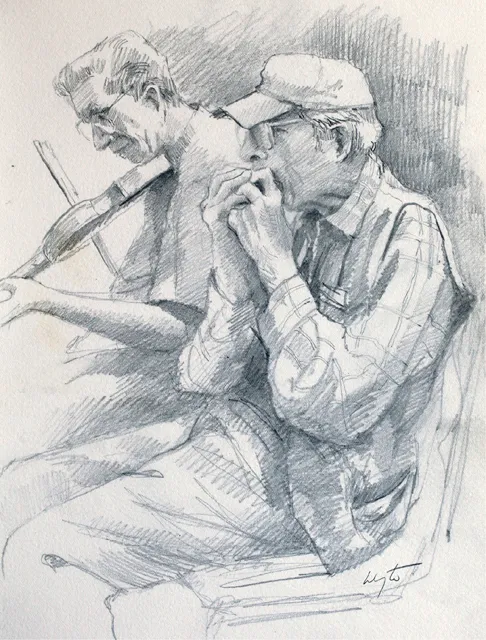
Music Men, 2007
Graphite on paper, 10 ½ × 7 ¾ inches
Private collection
Waiting, 2002
Watercolor on paper, 40 × 27 inches
Private collection
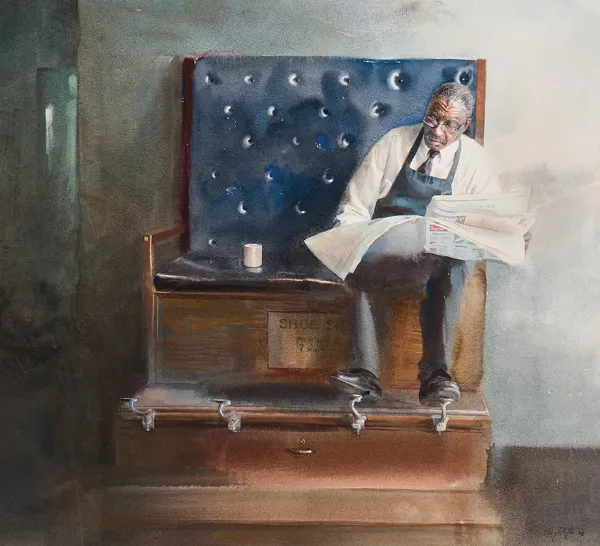
Visione, or vision, is represented by Whyte's ability to see beauty in ordinary things and people. “I'm a genre painter who depicts people under the radar,” she explained when describing herself and her sitters. Her vision impels her to take on new challenges and not become complacent. For the Working South project, she dedicated almost four years to the thirty watercolors that illustrated her theme and required her to travel far afield from Union City, Tennessee, to Miami, Florida, and lots of small towns in between.
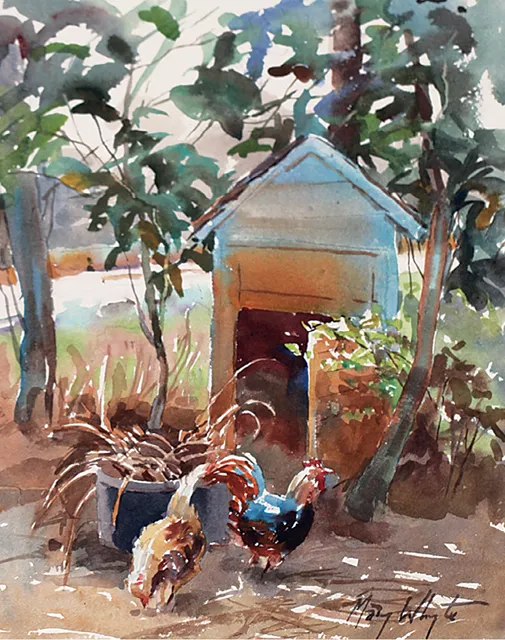
Outbuilding with Chickens, 2011
Watercolor on paper, 11 × 9 inches
Private collection
Shoe Shine, 2008
Watercolor on paper, 25 ¼ × 23 inches
Private collection
Whyte's perseveranza, or perseverance, and discipline have allowed her to juggle all that she does: painting meticulously rendered watercolors, teaching four to six workshops annually, and producing books and DVDs, all at an apparent leisurely pace. While Working South was on view at the Greenville County Museum of Art during 2011, she offered numerous lectures, gallery talks, and book signings, reaching an audience of more than eleven thousand. In the DVD Watercolor Portraits of the South with Mary Whyte, she demonstrates her working method—lots of quick sketches, finished studies, and photographs—and shows the demanding task of painting the details of Tesha's right eye, mouth, and hair. She patiently and deliberately applies each stroke while providing an articulate and insightful commentary.
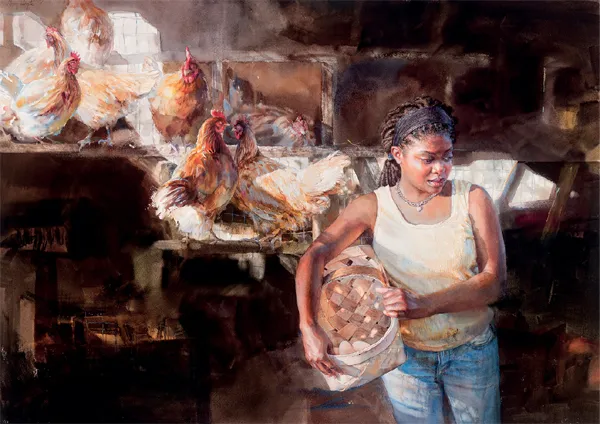
One of the most engaging segments of the video is of a chicken in Coop; the hen comes alive as Whyte mixes her favorite colors, ultramarine blue and burnt sienna, to simulate its feathers. In Painting Portraits and Figures in Watercolor, she declared, “No accomplished artist was brilliant right out of the chute. Every one of them had to pay his or her dues with hundreds of drawings and paintings. The key is to learn from failed works and understand what went wrong.”
Furthermore her passion for watercolor compounds the challenges. “Watercolor, as any of the serious arts, takes considerable patience, fortitude, and practice. If mastering the medium were easy, everyone would be an adept watercolorist and the medium would lose its magical appeal. Becoming an accomplished artist requires years of earnest effort to master drawing, composition, color mixing, and technique.”
Forza in Italian literally denotes “force,” but it can also be translated as strength. Mental, emotional, and physical strength are necessary to Whyte's modus operandi. “Painting is largely a solitary endeavor that requires enormous concentration…. I need a quiet place where I know I can have several hours of uninterrupted time.” She sometimes goes off for a month at a time in a new location, just so that she can concentrate on her work.
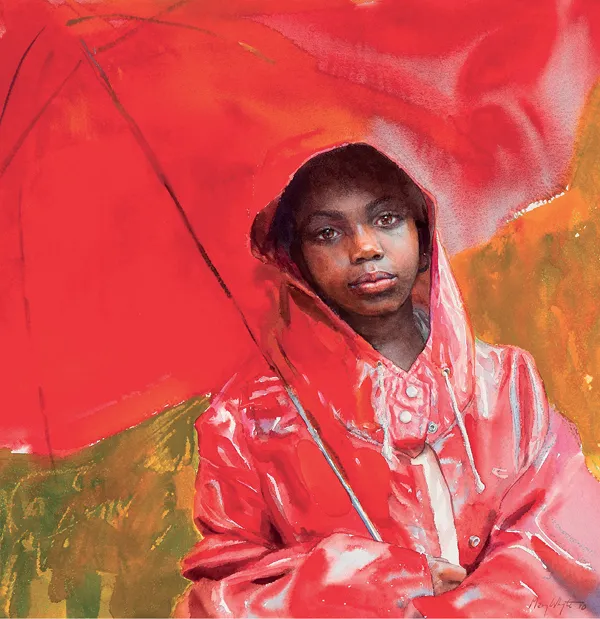
Slicker, 2010
Watercolor on paper, 18 × 17 ½ inches
Private collection
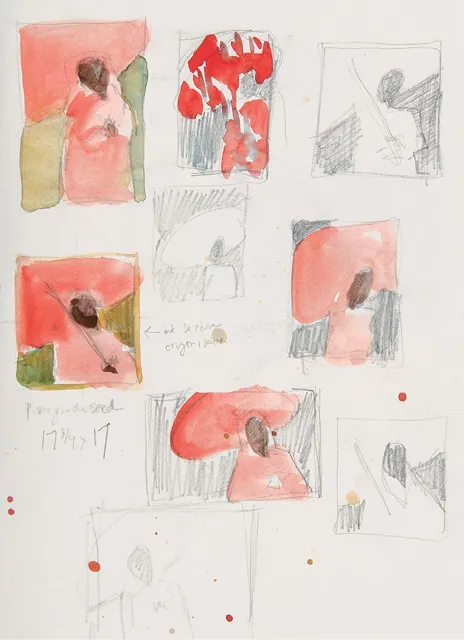
Sketches for Slicker, 2010
Graphite and watercolor on paper, 12 × 8 ¼ inches
Collection of the artist
Coop, 2011
Watercolor on paper, 28 ¼ × 40 ¾ inches
Private collection
She often paints en plein air—a French term for painting out of doors—and in South Carolina that can mean painting in hot and humid conditions. To optimize the light Whyte starts early in the morning and usually limits her sessions to less than two hours. She wears a hat with a wide visor so the sun does not get in her eyes and either a black, white, or gray top so that its color is not reflected on her paper. For her everything is carefully planned and worked out in advance. Strength is also a quality she finds in many of her sitters, as exemplified by the man in Hull, his power echoed by the impo...