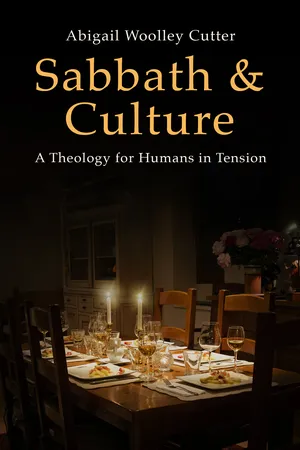
This book proposes the Sabbath as a strategy for living in tension between this world and the next. It steers a careful path between assimilation with the temporal culture and a response to a divine calling to be set apart. Abigail Cutter resources the Sabbath tradition for a Christian ethic of culture—a concept often paired with the word "war." To think about human culture theologically, however, we must consider it apart from political battles and come to a deeper understanding of why Christians' relationship to culture has proven so difficult to discern. This consideration of what culture means—specifically in our contested age—lays the groundwork for a renewed cultural theology.
Sabbath and Culture centers on two broad, related questions: Who are humans before God? and Who are humans within culture? Engaging the work of H. Richard Niebuhr, Abraham Joshua Heschel, and Charles Taylor, Cutter advocates for a social pattern of "tensions in equilibrium" that allows inhabitants of a complex society to imagine the transcendent. The Sabbath has multiple meanings for both Judaism and Christianity; with clarity and candor, Cutter offers a metaphysical-realist vision of how Christians can thoughtfully receive this essentially Jewish practice. Ultimately she shows what the Sabbath means for those of us who wish to live peaceably in a time of deep divisions. The Sabbath, a gift from God, reveals God's concern for justice and peace among all his creatures. What would it look like for us to heed this call and keep the Sabbath holy?