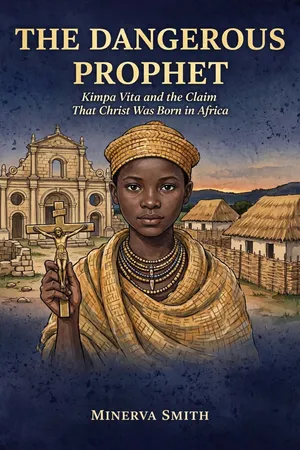
She claimed Saint Anthony spoke through her. The kingdom she tried to save condemned her to death.
In the early eighteenth century, Kongo was a kingdom in pieces. Civil war had divided the throne, and the old capital, São Salvador, stood in ruins. Into this broken world came a young noblewoman named Kimpa Vita, who began to preach a message that neither kings nor missionaries could ignore.
Saint Anthony, she said, had entered her body and was speaking through her. She declared that Christ had been born in Kongo, called the scattered people back to their ruined capital, and challenged those who believed they alone could decide what Kongo's Christians should believe.
Her followers answered. A deserted city began to fill again, and a religious movement spread faster than the rival kings could contain it. But her influence set her on a collision course with King Pedro IV and the Capuchin missionaries, who branded her teachings heresy.
In 1706, she was captured and burned at the stake.
Three years later, Pedro IV marched into São Salvador and broke what remained of her movement. He went on to build the reunited kingdom she had demanded, but he built it without her.
The Dangerous Prophet is the story of a woman who tried to restore a kingdom through faith and of the king and the Church who could not tolerate the authority she claimed. It is a history of religious conviction, political power, and the struggle over who has the right to speak for God.