![]()
CHAPTER 1
GREENING TRANSPORTATION
Unless you’ve been in a coma for the last decade, you very likely won’t need convincing that the world needs to find a way to “green” its transportation system — that is, to make it more environmentally sustainable. Much more sustainable. Global climate change, our heavy dependence on declining oil reserves, and high fuel prices should be enough to convince even the most stalwart opponents of all things green that we must do something — and soon — to create a leaner, greener mode of transportation.
I won’t recite the catalogue of facts and figures here to make the case to you. You’re reading this book because you very likely already know them and feel the need to make changes. Chances are you are responding to a deep conviction that it’s time you did something — or perhaps more — to green your own transportation. This book will help enormously. It covers three basic areas: (1) ways you can drive less “fuelishly,” (2) green vehicles options like plug-in hybrids, and (3) green fuels such as biomethane, ethanol, and hydrogen.
While my emphasis since the early 1970s, when I became actively involved in energy efficiency and renewable energy, has been on residential energy efficiency and renewable energy, I have also studied green transportation extensively. It’s been one of several “side passions” of mine since 1971. It all started when I was nearly 20. I had just gotten married. After the ceremony, my wife and I drove from western New York State where I grew up, back to college in eastern Kansas, where we were both finishing our senior year. My parents had given us a Chrysler 300 as a wedding present. It was a large, sprawling ocean liner of a car! As we drove west along Interstate 70, we watched in horror as the needle on the gas gauge plummeted. We could actually see the needle move as we were driving. A few days after we returned, we traded in the monster for a fuel-efficient Volkswagen Beetle.
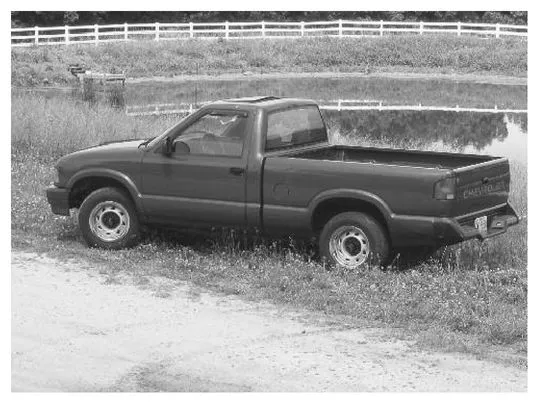
My next vehicle, which I bought after graduating with a Ph.D. in reproductive physiology, was a relatively efficient Datsun pickup truck. Efficient as it was, I chose to commute by bus or bicycle to the University of Colorado in Denver for my first teaching job. Every car I’ve driven since then has been fuel-miserly. Today, I drive a fuel-pinching Toyota Prius and, more recently, an electric Chevy S-10 pickup truck. My brother-in-law and I converted the former gas-engine truck to electricity at The Evergreen Institute’s Center for Renewable Energy and Green Building, my educational center in east-central Missouri (Figure 1.1).
In addition to pursuing ways to green my own transportation, I’ve attended workshops and numerous lectures on green cars and green fuels over the years and read every article that crossed my desk as well. This book is the culmination of much of my informal research — my green car hobby. Its focus is on personal transportation, not transportation systems, so it doesn’t include much information on trains and buses or other very green options. Although I briefly discuss mass transit and car-sharing programs, I focus primarily on what you can do to green up your act.
dp n="10" folio="3" ?
Fig. 1.1: My latest, most sustainable transportation: a former gas-engine truck that my brother-in-law and I converted to electricity. This vehicle is used for short trips to town and around the farm and The Evergreen Institute.
Before I start, though, I will discuss some criteria to consider when attempting to green personal transportation. These rules of the road, so to speak, will help you discern what makes a truly sustainable fuel or vehicle. With these guidelines, you can proceed quickly, not wasting time and energy on ideas that really have no long-term future.
Guidelines for Sustainable Fuel Transportation
When it comes to green transportation, you’ll find that there’s a plethora of options. When you’re choosing among them, it is important to make selections that are socially, economically, and environmentally sustainable. Green fuels and vehicles, that is, must make sense from all three perspectives to be truly sustainable. That’s the first rule. If an option doesn’t make sense from these perspectives, it is not worth our time or effort. Period.
dp n="11" folio="4" ?With that principle in mind, we will begin with criteria by which we can judge green fuels, such as hydrogen and ethanol.
First, when considering green fuels, the most sustainable are those that have a positive net energy yield. Net energy refers to the energy we obtain from an energy resource after subtracting the energy it takes to make it — that is, to extract, refine, and process a fuel. The higher the yield, the better. The most sustainable fuels are therefore those with the greatest net energy yield.
Second, a sustainable fuel must be clean — in every possible way. That is, it must be produced in ways that do no harm to people or the environment — for example, to be sustainable, biofuels must come from crops that are sustainably grown and harvested. When burned or consumed, a truly green fuel should produce little, if any, harmful pollution. The cleaner and more environmentally benign, the better. We can’t build a sustainable future by turning to fuels whose production and consumption poison people and other living creatures that grace our world or to fuels whose production and use threaten our atmosphere, waters, climate, and ecosystems, which are the life support system of the planet.
Third, for a fuel to be sustainable it must be abundant and renewable. We can’t build a long-term transportation system on short-term fuels. That’s the bind we’re in now. Gasoline-and diesel-fueled vehicles rely on a resource (oil) that’s quickly going the way of the dinosaurs, and is, in the process, causing severe economic turmoil. For economic stability, we need fuel we can count on forever. Building any transportation system based on fuel that’s going to give out in the near future is a waste of very precious energy, resources, and time.
Fourth, we must select options that are affordable — if not now, then clearly in the near future as economies of scale kick in or as improvements in production processes drive costs down. If subsidies are required now, fine, but in the long run, affordable fuel is vital to the long-term economic health of nations and their citizens.
The rules of the road for green vehicles overlap nicely with my four fuel guidelines. First and foremost, green vehicles must be powered by sustainable fuels. They should also be durable and safe. We don’t want people dying on the highways in their quest for a greener world.
Truly green vehicles must be made from recyclable materials and designed for ease of recycling. Moreover, we must establish the infrastructure to ensure that they can and will be recycled when their useful lives are over. Even better, green cars and trucks should be made from renewable resources, for example high-strength plastics made from chemicals derived from sustainably harvested plants.
In crowded urban centers, mass transit will very likely be the most sustainable form of transportation. Such systems service large numbers of people with much less impact on the environment than single occupancy vehicles. The amount of fuel consumed per passenger mile is much lower, as is the amount of pollution produced. Still, people will very likely cling tenaciously to their cars and trucks — even if they choose to rent a car from a local car cooperative or a private company that provides the convenience of private transportation without the hassles of ownership. Rest assured, private passenger vehicles will not disappear quickly from the urban landscape in many countries, making green fuels and green cars imperative.
Keep Your Brain Engaged
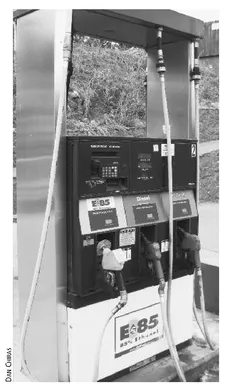
Over the years, I’ve heard many cockeyed schemes aimed at greening transportation. While many new ideas appear great at first blush, most don’t hold up to scrutiny. As you no doubt have found out, it is very easy to become swayed by novel fuel sources or novel types of vehicles, like air-powered cars that the ill-informed media proclaim will revolutionize transportation. Enjoy the creative ideas, but employ your critical faculties. The most important question you can ask when presented with a new fuel or vehicle is this: is it truly sustainable? Sustainability should be measured by the criteria just presented, among them net energy efficiency. Inquire about the net energy efficiency of exciting new developments. Does it take more energy to make a fuel or vehicle than you get out of it? Don’t be swayed by pro-oil interests who muddy the waters with falsehoods (Figure 1.2). Critics of green fuels are fond of pointing out the seemingly unfair subsidies required to support production of green fuels and new green vehicles. What they’re less forthcoming about, however, is that gasoline and diesel require huge amounts of energy to extract, refine, and transport to market. The net energy efficiency of gasoline is very likely under one — meaning you get less energy out of a gallon of gasoline than it takes to make it. You won’t find oil companies passing that information around. Moreover, the oil industry and their legions of followers don’t say a whole lot about the amazing subsidies that continue to flow into company coffers. So don’t let critics win the debate with their lies!
Fig. 1.2: Don’t be fooled by lies. Contrary to the media’s representation, ethanol has a much higher net energy efficiency than gasoline. When all the energy surrounding production and delivery is taken into account, we get a lot more energy from ethanol than we do from gasoline.
dp n="14" folio="7" ?Remember that we’re in an experimental phase on the path to a green energy future. Lots of new ideas are emerging. Some will work; others will fail miserably. Some will work because there are powerful lobby groups that stand to benefit from them. Seemingly good ideas will fail because they lack financial or political support. It will take time to sort through the options, to see what works and what doesn’t. In the meantime, enjoy the ride.
To speed up the evolutionary process, though, we should apply some sensible guidelines to help us judge what is truly green. After all, we were endowed with marvelous brains, so let’s use them. On a personal level, while you may not be able to influence public policy, you can make wise choices for yourself based on your understanding of what makes a fuel and a vehicle truly sustainable.
With these ideas in mind, let’s get started where all journeys of sustainable transportation should begin, with what you can do right now to green your wheels. That’s the subject of Chapter 2.
dp n="15" folio="8" ?dp n="16" folio="9" ?
![]()
CHAPTER 2
ESY GREEN:
CHANGING DRIVING HABITS, AND OTHER SIMPLE MEASURES TO GREEN YOUR MACHINE
When most people ponder ways to green their personal transportation, they contemplate grand schemes like futuristic hydrogen-powered cars. Or they may contemplate purchasing a hybrid or electric car or truck or converting their diesel vehicle to run on straight vegetable oil. While most of these are legitimate options, they require considerable thought and, in some cases, a substantial monetary investment.
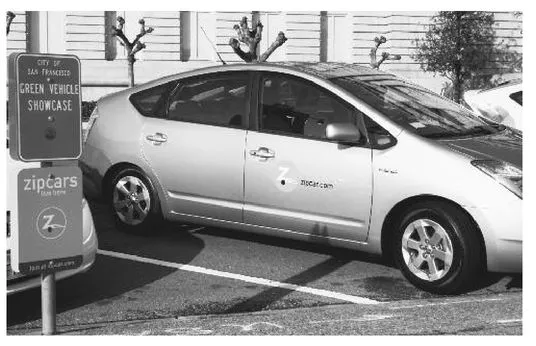
If these and other green transportation options are more than you want to pursue right now, don’t let your dream of greening your transportation idle. There are a great many ways you can reduce fuel consumption and help build a sustainable transportation system — right now, at little or no cost. You can, for instance, increase your use of mass transit or join a car-pool or vanpool to commute to work. You can ride a bike or walk when going to work or when running errands near your home or office. If you live in a major city, you could sell your car and subscribe to a service like Zipcar that rents cars to members when they need one, saving members a ton of money (Figure 2.1).
You could even embark on the nearly unspeakable act of altering your driving habits. It may be hard to believe, but driving your existing vehicle more efficiently can achieve the same level of fuel savings you could achieve by pursuing more costly options, like buying a more fuel-efficient car or truck. Moreover, there are a number of simple things you can do to improve the fuel efficiency of your vehicle, like keeping the tires properly inflated. Driving more efficiently and improving the efficiency of your car save gas and money, reduce pollution, and reduce the wear and tear on your vehicle. And, on top of that, fuel-efficient driving can make you a safer driver.
Fig. 2.1: Cars like this one supplied by Zipcar can be rented by city dwellers on an as-needed basis, greatly reducing the cost of personal transportation and the environmental impact of private vehicle ownership.
In this chapter, you will find a number of simple, practical suggestions that can help you improve fuel economy.
Wise Driving Habits
A couple of years ago, I took a road trip with some colleagues from Denver, Colorado, to Greensburg, Kansas, with the hopes of building some energy-efficient homes. The homes were to serve as a model to the community and the rest of the world in our collective effort to combat global warming — which had no doubt contributed to the devastating 1.7-mile-wide tornado that ripped through Greensburg in 2007, wiping out 95% of the homes and killing 11 people. For most of the trip, I was behind the wheel, with my colleagues chiding me for driving 60 miles per hour (mph) on the wide-open highways. After a while, I tired of their joking and said, “Hey guys, I don’t get it. You’re complaining because we’re driving at a slower speed, which increases mileage. That, of course, reduces carbon dioxide emissions, which reduces global warming. Global warming, of course, contributes to violent storms like the one that destroyed Greensburg.”
There wasn’t a word of rebuttal.
One of my friends, a green architect I work with frequently, later said he was going to drive more slowly in the future — and has kept his promise, too!
Over the years, many environmentalists — the people who presumably care the most about global warming and other environmental issues — have shamelessly admitted to having a “lead foot.” One after another has confessed to me that when it comes to the need for speed, they’re like most Americans: when they hit the road, getting...