![]()
Chapter One:
Getting Goslings
THERE ARE MANY REASONS TO CONSIDER ADDING GEESE to your farm: their loyal company and personalities, their protection of your property, the size and flavor of their eggs, their highly prized meat, or their use as effective crop weeders. Whichever of these reasons appeal to you, once you’ve decided to add geese to your farm or backyard, the first step is to decide where you are going to get your birds.
Geese can be acquired from a number of sources, including local breeders and hatcheries. You can start your search for geese by looking at mail-order catalogs from hatcheries and perusing the internet to find nearby poultry enthusiasts. Even if you do not use hatcheries for your ultimate poultry purchase, their catalogs will still help you understand the various breeds of geese and their different strengths and weaknesses.
Ordering from a Hatchery
Hatcheries are often the best source for starting a flock of geese, because they will have the greatest selection of breeds. After researching which types you want for your farm, you may find the only way to get your preferred breed of goose is to order through a reputable hatchery.
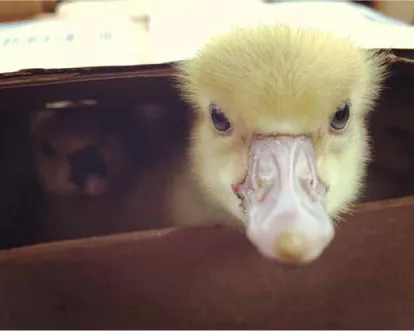
Mail-order goslings are eager to get out of their shipping box.
It is a good idea to look into the hatchery’s reputation before ordering, to ensure the birds you get will be healthy and display the proper characteristics of their breed. Internet research is a great way to find out if that hatchery has provided other buyers with healthy goslings. Some breeds are fairly rare, and if you plan to show your geese, they must meet standards set by the American Poultry Association. Many hatcheries’ stock doesn’t meet those standards, but companies who place importance on their birds’ bloodlines will have higher-quality goslings. If you’re buying more unusual breeds, remember that good stock is not inexpensive, and companies selling rare breeds for less often will not be selling well-bred birds.
Most hatcheries specialize in mail-order customers and will safely and reliably ship goslings across the country to new homes. The best places to get healthy geese are the ones that focus on waterfowl and have been raising them for generations. Mail-ordered goslings will arrive peeping via an overnight shipment, in a breathable box lined with shavings. Your post office will call you when they arrive. You need to be ready to pick them up when the call comes, as it is important to get your goslings into their brooder quickly so they can start eating and drinking.
If you are lucky, a reputable hatchery may be located near you, and you can avoid the mail-order option.
Finding a Local Breeder
Some of the healthiest, most robust goslings can come from a local breeder who has spent time and effort making sure their birds are of the finest quality. Good-quality show birds have strong bloodlines that ensure they will display the proper characteristics of their breed. It can be hard to track down a good goose breeder, but it is worthwhile if you plan to show your birds or you are looking for perfect examples of a specific breed.
The average backyard farmer will have mixed breeds that may not display the characteristics you are looking for, but these birds can still make exceptional pets or guardians. If showing or breeding your geese is not in your long-term plan, mixed breed goslings may be just what you are looking for.
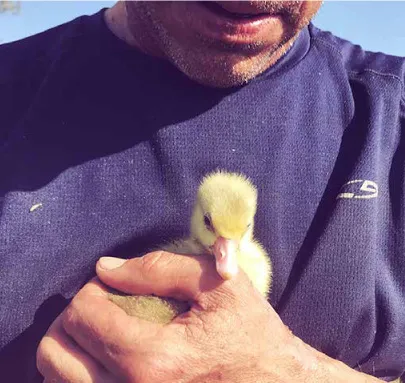
Geese from breeders, unless picked up in their first day or two of life, may have already imprinted on their mother or the breeder, and they may not be as friendly as a goose who has only ever known you since hatching. If your geese are being used for guarding and weeding, that bond may not be as important to you. However, if you want a family pet, make it a priority to get your goslings as young as possible so that they will imprint on you. To that end, when getting goslings from a local farm, you can sometimes establish a relationship with the farmer before your geese arrive and be ready to pick them up as soon as they hatch. A relationship like that can also be helpful with your goose-keeping later on, as an experienced goose owner can help you with questions you have throughout your goose’s life.
Goslings ordered from hatcheries generally ship on the same day they hatch, and arrive to you within their first two days of life. This greatly increases the chance that they will imprint on you, and if you’re picking up birds from a local farm or breeder, the earlier you can pick up your goslings the more likely they are to bond with you.
Incubating Hatching Eggs
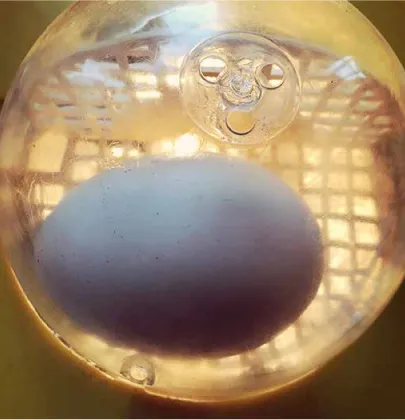
If you have an incubator, you can try hatching goslings on your own. Goose eggs require careful turning and temperature monitoring, so there is a time commitment involved, but a gosling hatched at home will be healthier than one that has shipped across the country and will almost definitely imprint right away. Like goslings, hatching goose eggs for home incubation can be ordered online or picked up at a local farm.
An incubated goose egg takes 28 days to hatch. For the first 25 days of incubation, they should be kept at 99.5° Fahrenheit, and turned 3 to 7 times per day. The last 3 days, the temperature in the incubator can be lowered to 98.5°, and you can stop turning the eggs. The humidity in the incubator should be 86% for the first 25 days, and 94% for the last 3. The best way to maintain high humidity is to regularly mist the eggs with a household spray bottle, or leave a small tray of water in the incubator. Most home incubators come with a humidity monitor and thermometer, but if yours does not, you can pick up one at your local pet store where they sell them for reptile’s terrariums.
Hatching goslings at home is one of the most sure-fire ways to have them imprint on you. Yours will be the first face they ever see, and you’ll be the first person to feed them. From that first day they hatch, they will think of you as “mother goose” and should be very dedicated pets.
Local Feed or Garden Supply Stores
Local feed or garden stores may sell goslings in the spring. In February or March, they will often have order forms available at the checkout for deliveries of birds expected to arrive that spring. Even larger chain stores such as Tractor Supply frequently have goslings on their order forms. The choices for breeds might be limited, and the birds’ health can vary depending on the source, but if you develop a good relationship with the staff, you may benefit by making connections that can offer you valuable advice throughout your goose’s life.
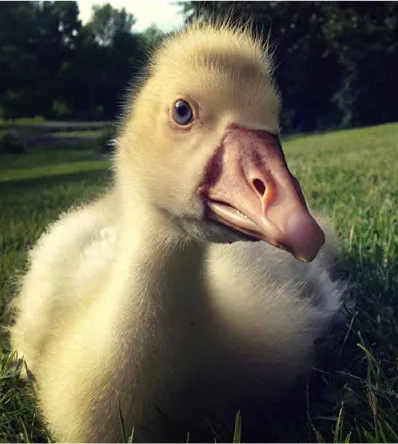
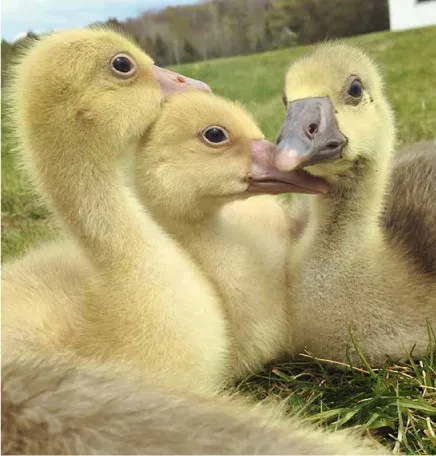
Goslings develop the famous goose attitude early on.
Getting Adult Geese
Of course, starting with goslings is not the only option for introducing geese to your farm. You can also find adult birds from local farms. If you want to start reaping the benefits of keeping geese right away, having an adult goose might be a worthwhile beginning, especially if you don’t have the time or energy that caring for goslings requires. While an adult goose will never imprint on you the way a gosling does, you can find birds that are very friendly. Moreover, mature geese are already practiced egg layers and more than likely prepared to protect your property as soon as you bring them home.
Hatching with a Broody Goose
If you already have some adult geese, you may decide to allow one of your females to sit on eggs in the spring. You can purchase hatching eggs, and instead of incubating them yourself, and worrying about humidity and turning times, you can allow the mother goose to take care of the business of raising goslings. This takes a lot of the guesswork out of raising geese, as a mother goose usually knows what to do without needing to do any research.
If you have a pair of geese, male and female, you may also decide to let them hatch their own eggs. Some breeds, specifically Sebastopols and Dewlap Toulouse, have issues with low fertility, and if you wish to breed these, it’s important to start with strong stock and allow ratios of one gander to two or three geese. Other breeds have no such issues, and with no effort on your part, they can start a family.
While nine out of ten hatchings go without issue, it is a good idea to calculate when the eggs will be due (about 28 days after your goose starts setting), just in case the mother is too rough with her hatchlings. It is important to give her a separate area that the rest of the flock can’t reach, because they will harass her and potentially harm her goslings when they are too young to defend themselves.
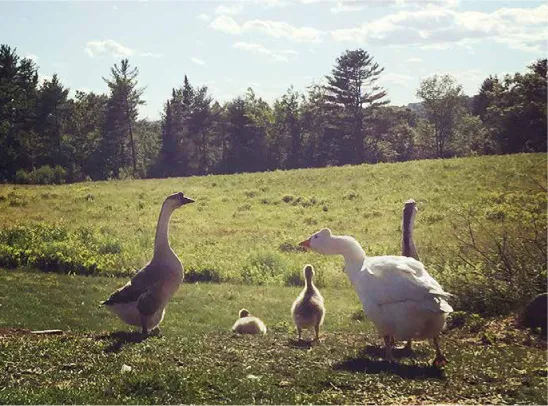
Many geese make excellent, protective parents.
Raising Lady Goose
Our first pair of goslings arrived on a cold, wet day in late June. The post office called us to let us know that our African goslings were ready to be picked up, and we jumped in the car and hurried down to get them. The goslings would spend their first few weeks in a make-shift brooder box in our mudroom, and at every passing person, they would jump up and down, peeping to be recognized and played with. Their bond with us required no work on our part, as they instantly imprinted on my partner and me.
A few years later, when one of the geese was taken by an eagle, the survivor, Lady Goose, became head over heels in love with my partner. She spent that entire fall only one or two feet away from him, honking softly in his ear while he worked on our vintage tractor, or calling out urgently for him when he was out of sight in our home. After we expanded our flock, Lady Goose found a new goose companion, and while she remains attached to us, she’s no longer as underfoot as before.
Goslings hatched under a mother goose will almost never imprint on a person, because they have their real mama right there to take care of them. If the mother was hand raised and is friendly, however, you’ll probably end up with friendly and unaggressive young geese from her.
Goslings and Brooders
Now if you’ve decided on beginning with goslings, and you know where you’ll get them, it is time to get the brooder ready! Goslings are much hardier than baby chicks, but they still have special requirements to ensure they will grow up into healthy, happy birds.
Lighting and Temperature Control
Day-old goslings need a brooder temperature between 90° and 95°F. The easiest way to accomplish that warmth is to use one or two regular 60 or 100 watt light bulbs. You can also use special purpose heat lamps;...