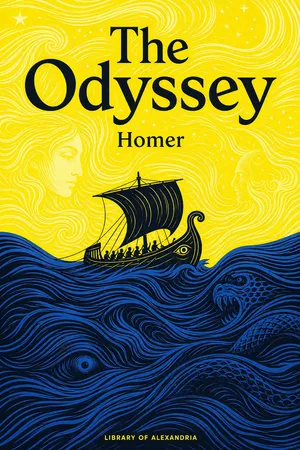
Winning a war is only the beginning. For Odysseus, the journey home demands a different kind of heroism: patience, ingenuity, and the strength to endure.
Homer's The Odyssey follows the king of Ithaca as he struggles to return after the Trojan War. Across a sea shaped by divine rivalries, he confronts the Cyclops, the Sirens, and temptations that threaten to draw him away from his purpose. His greatest resource is not simply a warrior's strength, but a restless, inventive mind-one whose cleverness can save him even as his pride brings danger.
In Ithaca, Penelope resists the suitors who crowd her household, while Telemachus grows toward adulthood in his father's absence. Their story gives the epic's distant wonders an intimate centre: a family under pressure and a home that must be reclaimed. Moving between perilous voyages and domestic conflict, the poem explores hospitality, loyalty, identity, and justice. Its hero is resourceful but fallible, making his struggle compelling far beyond the world of ancient Greek myth.
What readers find inside:
- Mythic encounters - The Cyclops and the Sirens test the limits of human courage and cunning.
- Gods and mortals - Athena's support and Poseidon's hostility reveal a world in which divine power shapes human lives.
- A household under siege - Penelope's resistance and Telemachus's growth make the waiting at home as consequential as the voyage.
- The costs of pride - Odysseus's choices expose the uneasy relationship between intelligence, self-confidence, and survival.
- The meaning of home - The longing for Ithaca gives the epic its emotional force and raises lasting questions about belonging.
For readers drawn to Greek mythology, lovers of sea adventures, and anyone interested in the roots of heroic storytelling, this poem offers both extraordinary encounters and recognisably human stakes.
Set sail with Odysseus and discover what it takes to find the way home.