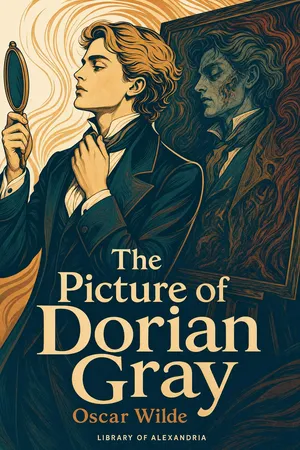
He keeps his beauty. His portrait keeps his secrets.
In Oscar Wilde's The Picture of Dorian Gray, a young man sees his likeness painted by Basil Hallward and wishes that the image might age in his place. Under the influence of the witty, pleasure-loving Lord Henry Wotton, Dorian begins to pursue a life in which beauty and sensation seem to excuse everything. His wish becomes a terrible reality: his face remains youthful while the hidden canvas records his moral decay.
Set against the elegance and hypocrisy of nineteenth-century London, Wilde's only novel brings together Gothic suspense, sparkling conversation, and searching questions about art and responsibility. As Dorian retreats into indulgence, cruelty, and secrecy, the distance between his public appearance and private conscience grows ever more frightening. The novel's enduring power lies in that divide: a society quick to admire a beautiful surface may refuse to see what it conceals. Its questions about influence, self-invention, and the cost of escaping consequences remain unsettlingly familiar.
What readers find inside:
- A sinister portrait - A painted likeness becomes the visible record of a life its owner tries to hide.
- Three defining figures - Dorian, Basil Hallward, and Lord Henry Wotton embody competing claims of beauty, devotion, and pleasure.
- Wit with an edge - Brilliant conversation exposes the contradictions of fashionable society and the appeal of dangerous ideas.
- Beauty and conscience - The story tests whether outward perfection can ever protect a person from inward corruption.
- Mounting Gothic dread - Secrecy and moral evasion turn a wish for lasting youth into a source of terror.
For readers of Gothic classics, psychological fiction, and novels of ideas, this is a darkly compelling encounter with desire and self-deception.
Step into Dorian's glittering world and discover what his flawless face cannot reveal.