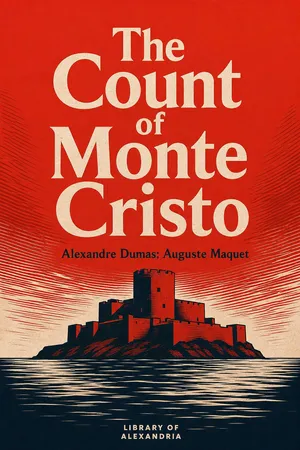
What would you do if you had the wealth and power to punish everyone who betrayed you? Edmond Dantès has spent years imagining his answer.
In The Count of Monte Cristo, Alexandre Dumas and Auguste Maquet follow a young sailor whose promising future is destroyed by jealous rivals. Falsely accused and confined in the Château d'If, Dantès loses his liberty and the life he expected to lead. Escape and the discovery of a hidden treasure allow him to return under a new identity, with resources his enemies could never have imagined.
Set against the political upheavals and social ambitions of nineteenth-century France, the novel moves from prison walls to the glittering world of Parisian society. Dantès turns wealth, secrecy, and patient calculation into instruments of revenge. Yet the consequences reach beyond those he intends to punish, forcing a reckoning with the difference between justice and vengeance. Its intricate plotting, dramatic reversals, and emotional stakes make this both an absorbing adventure and a searching exploration of what bitterness can cost.
What readers find inside:
- Wrongful imprisonment - Dantès's confinement in the Château d'If begins a profound transformation of his hopes and character.
- Treasure and reinvention - A hidden fortune gives a betrayed sailor the means to assume a powerful new identity.
- A patient revenge - Secrets and carefully laid plans draw his former enemies into a web of consequences.
- Love and loyalty - Affection, ambition, and betrayal test relationships across the years.
- Justice and mercy - The pursuit of retribution raises unsettling questions about innocence, responsibility, and forgiveness.
For readers who love historical adventures, elaborate revenge stories, or morally complex classics, this novel offers the pleasures of suspense alongside questions that remain deeply personal.
Enter Dantès's world and follow a quest for justice that puts the avenger himself on trial.