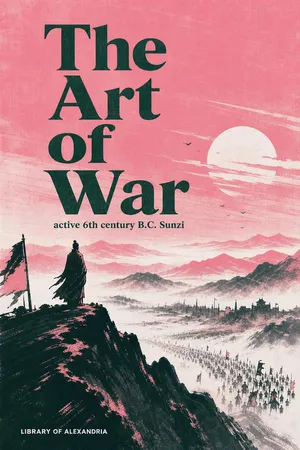
The strongest position is not always won by fighting. Strategic judgment begins with knowing when to act-and when not to.
Sun Tzu's The Art of War is an ancient Chinese military treatise on preparation, command, and the intelligent use of force. Across thirteen chapters, it examines how careful assessment, knowledge of an opponent, and attention to conditions can shape the outcome of a conflict before battle begins. Deception, timing, terrain, and the management of resources all matter more than strength alone.
At its heart is a demanding idea: successful leadership must reckon with the costs of conflict, not merely the prospect of victory. Sun Tzu considers the dangers of prolonged campaigns, the importance of reliable intelligence, and the need to adapt rather than follow a fixed plan. These principles have kept The Art of War central to discussions of military thought while drawing readers interested in negotiation, competition, and decisions under pressure. Its value today lies in the questions it asks about preparation, judgment, and the limits of confrontation.
What readers find inside:
- Strategic assessment - Evaluate your own position and an opponent's strengths before committing to action.
- Planning and deception - Explore how information, appearances, and surprise can create an advantage.
- Leadership and command - Consider the discipline, judgment, and responsibility required to direct others.
- Terrain and timing - Discover why circumstances and the moment of action must guide a strategy.
- The cost of conflict - Examine why prolonged struggle can undermine the very success it seeks.
- Adaptable thinking - Follow an approach that responds to changing conditions rather than relying on rigid formulas.
This classic will appeal to readers of military history, students of Chinese philosophy, and anyone interested in the strategic foundations of leadership and negotiation.
Begin reading and consider what it means to prevail through preparation rather than needless confrontation.