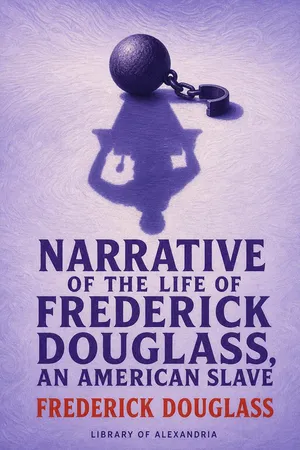
Learning to read revealed the injustice of slavery-and gave Frederick Douglass a way to challenge it. His account turns personal experience into an enduring demand for human dignity.
Published in 1845, Narrative of the Life of Frederick Douglass, an American Slave recounts Douglass's childhood and young adulthood in bondage in Maryland. From the violence of plantation life to his experiences in Baltimore, he exposes a system that denied enslaved people knowledge, family security, and authority over their own lives. His determination to learn to read and write becomes central to his growing understanding of oppression and his resolve to resist it.
Douglass writes with directness, careful observation, and moral force. His confrontation with Edward Covey marks a crucial assertion of his own humanity, while his criticism of slaveholding religion lays bare the distance between professed belief and practiced cruelty. Both an autobiography and a major work of abolitionist literature, the book still challenges readers to consider how power is maintained-and how testimony can undermine it.
What readers find inside:
- Life under slavery - Douglass describes the violence, deprivation, and uncertainty that shaped his early years.
- The pursuit of literacy - Reading and writing deepen his awareness of injustice and expand his sense of possibility.
- Resistance and selfhood - His struggle with Covey becomes a turning point in his refusal to accept dehumanization.
- Religious hypocrisy - Douglass distinguishes Christian belief from the conduct of those who use religion to defend slavery.
- Abolitionist testimony - Personal recollection becomes a public argument against the institution of slavery.
This work will speak to readers of African American history, readers of memoir and autobiography, and anyone interested in the relationship between education, justice, and personal agency.
Begin this landmark account and encounter a voice that insists on being heard.