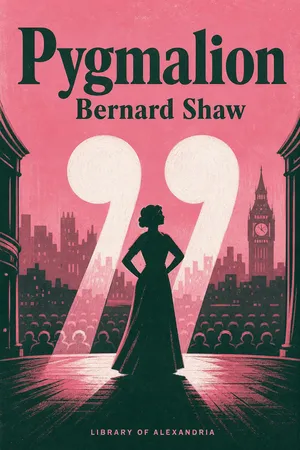
A new accent can open doors. But who gets to decide what happens after a woman walks through them?
In Bernard Shaw's Pygmalion, Eliza Doolittle, a London flower seller, seeks speech lessons from Henry Higgins, a professor of phonetics. Higgins believes that changing her pronunciation can allow her to pass as a duchess. For him, the undertaking is a demonstration of his expertise; for Eliza, it offers the possibility of a different livelihood and a different life.
As her lessons expose the habits and assumptions of polite society, the experiment becomes a struggle over dignity, obligation, and independence. Shaw uses sparkling arguments and uncomfortable encounters to ask how much social standing depends on speech and manners-and what those outward signs fail to reveal. The play that inspired My Fair Lady remains both an entertaining comedy and a searching challenge to the idea that one person can remake another without consequences.
What readers find inside:
- Eliza Doolittle - A determined heroine insists on being treated as a person rather than a successful experiment.
- Language and status - Accents reveal how quickly people assign rank, opportunity, and worth to strangers.
- Henry Higgins - A gifted specialist's confidence in his methods clashes with his treatment of the people around him.
- Social satire - British class conventions become the target of sharp dialogue and comic reversals.
- Independence and identity - Eliza's changing circumstances raise questions about work, belonging, and the right to choose a future.
For readers of classic British drama, lovers of witty social comedy, and admirers of My Fair Lady curious about its source, this play offers much more than a story of changed appearances.
Step into Shaw's London and meet a heroine whose most important transformation is learning to speak for herself.