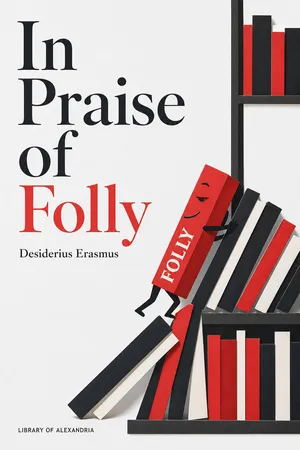
What if the fool sees more clearly than the wise? Erasmus turns that question into a witty, unsettling challenge to human pride.
First published in 1511, In Praise of Folly gives the stage to Folly herself, who delivers a spirited speech celebrating her influence over human life. Scholars, monarchs, theologians, and church leaders all come under scrutiny as she exposes the self-interest and pretension beneath their claims to wisdom. Her listeners may laugh at others, but they cannot remain comfortably outside the joke.
A landmark of Renaissance humanism, this satirical essay combines comic invention with serious reflection on faith, learning, and moral conduct. Erasmus challenges religious abuses without abandoning the search for sincere Christian belief. His irony continually unsettles the boundary between foolishness and wisdom, asking readers to look beyond status, elaborate arguments, and outward displays of piety. Its questions still matter wherever authority resists criticism and cleverness passes for understanding.
What readers find inside:
- A memorable speaker - Folly makes her own case through a mock celebration of the foolishness that shapes society.
- Learning under scrutiny - Intellectual vanity and academic pretension become targets of sharp, playful criticism.
- Religion and sincerity - The gap between outward observance and inward faith gives the satire its moral urgency.
- Power and pride - Rulers and religious authorities face the same searching wit directed at ordinary human weaknesses.
- Paradox and self-recognition - The speech invites readers to question their confidence in their own good sense.
This classic will appeal to readers of philosophical humor, students of Renaissance thought, and anyone interested in the relationship between religion and reform.
Step into Folly's audience and discover how much a comic voice can reveal about the serious business of being human.