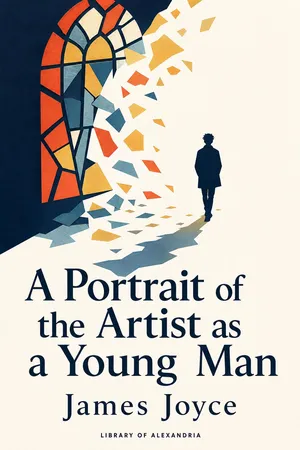
How do you become yourself when family, church, and country have already decided who you should be?
In A Portrait of the Artist as a Young Man, James Joyce follows Stephen Dedalus from the impressions of childhood to the ambitions of early adulthood. Growing up in late nineteenth-century Ireland, Stephen encounters the pressures of school, family loyalty, Catholic belief, and national identity. His growing desire to create brings him into conflict with the authorities and attachments that have shaped his world.
This semi-autobiographical coming-of-age novel makes its central struggle felt through language itself. As Stephen matures, the prose develops with his perceptions, moving from a child's sensory experience toward searching arguments about beauty, belief, and artistic purpose. Desire, guilt, religious fear, and intellectual discovery become parts of an unsettled inner life. A landmark of literary modernism, the novel remains compelling for its refusal to make independence simple: finding a voice can also mean risking estrangement from what is familiar and loved.
What readers find inside:
- Stephen Dedalus - A sensitive, questioning protagonist searches for an identity beyond the roles others offer him.
- Faith and conscience - Catholic teaching, guilt, and spiritual discipline exert a powerful influence on Stephen's development.
- Irish life - Family tensions and debates about politics and national belonging connect private experience to a divided society.
- Modernist prose - Shifting language and intimate access to thought reveal a consciousness changing as it encounters the world.
- Creative independence - Stephen's reflections on beauty and expression explore what an artistic vocation might demand.
For readers of Irish literature, psychologically rich coming-of-age stories, and modernist fiction, this is an absorbing encounter with the struggle between belonging and self-determination.
Enter Stephen's changing world and follow the search for a voice he can call his own.