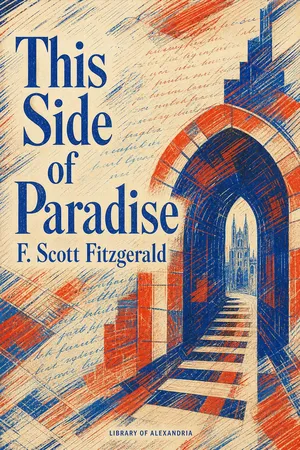
What happens when the life you imagined no longer seems possible? For Amory Blaine, growing up means discovering how little charm, intelligence, and ambition can guarantee.
In This Side of Paradise, F. Scott Fitzgerald follows a privileged young man from prep school to Princeton and into the unsettled world surrounding the First World War. Amory is clever, vain, romantic, and eager to become someone remarkable. Yet disappointed love and uncertain prospects force him to question the ideals he once took for granted.
Published in 1920, Fitzgerald's first novel captures a generation caught between inherited expectations and new doubts about love, money, and success. Its blend of social observation, introspection, verse, and dramatic dialogue gives youthful uncertainty an unusually restless form. Beneath the wit and romantic longing lies a question that remains familiar: how do you build an identity when the approval and achievements you pursue fail to satisfy?
What readers find inside:
- An Unsettled Hero - Amory Blaine's confidence and insecurity make his search for distinction both revealing and painfully recognizable.
- Princeton Life - College friendships, intellectual ambitions, and social aspirations shape Amory's ideas about who he might become.
- Love and Disappointment - Romantic relationships expose the distance between Amory's ideals and the demands of life beyond them.
- Class and Privilege - Fitzgerald examines how wealth and status influence desire, opportunity, and judgments of personal worth.
- Postwar Disillusionment - The uncertainties of youth become part of a wider questioning of inherited values and promises of success.
This novel will appeal to readers of American literary classics, coming-of-age fiction, and stories of the Lost Generation. It is especially rewarding for anyone drawn to flawed protagonists whose ambitions are easier to recognize than to admire.
Enter Amory Blaine's world and follow his uneasy journey from self-assurance toward self-knowledge.