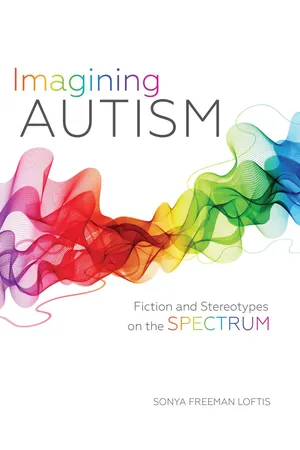
A disorder that is only just beginning to find a place in disability studies and activism, autism remains in large part a mystery, giving rise to both fear and fascination. Sonya Freeman Loftis's groundbreaking study examines literary representations of autism or autistic behavior to discover what impact they have had on cultural stereotypes, autistic culture, and the identity politics of autism. Imagining Autism looks at fictional characters (and an author or two) widely understood as autistic, ranging from Conan Doyle's Sherlock Holmes and Harper Lee's Boo Radley to Mark Haddon's boy detective Christopher Boone and Steig Larsson's Lisbeth Salander. The silent figure trapped inside himself, the savant made famous by his other-worldly intellect, the brilliant detective linked to the criminal mastermind by their common neurology—these characters become protean symbols, stand-ins for the chaotic forces of inspiration, contagion, and disorder. They are also part of the imagined lives of the autistic, argues Loftis, sometimes for good, sometimes threatening to undermine self-identity and the activism of the autistic community.
- 208 pages
- English
- ePUB (mobile friendly)
- Available on iOS & Android
eBook - ePub
About this book
Trusted by 375,005 students
Access to over 1.5 million titles for a fair monthly price.
Study more efficiently using our study tools.
Information
ONE
The Autistic Detective: Sherlock Holmes and His Legacy
“I am a brain, Watson. The rest of me is a mere appendix.”
—Sherlock Holmes in Arthur Conan Doyle, “The Adventure of the Mazarin Stone”
Sherlock Holmes has long been rumored to be on the autism spectrum. From chat on fan sites to direct diagnoses in the New York Times and Psychology Today, he is the literary character most commonly associated with autism in the popular imagination.1 Yet despite the ongoing scholarly conversation regarding Arthur Conan Doyle’s work, the significance of the great detective’s autism “diagnosis” has been largely overlooked. While it would be impossible to diagnose a fictional character with a neurological difference, it says something about the way that the public imagines autism that Holmes is consistently imagined and described as a person on the spectrum. Indeed, Conan Doyle’s famous character popularized the stereotype of the detective with autistic traits, thus perpetuating several common tropes about autism.2 While the cultural fantasy of the autistic detective may seem to dispel the darker fantasy of those with cognitive disabilities as dangerous criminals and social problems, such detective figures may actually work to reinforce these stereotypes. Furthermore, the presumably redemptive fiction of the autistic hero often proves oddly dehumanizing: even as his incredible feats of deduction are praised as the work of a genius, Holmes is objectified by his beloved Watson, who constantly compares the brilliant sleuth to machines and repeatedly describes him as “inhuman.” Indeed, Watson customarily imagines the famous detective as distant, callous, unknowable, and inexplicable. As Watson (representing the neurologically typical reader) struggles to solve the enigma that is Holmes, he establishes a legacy of mystery and mysticism surrounding the autistic detective that carries over into the famous figure’s many pop culture analogs.
Emulating Conan Doyle’s famous tales, contemporary crime fiction frequently creates detective characters with autistic characteristics. For example, popular television shows such as Criminal Minds and Bones present detectives with autistic traits who are clearly constructed to remind audiences of Holmes. While figures such as Spencer Reid and Temperance Brennan (and other crime fighters following in Holmes’s shadow) may seem to counteract fears of people with cognitive disabilities as deviant, criminal, or dangerous, they may actually reinforce those stereotypes. Dwelling on the mystery and exoticism of alterity, such figurations also cast the character with autism as a puzzle in need of an outside solution.
Diagnosis and Deduction
The claim that Conan Doyle’s famous detective has Asperger’s syndrome (AS) is ubiquitous enough to appear in a variety of popular venues, and his diagnosis has been pursued by both fans and professionals; unfortunately, most of the discussions of Holmes’s autistic traits present negative stereotypes as a part of their analysis, offering an extremely superficial and one-sided view of autism. A 2009 article in the New York Times describes Holmes as “mind-blind,” “cold-blooded,” and “rude,” using these demeaning descriptors as diagnostic criteria for the popular sleuth.3 Autistic people generally consider the term “mind-blind” to be derogatory, and the idea that all people with autism are cold-blooded and rude is obviously a damaging stereotype.4 Another article, published in 2010, describes Holmes as a character with Asperger’s who can solve crimes because he thinks outside of “normal, balanced cognition.”5 Such readings set neurotypical thinking up as the natural norm and suggest that other ways of thinking must be inherently inferior. A 2011 article in Psychology Today explains that Holmes must be autistic because “his obsessive interest in the craft of crime-solving crowded out almost everything else from his life, including the possibility of warm and reciprocal relationships.”6 Clearly, people on the spectrum are incapable of warm and reciprocal relationships (our ability to use sarcasm is also often falsely maligned). In Autism: Explaining the Enigma (2003), Uta Frith presents Holmes as a “creature of cold reason who is incapable of warm-hearted relationships” and explains that he is juxtaposed with Watson, a character who is able to have “warm feelings.”7
Certainly, the suggestion that Holmes (and the autistic population he is imagined to represent) is completely incapable of emotional connections is a disturbing one. In sum, such readings frequently present autism as “abnormal” in relation to an imaginary neurotypical norm and encourage false stereotypes of autistics as emotionless, lacking in empathy, and incapable of love. Perhaps even more problematic is the potential interpretative looping that can result when the psychiatric community itself identifies a literary character as having a specific cognitive disability. Holmes’s supposed diagnosis was the subject of a letter to the editor in a 2013 issue of the Journal of Autism and Developmental Disorders: Eric Altschuler suggests that studying figures like Holmes might help to determine how prevalent autism was in previous generations.8 Such arguments demonstrate how a fictional character can be labeled based on stereotypes and then used as an exemplar for actual autistic people. Suddenly, it is not autistic people who are the interpretative template for the literary character; instead, the public perception of the literary character may reshape and inform how autism is defined as a social construct.
However, the ongoing conversation about Holmes and autism rarely addresses the difficulties inherent in “diagnosing” a literary character or the narrow view of people on the spectrum that the resulting analysis often offers. Amateur diagnoses based on popular stereotypes foster a one-dimensional way of thinking about people on the spectrum. In addition, such informal diagnosis may lead people to think that the experience of being autistic can be reduced to a list of criteria in the Diagnostic and Statistical Manual of Mental Disorders. For those who self-identify as autistic, being on the spectrum is not just a list of traits but an entire person, an entire life experience. That experience is always much more than (and sometimes simply other than) the diagnostic criteria. The diagnosis of a literary character may be misleading in that even the best-drawn character can never have the full roundness of a real person. One may wonder on what level Holmes’s autism is merely Conan Doyle’s “narrative prosthesis.”9 Because Holmes is a literary construct, it is also important to note that his autism diagnosis is partially a function of Watson’s neurotypical narrative. Almost all of the reader’s perceptions of Holmes are filtered through Watson’s narrative voice: it might be more accurate not to say that Holmes is autistic but rather that Watson perceives him as autistic. Thus, the adventures of the autistic detective, as narrated by his neurotypical sidekick, are presented with an extra layer of interpretative data—as readers, we perceive both Holmes’s autistic traits and Watson’s neurotypical reactions to those traits. In fact, Watson’s invisible, default position as neurotypical narrator mirrors the assumed norm of the majority perspective in our society at large. The neurotypical narrative perspective Watson offers elides the issue of autism as a subjective social construct: because Watson’s voice narrates Holmes’s story, the reader is placed in a default neurotypical position and is encouraged to perceive Holmes’s actions and words through the interpretative lens of Watson’s “normative” social expectations.
The dangers of diagnosing a literary character with autism spectrum disorder (ASD) are manifold, and the very question of Holmes’s status on the spectrum raises larger questions about disability representation and the definition of autism itself. The question of who “controls” the autism diagnosis or “defines” what it means to be autistic is already a fraught one within the autism community.10 One potential answer is that the psychiatric community (via the DSM) defines autism. But a growing body of collective literature written by autistic people, the reported individual experiences of people on the spectrum, and popular culture representations of autism all add different angles to that definition (or, in the case of some narratives written by autistic people, completely rewrite it).11 Autobiographies written by people on the spectrum present an increasingly common way of “talking back” against the definition of autism presented in the DSM.12 Of course, one potential definition of autism is that it is not neurotypical—autism is a social construct that exists solely in opposition to what is considered normative and could be described as whatever a particular society perceives as falling outside of that norm.13 Ultimately, autism is a fluid signifier that works through multiple meanings in our culture.14 All of the possible sources of definition for the condition are subjective—and despite the vaunted objectivity of the medical profession, the criteria provided by the DSM are as subjective as any others.15 In any case, the popular culture conception of what it means to be autistic may have little to do with the diagnostic criteria provided by psychiatrists. When it comes to “diagnosing” a character like Holmes, social norms and popular stereotypes may play more of a role in constructing and defining autism than the reported life experiences of actual autistic people or the diagnostic criteria given in the DSM. Ultimately, no one representation can ever encapsulate the incredible diversity of the spectrum—and while Holmes is probably an autistic character by most definitions, he is not an autistic person.
In many ways, the popular association of Holmes with the autism spectrum is unsurprising, as Conan Doyle’s character adheres to a plethora of autism stereotypes: Watson perceives Holmes as having intense interests, struggling in the social sphere, and displaying unusual body language.16 Certainly, Holmes approaches his work with an intense single-mindedness (both crime solving and his chemical experiments). As Watson explains, “His zeal for certain studies was remarkable, and within eccentric limits his knowledge was so extraordinarily ample and minute that his observations have fairly astounded me.”17 Watson understands Holmes’s knowledge to be deep rather than broad—but, more importantly, the depth of that knowledge “astounds” him, and he finds it “extraordinary.” Watson, representing the neurotypical reader, is unable to understand or appreciate Holmes’s deep interests and perceives them as mysterious. This lack of understanding contributes to the stereotype of autism as a “puzzling” and mysterious phenomenon. Watson describes Holmes as choosing his work over human companionship: “So engrossed was he with his occupation that he seemed to have forgotten our presence” (Study, 32). The emphasis here should be on the word “seemed”—as is so often the case, Watson cannot really tell the reader what Holmes is thinking, again contributing to the stereotype of the autistic mind as mystery. Certainly, Holmes’s fields of interest often seem too narrow to interest a wider audience: “I have been guilty of several monographs. They are all upon technical subjects. Here, for example, is one ‘Upon the distinction between the Ashes of the Various Tobaccos’. In it I enumerate a hundred and forty forms of cigar, cigarette, and pipe tobacco, with coloured plates illustrating the difference in the ash.”18 The unusual depth of Holmes’s interests may make them seem eccentric and exotic to some readers.
In addition, the other characters frequently perceive Holmes as socially awkward. However, what the other characters interpret as bluntness or rudeness could also be construed as a misunderstanding caused by fundamentally different ways of thinking. In The Hound of the Baskervilles, Mrs. Lyons seems quite shocked by the detective’s behavior, as “Holmes opened his interview with a frankness and directness which considerably amazed her.”19 Given the context of his interview with Mrs. Lyons (Holmes is trying to apprehend a murderer before he kills again), Holmes’s haste and directness are quite appropriate. It is true, however, that Holmes often forgets social niceties, even going so far as to slight royalty in “A Scandal in Bohemia”: “He bowed, and, turning away without observing the hand which the king stretched out to him, he set off in my company for his chambers.”20 His responses also sometimes show a lack of understanding of Watson’s feelings. After giving a rather unkind account of Watson’s alcoholic brother in The Sign of the Four, he apologizes by explaining, “Viewing the matter as an abstract problem, I had forgotten how personal and painful a thing it might be to you” (Sign, 9). Later, Holmes actually groans at the announcement of Watson’s engagement—hardly the kind of response his friend could have been hoping to elicit. Holmes often oscillates between silence and long monologues, speaking with “the air of a clinical professor expounding to his class” and avoiding small talk (even with Watson and his fiancée): “Miss Morstan and I chatted in an undertone about our present expedition and its possible outcome, but our companion maintained his impenetrable reserve until the end of our journey” (Sign, 39, 19). The “impenetrable” nature of Holmes’s silence suggests the common stereotype of those with autism as trapped by an imprisoning interiority, separated from the rest of the world by a chasm of silence.21 Watson perceives Holmes’s communication style as alienating the police and making it difficult for Holmes to work with a team to solve cases: “One of Sherlock Holmes’s defects—if indeed, one may call it a defect—was that he was exceedingly loth to communicate his full plans to any other person until the instant of their fulfillment” (Hound, 146). Even as Watson contemplates Holmes’s communication style, he questions whether or not this difference should be regarded as a “defect.” Overall, the other characters perceive Holmes as noncommunicative and disengaged. As a result, Holmes spends a great deal of time in solitude: “while Holmes, who loathed every form of society with his whole Bohemian soul, remained in our lodgings in Baker Street, buried among his old books” (Adventures, 5–6). Overall, Holmes’s general isolation and lack of social skills align neatly with autism stereotypes.
In addition, Holmes frequently engages in self-stimulating (stimming) behaviors and displays atypical body language: through the reactions of the neurotypical characters, the reader is encouraged to interpret these autistic traits as signs of illness and symbols of Holmes’s ineffable mystery. Holmes’s habit of repetitive pacing is a source of concern for both Watson and the landlady. Mrs. Hudson expresses her worries to Watson: “I am afraid for his health . . . he’s that strange, sir. After you was gone he walked and he walked, up and down, and up and down, until I was weary of the sound of his footstep. Then I heard him talking to himself and muttering . . . and now he has slammed off to his room, but I can hear him walking same as ever. I hope he’s not going to be ill, sir. I ventured to say something to him about cooling medicine” (Sign, 71). Although Watson knows that Holmes has a habit of pacing when he is thinking, even Watson worries when the detective continues to pace all night: “I was myself somewhat uneasy when through the long night I still from time to time heard the dull sound of his tread” (Sign, 72). The neurotypical characters perceive Holmes’s stimming as “strange” and “ill,” and it makes them “uneasy.” Mrs. Hudson also indicates that Holmes’s stimming makes her “weary”: in the formation of negative stereotypes, not only is neurotypical taken as the default normal, but autistic differences that are viewed as annoying are also those most frequently pathologized. In addition to this stimming behavior, Holmes exhibits atypical body language that Watson finds difficult to interpret: because of his inability to decode his friend’s expressions, Watson often imagines Holmes as cold and emotionless. According to Watson, Holmes rarely seems focused on the person he is conversing with and is often looking elsewhere. Indeed, it is remarkable how often Holmes either sits with his back to Watson or converses with clients with his eyes shut. At the beginning of The Adventures of Sherlock Holmes, when Holmes has been separated from his dearest friend for ...
Table of contents
- Cover
- Half title
- Title
- Copyright
- Dedication
- Contents
- Acknowledgments
- Introduction
- 1 The Autistic Detective: Sherlock Holmes and His Legacy
- 2 The Autistic Savant: Pygmalion, Saint Joan, and the Neurodiversity Movement
- 3 The Autistic Victim: Of Mice and Men and Flowers for Algernon
- 4 The Autistic Gothic: To Kill a Mockingbird, The Glass Menagerie, and The Sound and the Fury
- 5 The Autistic Child Narrator: Extremely Loud and Incredibly Close and The Curious Incident of the Dog in the Night-Time
- 6 The Autistic Label: Diagnosing (and Undiagnosing) the Girl with the Dragon Tattoo
- Afterword
- Notes
- Index
Frequently asked questions
Yes, you can cancel anytime from the Subscription tab in your account settings on the Perlego website. Your subscription will stay active until the end of your current billing period. Learn how to cancel your subscription
No, books cannot be downloaded as external files, such as PDFs, for use outside of Perlego. However, you can download books within the Perlego app for offline reading on mobile or tablet. Learn how to download books offline
Perlego offers two plans: Essential and Complete
- Essential is ideal for learners and professionals who enjoy exploring a wide range of subjects. Access the Essential Library with 800,000+ trusted titles and best-sellers across business, personal growth, and the humanities. Includes unlimited reading time and Standard Read Aloud voice.
- Complete: Perfect for advanced learners and researchers needing full, unrestricted access. Unlock 1.5M+ books across hundreds of subjects, including academic and specialized titles. The Complete Plan also includes advanced features like Premium Read Aloud and Research Assistant.
We are an online textbook subscription service, where you can get access to an entire online library for less than the price of a single book per month. With over 1.5 million books across 990+ topics, we’ve got you covered! Learn about our mission
Look out for the read-aloud symbol on your next book to see if you can listen to it. The read-aloud tool reads text aloud for you, highlighting the text as it is being read. You can pause it, speed it up and slow it down. Learn more about Read Aloud
Yes! You can use the Perlego app on both iOS and Android devices to read anytime, anywhere — even offline. Perfect for commutes or when you’re on the go.
Please note we cannot support devices running on iOS 13 and Android 7 or earlier. Learn more about using the app
Please note we cannot support devices running on iOS 13 and Android 7 or earlier. Learn more about using the app
Yes, you can access Imagining Autism by Sonya Freeman Loftis in PDF and/or ePUB format, as well as other popular books in Literature & Literary Criticism. We have over 1.5 million books available in our catalogue for you to explore.