Essays on technology's effect on our relationship with our bodies: "A timely and perceptive look . . . at some of the most anxiety producing issues of the day." —Paul Rabinow, University of California, Berkeley
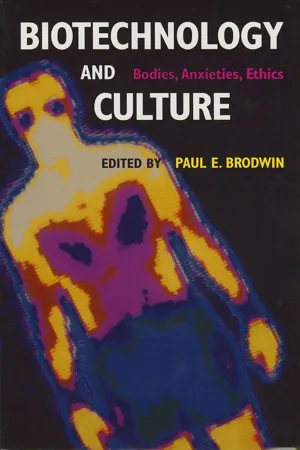
As birth, illness, and death increasingly come under technological control, struggles arise over who should control the body and define its limits and capacities. Biotechnologies turn the traditional "facts of life" into matters of expert judgment and partisan debate. They blur the boundary separating people from machines, male from female, and nature from culture. In these diverse ways, they destroy the "gold standard" of the body, formerly taken for granted.
Biotechnologies become a convenient, tangible focus for political contests over the nuclear family, legal and professional authority, and relations between the sexes. Medical interventions also transform intimate personal experience: giving birth, building new families, and surviving serious illness now immerse us in a web of machines, expert authority, and electronic images. We use and imagine the body in radically different ways, and from these emerge new collective discourses of morality and personal identity.
This book brings together historians, anthropologists, cultural critics, and feminists to examine the broad cultural effects of technologies such as surrogacy, tissue-culture research, and medical imaging. The moral anxieties raised by biotechnologies and their circulation across class and national boundaries provide other interdisciplinary themes for discourse in these essays. The authors favor complex social dramas of the refusal, celebration, or ambivalent acceptance of new medical procedures. Eschewing polemics or pure theory, contributors show how biotechnology collides with everyday life and reshapes the political and personal meanings of the body.
Contributors include Paul Brodwin, Lisa Cartwright, Thomas Csordas, Gillian Goslinga-Roy, Deborah Grayson, Donald Joralemon, Hannah Landecker, Thomas Laqueur, Robert Nelson, Susan Squier, Janelle Taylor, and Alice Wexler.
"This impressive collection offers a number of rich examples of why the development of anthropological studies of science, technology, and their disruptive social effects is a leading edge of critical enquiry." —Arthur Kleinman, Harvard University
- 312 pages
- English
- ePUB (mobile friendly)
- Available on iOS & Android
eBook - ePub
About this book
Trusted by 375,005 students
Access to over 1.5 million titles for a fair monthly price.
Study more efficiently using our study tools.
Information
Part I: Genealogies
Chapter 1
Life and Death at Strangeways
The Tissue-Culture Point of View
I do not love thee, Doctor FellThe reason why, I cannot tellBut this I know, and know full wellI do not love thee, Doctor Fell.—Tom Brown
The gray walls, black gowns, masks and hoods; the shining, twisted glass and pulsating colored fluids; the gleaming stainless steel, hidden steam jets, enclosed microscopes and huge witches’ caldrons of the “great” laboratories of “tissue culture” have led far too many persons to consider cell culture too abstruse, recondite, and sacrosanct a field to be invaded by mere hoi polloi!... But every biology student should at some time have the dramatic experience of seeing the rhythmic beat of heart muscle, the sweep of the cilia of pulmonary epithelium, the twitching of skeletal muscle, the peristalsis of chorioallantoic or intestinal vesicles, the migration of fibroblasts, and the spread of nerve fibres. And every student can not only see these things but have the thrill of preparing them himself.—Philip R. White, Cultivation
“Transplant of Pig Hearts to Be Banned: Blow for Patients Awaiting Surgery” was the headline of the London Times I picked up at the news agent in Green Park. It was 16 January 1997, and I had come straight in from Heathrow, heading up to the hospice in Saint John’s Wood where my friend was dying of end-stage lung cancer. The story took up all the top left of page 1: the British government was banning “pioneering surgery to transplant pig hearts to people after a government inquiry concluded that the procedure was too risky,” reported the Times’s health correspondent (Laurance).1 The context for this decision was a “global organ donor crisis—at least 6,000 people are waiting for transplants in Britain and five times that number are on waiting lists in America.” Set into the story was a cartoon of an argyll-sweatered man swinging from a light fixture; a twinsetclad woman in the foreground, holding a newspaper with the headline “PIG HEART TRANSPLANTS UNSAFE,” explained to her male companion, “He opted for the monkey heart transplant instead.” The government recommended the creation of an “interim authority”—a “regulatory body to control experiments,” the correspondent reported, noting that “a similar arrangement was made to control in-vitro fertilisation clinics in the 1980s before the Human Fertilisation and Embryology Act was passed in 1990.” And now the in vitro fertilization (IVF) industry is in full swing in England, and perhaps xenotransplantation too is on its way to implementation, I thought.2
Over the next several days, I forgot the newspaper story, as I sat with my friend in the hospice and as he died. But the story has come back to me now, with its tangled web of seemingly stable oppositions—birth and death, institutional power and personal choice, profit and gift, free will and bondage, First World and Third World, nature and culture, human and animal—as the route to my topic: the analysis of a biomedical technique, developed in the first three decades of this century, that has occupied a pivotal position in the construction of our contemporary understanding of life and death. This technique is tissue culture.3 As defined in Animal Tissue into Humans, the report of the Advisory Group on the Ethics of Xenotransplanation issued the day I arrived in London, tissue is “an organised aggregate of similar cells that perform a particular function... used to refer also to organs,” and tissue culture is the technique of “isolating a small fragment of tissue from the body and cultivating it in a glass vessel containing suitable nutritive medium” (Great Britain 163). First successfully accomplished by Ross G. Harrison, who in 1907 published his discovery that amphibian nerve fiber could be made to live and grow in nutrient outside the body, the technique of tissue culture was given additional impetus during World War I.4 In the postwar period, Nobel Prize winner Alexis Carrel was one of the prominent pioneers of tissue culture. Working at the Rockefeller Institute in New York City, Carrel achieved worldwide publicity for his accomplishment in keeping a chicken heart beating in vitro for over a decade. With its extension in the development of organ culture by Honor Bridget Fell and Robinson in 1929, tissue culture laid the foundation for modern biomedical techniques ranging from in vitro fertilization to organ transplantation, including the animal to human transplantations whose press furor greeted me on my arrival in London (Russell).5
As it has developed, then, tissue culture exists at the nexus of two boundaries currently under renegotiation: the boundary of the species and the boundary of the human life span. Two forms of growth are typically investigated in tissue grown in vitro: organized growth and unorganized growth. Researchers have accessed them—with iconic overdetermination—by culturing the embryo and the cancer cell, potent images of life and death.6 Since its earliest years, this Janus-faced technique has drawn on—and catalyzed—fantasies extending beyond the discrete set of cells in the laboratory culture. In lectures, scientific papers, popular science articles, and fiction, people weigh the potential of tissue culture for the assault on aging, the prolongation of life, and, indeed, the fantasy of immortality. Tissue culture calls into question the definition of the individual, the boundaries of the body, the relations among species, and the authority of medical science. Moreover, it also challenges the conventional or accepted structure of the human life span.7 Cultured tissues, whether from animals or human beings, play a crucial part in the broader twentieth-century project of reshaping the human life, in biomedicine (through interventions in conception, gestation, birth, aging, and death) and in literature and popular culture.
In the past decade, scholars have begun to hypothesize that the life course functions as a social institution, changing as other institutions have changed in response to Western processes of modernization.8 Many now argue that the life span is “a discursive or imagined production, symbolic of a culture’s beliefs about living and aging,” and they understand the arc from birth to death not as merely natural but as the product of a culture’s beliefs about human life and the shape of the human story (Katz, “Imagining” 61). However, such a constructivist position has its limits. Refuting “a view of the life course in which culture is granted the overarching power to mold nature in any form it chooses,” these scholars hold instead that “human beings share with other species an embodied existence inevitably involving birth, growth, maturation and death” (Featherstone and Hep-worth 375).
The biotechnology of tissue culture participates in this broader twentieth-century reconceptualization and reconstruction of the human life span. As I demonstrate in the longer project from which this essay is drawn, this reshaping of life is being accomplished, simultaneously, in biomedical science and in literature and popular culture, in ways I want to exemplify briefly. One kind of material and cultural reconfiguration of life is produced by biomedical practices, so that people are conceived differently, born differently, and age and die differently. The new technique of cloning, or more precisely nuclear fusion, which has tissue culture as its foundation, has already provoked a rethinking of the notion of aging on the animal level that is certain to travel—even if the technology does not—to the human realm.9 Another restructuring of human life is accomplished by fiction, science fiction, popular science writing, and journalism, all part of a powerful set of inscription technologies which shape human beings to meet the needs of society. Through the vehicles of image, genre, character, and plot, literary and para-literary texts help to set the boundary conditions for the human condition. Such representations help us to understand our experience as individuals, including our experience of the body. This process of identity construction shapes both the symbolic and the material realms, as new kinds of life stories both catalyze and confirm new beginnings and endings.10 A third kind of restructuring occurs at the boundary of the scientific and the literary, in the medical narratives that interweave materiality and representation, objectivity and interpretation (Hunter). “The journey from birth to death,” Michael Holquist has observed, “serves as a biographical rhythm that entrains information into narrative so that it may best be processed as meaning by men and women who are born and die” (21). Such an implicit structure lies behind even the case history and the illness narrative, so that diagnostic facts arrive already shaped by representation.11 When the journey from birth to death is rerouted, lengthened, or curtailed, meaning too is changed. In each of these different settings (the scientific, the literary, and their intersection in various forms of medical writing), the practical and symbolic resources of creatures that border on the human (animals and human embryos and fetuses, as well as tissues cultured from them) are used to recast that birth to death journey and thus redefine the human. This robs human beings of some old certainties and enables us to imagine new options.
If we analyze the (re) construction of the life course, as carried out in symbolic process and in scientific practice, we can perhaps recover the fantasies, responses, fears, and even the sense of possibilities, that may have been obscured or erased as we accepted without scrutiny this massive technoscientific and cultural reshaping of life. Moreover, when we transgress the disciplinary boundaries that limit knowledge, and study these acts of reconstruction in relation to each other, we can also illuminate literary and scientific practices. In what follows, I will trace some of the resonances of the new biotechnology of tissue culture (including its specifically literary resonances) within this larger modern and postmodern project of reshaping the course of human life. My focus is one specific site: the Strangeways Research Laboratory in Cambridge, England.
Tissue culture came to Great Britain when Thomas Strangeways Pigg Strangeways made the technique the sole focus of the laboratory he founded (Fell, “Tissue” 1). Initially a research hospital investigating rheumatoid arthritis when it was established in 1905, by the teens and early twenties the laboratory abandoned the clinical medical component, when Strangeways determined to focus on the microphysiology of disease, as revealed by this new technique he had learned from Alexis Carrel.12 Tissue culture continued to be central to Strangeways Laboratory research throughout its founder’s life. As the Lancet recounted in Strangeways’s obituary, “By a curious irony the last lecture which he ever delivered was on Death and Immortality, and he illustrated it by a preparation bearing marvelous witness to his technical skill—a living culture of tissue made from a sausage purchased in the town” (“T. S. P. Strangeways” 56). With his death in 1926, the Research Hospital became the Strangeways Research Laboratory, funded by the Medical Research Council of Great Britain. Its directorship was assumed by twenty-eight-year-old Dr. Honor Bridget Fell, who, after completing a Ph.D. in zoology at Edinburgh University, had studied tissue culture at Cambridge with Thomas Strangeways (Strangeways; Hall).
The papers of the Strangeways Research Laboratory—in the 1920s and 1930s the only laboratory in the United Kingdom to concentrate exclusively on tissue culture—provide a flavor of the scientific, technical, cultural, and social issues this relatively new biotechnology raised.13 Scientists dedicated themselves to exploring “the tissue-culture point of view,” a phrase Dr. Honor Fell coined to refer to the scientific and popular mindset bred by the micropractices of this novel technique. Three genres of documents all register the impact of this new biotechnology on our understanding of the beginning and the end of life: (1) a series of lectures on tissue culture that Honor Fell delivered, (2) press coverage of Strangeways’s experiments, and (3) poems Strangeways researchers wrote in response to their experimental work. I approach these documents with two questions in mind. How do they reflect the broad cultural and scientific impact of tissue culture within and beyond the laboratory? Is there a genre-linked difference in the way that impact is registered and articulated? As we begin to investigate the tissue-culture point of view, we should hold in our minds a line from the nursery rhyme that has provided the opening epigraph of this essay: “I do not like thee, Dr. Fell.” While this poem originated nearly three centuries earlier, C. H. Waddington’s daughter recalls reciting it as a child and assuming that it referred to her father’s laboratory colleague. As her memory suggests, the point of view bred by the practices of tissue culture inspired both fascination and unease (McDuff).
A series of lectures Dr. Honor Fell called “Tissue Culture,” which she delivered between 1936 and 1938 to vocational and postgraduate medical students, conveys the impact of the new technology on contemporary biomedical practices and cultural attitudes toward life and death. Dr. Fell is explicit about “the tissue-culture point of view,” and her lectures set the context for the reception of the prototypical Strangeways tissue-culture experiments, both within and beyond the laboratory.
1. The tissue-culture point of view raises questions about—and catalyzes reconceptions of—the boundaries of death and life. “The tissue to be cultivated,” Dr. Fell specifies dryly, “should be taken from the animal immediately after death. This, however, is not essential and tissue has been known to grow quite well in vitro when taken from the body as much as a week after death or considerably longer if the body has been kept in cold storage” (Fell, “Tissue” 3). Perhaps in order to increase the drama— because this lecture is to vocational students—Dr. Fell shifts reg...
Table of contents
- Cover
- Half Title
- Title Page
- Copyright Page
- Table of Contents
- Acknowledgments
- Introduction
- Part I: Genealogies
- Part II: Maternity in Question
- Part III: Ethics and the Technological Subject
- Part IV: Biotechnology and Globalization
- Contributors
- Index
Frequently asked questions
Yes, you can cancel anytime from the Subscription tab in your account settings on the Perlego website. Your subscription will stay active until the end of your current billing period. Learn how to cancel your subscription
No, books cannot be downloaded as external files, such as PDFs, for use outside of Perlego. However, you can download books within the Perlego app for offline reading on mobile or tablet. Learn how to download books offline
Perlego offers two plans: Essential and Complete
- Essential is ideal for learners and professionals who enjoy exploring a wide range of subjects. Access the Essential Library with 800,000+ trusted titles and best-sellers across business, personal growth, and the humanities. Includes unlimited reading time and Standard Read Aloud voice.
- Complete: Perfect for advanced learners and researchers needing full, unrestricted access. Unlock 1.5M+ books across hundreds of subjects, including academic and specialized titles. The Complete Plan also includes advanced features like Premium Read Aloud and Research Assistant.
We are an online textbook subscription service, where you can get access to an entire online library for less than the price of a single book per month. With over 1.5 million books across 990+ topics, we’ve got you covered! Learn about our mission
Look out for the read-aloud symbol on your next book to see if you can listen to it. The read-aloud tool reads text aloud for you, highlighting the text as it is being read. You can pause it, speed it up and slow it down. Learn more about Read Aloud
Yes! You can use the Perlego app on both iOS and Android devices to read anytime, anywhere — even offline. Perfect for commutes or when you’re on the go.
Please note we cannot support devices running on iOS 13 and Android 7 or earlier. Learn more about using the app
Please note we cannot support devices running on iOS 13 and Android 7 or earlier. Learn more about using the app
Yes, you can access Biotechnology and Culture by Paul E. Brodwin in PDF and/or ePUB format, as well as other popular books in Biological Sciences & Biotechnology. We have over 1.5 million books available in our catalogue for you to explore.