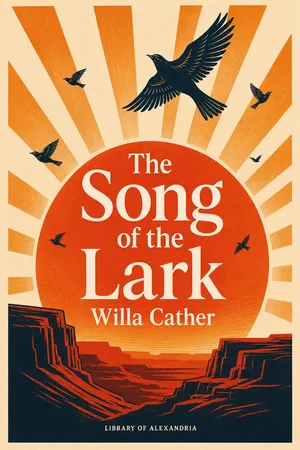
A remarkable voice begins in an ordinary town. To discover what it can become, Thea Kronborg must decide how much of her life she is willing to give to art.
Willa Cather's The Song of the Lark follows a gifted young woman from Moonstone, Colorado, toward a career as an opera singer. Growing up in a crowded household, Thea finds in music a purpose that the people around her cannot always understand. Her ambitions carry her to Chicago, where training and city life test both her abilities and her sense of who she wants to become.
The novel's world stretches from small-town streets to the desert Southwest and the musical culture of Europe. In the ancient cliff dwellings of Arizona, Thea encounters a vision of human creativity that deepens her understanding of her own vocation. Cather makes artistic development a story of attention, discipline, solitude, and difficult choices rather than talent alone. Her vivid landscapes and close observation of character give lasting force to a question that remains urgent: how can a person honor a calling without escaping its human costs?
What readers find inside:
- A determined heroine - Thea Kronborg grows from an observant small-town girl into a woman intent on shaping her own future.
- Music as a vocation - The pursuit of an operatic career reveals the labor and sacrifice behind artistic achievement.
- The American West - Colorado and the Arizona desert shape Thea's imagination as profoundly as her musical training.
- Ambition and belonging - Family ties, friendship, and personal attachments place competing demands on a developing artist.
- A life in formation - Cather explores how experience, memory, and disciplined effort become the foundations of an individual voice.
For readers of American classics, stories of women finding their independence, and novels about music and creative work, this is an absorbing portrait of a life built around a calling.
Follow Thea from her Colorado beginnings into the demanding world of music.