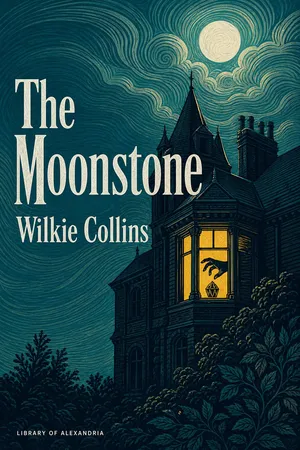
A priceless diamond disappears. In a house full of witnesses, no one seems able-or willing-to tell the whole truth.
Given to Rachel Verinder on her eighteenth birthday, the Moonstone is no ordinary jewel. Looted from an Indian shrine, the great yellow diamond carries a history of violence into an English country house. When it vanishes that night, the search for an explanation unsettles servants, relatives, and suitors alike. Sergeant Cuff brings a detective's trained eye to the case, but private loyalties and guarded feelings make the evidence difficult to read.
First published in 1868, Wilkie Collins's The Moonstone helped establish the shape of the modern detective novel. Its story unfolds through several narrators, whose prejudices, attachments, and gaps in knowledge become part of the puzzle. Domestic comedy sits beside suspense, romance complicates suspicion, and the diamond's origins expose the violence beneath respectable wealth. The result is both an absorbing whodunit and a sharp examination of how people mistake their own perspective for the truth.
What readers find inside:
- A country-house mystery - A missing birthday gift turns a private household into a field of clues and competing suspicions.
- Sergeant Cuff - The observant detective tests appearances against evidence while navigating a family's secrets.
- Conflicting voices - Successive accounts reveal how character and self-interest shape the telling of events.
- Love under suspicion - Rachel Verinder and Franklin Blake are caught in the emotional consequences of an unexplained theft.
- An imperial legacy - The sacred jewel connects the English mystery to plunder in India and the claims of its original guardians.
Ideal for readers of classic British mysteries, lovers of Victorian fiction, and anyone drawn to stories in which the witnesses are as intriguing as the crime.
Enter the Verinder household and follow the evidence behind its carefully guarded doors.