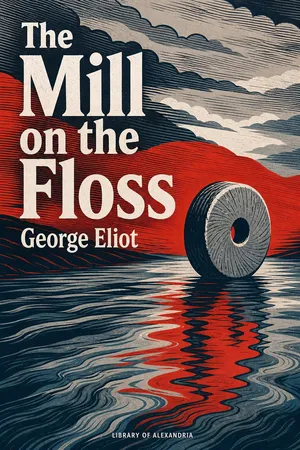
What happens when loyalty to those you love leaves little room to become yourself? Maggie Tulliver's struggle gives this Victorian novel its enduring emotional force.
Set in rural England, George Eliot's The Mill on the Floss follows Maggie and her brother Tom from childhood into the demanding world of adult responsibility. Growing up at Dorlcote Mill, Maggie longs for knowledge, affection, and a life beyond the limits placed on her. Tom's firm convictions and fierce sense of duty bind the siblings together even as their differences drive them apart.
Family misfortune, wounded pride, and conflicting attachments test Maggie's capacity for self-denial. Through her relationships with Philip Wakem and Stephen Guest, Eliot explores the painful distance between desire and obligation. The novel's richly observed community is more than a backdrop: its judgments help determine whose mistakes are forgiven and whose become a lasting burden. Eliot's sympathy for imperfect people makes this both an intimate family story and a searching examination of moral choice.
What readers find inside:
- A divided sibling bond - Maggie and Tom's deep attachment is tested by incompatible temperaments and expectations.
- A restless heroine - Maggie's intellectual curiosity and emotional intensity challenge the narrow possibilities offered to her.
- Love and conscience - Conflicting affections force difficult questions about happiness, responsibility, and sacrifice.
- Rural English life - The mill, family households, and surrounding community reveal a world shaped by money, kinship, and reputation.
- Psychological insight - Eliot traces how childhood experiences, pride, and longing influence adult decisions.
For readers of Victorian classics, psychologically rich family novels, and stories of women confronting social expectations, this is a deeply involving encounter with the claims of love and duty.
Enter Maggie Tulliver's world and follow a life caught between the need to belong and the longing to choose.