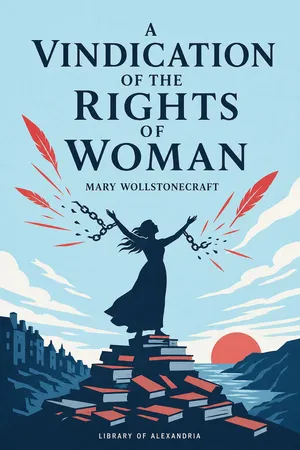
What happens when women are taught to please rather than to think? Mary Wollstonecraft challenges a society that mistakes enforced dependence for natural weakness.
Published in 1792, A Vindication of the Rights of Woman is a foundational work of feminist philosophy and Enlightenment political thought. Wollstonecraft argues that women are rational beings whose intellectual and moral development matters as much as men's. Against conventions that prize beauty, obedience, and social polish, she makes the case for education that cultivates judgment, self-respect, and independence.
Writing amid the debates stirred by the French Revolution, Wollstonecraft asks how a society can claim to value reason while denying women the chance to exercise it. She examines the expectations surrounding marriage, motherhood, manners, and virtue, and challenges influential ideas about female education, including those of Jean-Jacques Rousseau. Her enduring insight is that apparent differences in ability cannot be separated from differences in opportunity. The result is both an argument about education and a searching examination of power in everyday life.
What readers find inside:
- Equal Education - A sustained case for developing women's minds rather than preparing them solely to attract and obey men.
- Reason and Virtue - An argument that moral standards should rest on shared human capacities, not separate rules for each sex.
- Manufactured Dependence - A critique of customs that reward weakness and discourage independent judgment.
- Marriage and Family - An exploration of how education and mutual respect shape relationships and the raising of children.
- Political Questions - A challenge to the gap between universal ideals and the unequal treatment of women.
This book will appeal to readers of feminist theory, students of Enlightenment philosophy, and anyone interested in the history of education and gender equality. Its direct questions about character, opportunity, and dignity remain worth arguing with today.
Begin Wollstonecraft's bold argument and consider what an education for genuine independence demands.