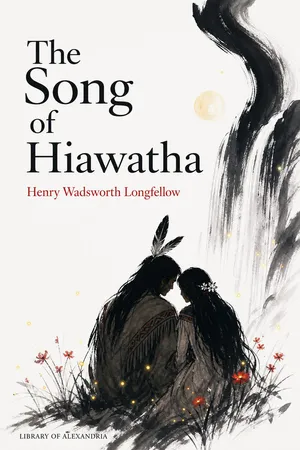
A legendary hero, a world alive with spirits, and a love shadowed by loss: this is epic storytelling carried by an unforgettable rhythm.
In The Song of Hiawatha, Henry Wadsworth Longfellow follows the life of Hiawatha, raised by his grandmother Nokomis, as he faces supernatural challenges and seeks the welfare of his people. His courtship of Minnehaha brings tenderness to a narrative of heroic deeds, friendship, hardship, and grief. Forests, lakes, birds, and changing seasons are not merely a backdrop; they shape the poem's imaginative world.
First published in 1855, the poem draws on Native American legends, especially Ojibwe traditions, as interpreted by a nineteenth-century American poet. It is a literary reimagining rather than a direct account of Indigenous life or belief. Longfellow's distinctive, strongly patterned verse gives its episodes the momentum of spoken storytelling, while its visions of nature and its treatment of love and mortality continue to reward close reading.
What readers find inside:
- A hero's journey - Hiawatha's growth and trials connect personal courage with responsibility to a wider community.
- Love and loss - His relationship with Minnehaha gives the expansive narrative an intimate emotional center.
- A living landscape - Water, woodland, animals, and seasons fill the verse with movement and vivid imagery.
- Legend and the supernatural - Encounters with extraordinary beings place human struggles within a world of spiritual powers.
- Memorable verse - Repetition and a distinctive falling rhythm make the poem especially rewarding to read aloud.
A compelling choice for readers of classic American poetry, lovers of mythic quests, and those interested in how nineteenth-century literature reworked traditional stories.
Enter Longfellow's imagined world and follow a journey through courage, devotion, and the changing rhythms of nature.