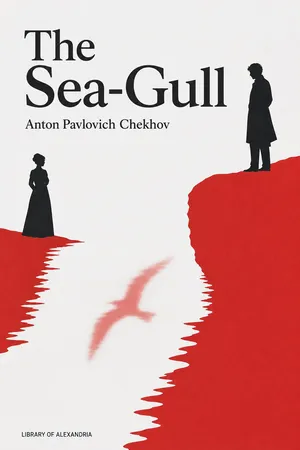
Everyone longs to be loved. Everyone is looking somewhere else.
Set on a Russian country estate beside a lake, Anton Chekhov's The Sea-Gull brings artists and lovers together in a web of longing, rivalry, and disappointment. The young writer Treplev wants to create new forms of theatre and win the approval of his mother, the celebrated actress Arkadina. Nina dreams of the stage, while her attraction to the established writer Trigorin deepens the tensions among them.
Through awkward encounters, everyday conversations, and moments of unexpected humor, Chekhov reveals how easily people miss one another's needs. Artistic conviction competes with the desire for recognition; love offers hope without guaranteeing understanding. A landmark of dramatic realism, the play remains compelling for its refusal to turn complicated people into simple heroes or villains. Its emotional force lies as much in what goes unsaid as in what its characters dare to confess.
What readers find inside:
- Artists in conflict - Treplev, Arkadina, Trigorin, and Nina reveal contrasting hopes for creative work and public recognition.
- Unreturned affection - Entangled attachments expose the loneliness of loving someone whose attention lies elsewhere.
- A lakeside setting - The country estate becomes a close, uneasy meeting place for competing generations and ambitions.
- Symbol and subtext - The bird of the title connects the characters' dreams with vulnerability and destruction.
- Comedy beside sorrow - Ordinary frustrations and uncomfortable exchanges bring humor into the play's painful emotional world.
For readers of Russian classics, theatre lovers interested in the foundations of modern drama, and anyone drawn to stories about creativity and complicated relationships, this is a play that rewards close attention.
Step into Chekhov's lakeside world and discover how much can be at stake in an ordinary conversation.