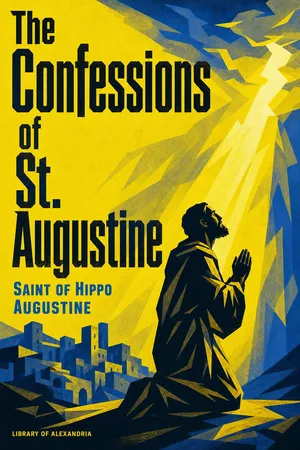
What makes a restless heart find peace? Augustine turns the story of his own life into a searching conversation with God about desire, failure, and the possibility of change.
Written in late antiquity, The Confessions of St. Augustine follows Augustine from his youth in North Africa through ambition, philosophical questioning, and conversion to Christianity in Milan. He recalls the theft of pears, examines the motives beneath his actions, and reflects on the influence of his mother, Monica. His account makes spiritual struggle intensely personal: knowing what is good does not always mean being able to choose it.
More than a narrative of conversion, this work explores memory, time, creation, and the relationship between human choice and divine grace. Augustine addresses God throughout, joining prayer to rigorous self-examination. Its lasting power lies in that combination of emotional candor and intellectual depth, inviting readers to consider not only what they believe but how they live.
What readers find inside:
- A restless youth - Augustine examines ambition, pleasure, friendship, and the desires that shaped his early life.
- The struggle to change - His conversion reveals the tension between conviction, habit, and the will.
- Sin and grace - Confession becomes a way of understanding responsibility, forgiveness, and dependence on God.
- Memory and time - Philosophical reflections ask how the mind remembers and how human beings experience the passing of time.
- Prayer and self-knowledge - A sustained address to God turns personal recollection into an inquiry into the human heart.
For readers of Christian classics, seekers exploring faith and doubt, and lovers of philosophical autobiography, this is a deeply human encounter with a foundational voice of Christian thought.
Begin Augustine's journey and discover questions about love, purpose, and change that remain alive today.