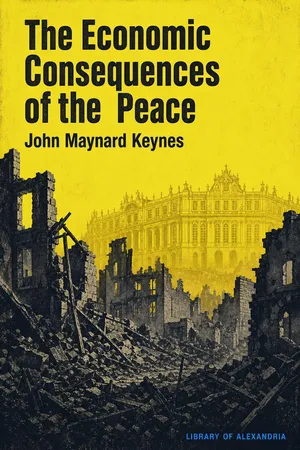
A war can end while the conditions for lasting stability remain dangerously unresolved. John Maynard Keynes asks what happens when a settlement demands more than a defeated nation can pay.
Published in 1919, The Economic Consequences of the Peace is Keynes's urgent critique of the Treaty of Versailles. Having served as an adviser to the British delegation at the Paris Peace Conference, he brought firsthand experience to his analysis of the settlement. He argued that punitive reparations against Germany threatened not only German recovery but also the interconnected economy of Europe.
Keynes examines the gulf between political demands and material realities: debts must be paid through production and trade, while damaged economies need food, resources, and functioning markets. Alongside his financial arguments, he offers sharp portraits of the conference's leading statesmen, including Woodrow Wilson, Georges Clemenceau, and David Lloyd George. The result is both an insider's account of diplomacy and a lasting challenge to the idea that punishment can provide a sound basis for reconstruction.
What readers find inside:
- Versailles under scrutiny - Keynes tests the treaty's financial demands against Europe's capacity to recover.
- Reparations and debt - The argument connects Germany's obligations with the wider problems of international payments and trade.
- Diplomacy in close view - Portraits of leading negotiators reveal the personalities behind the settlement.
- An interconnected continent - Keynes explains why the distress of one economy cannot be isolated from its neighbours.
- Alternatives to punishment - Proposals for reconstruction and cooperation point toward a more durable settlement.
This book will appeal to readers of World War I history, students of economics and international relations, and anyone interested in how financial decisions shape political life. Its questions about debt, national resentment, and recovery still reward careful attention.
Begin this searching account of Versailles and consider what nations must rebuild after the fighting stops.